Inbunden, Engelska, 2026
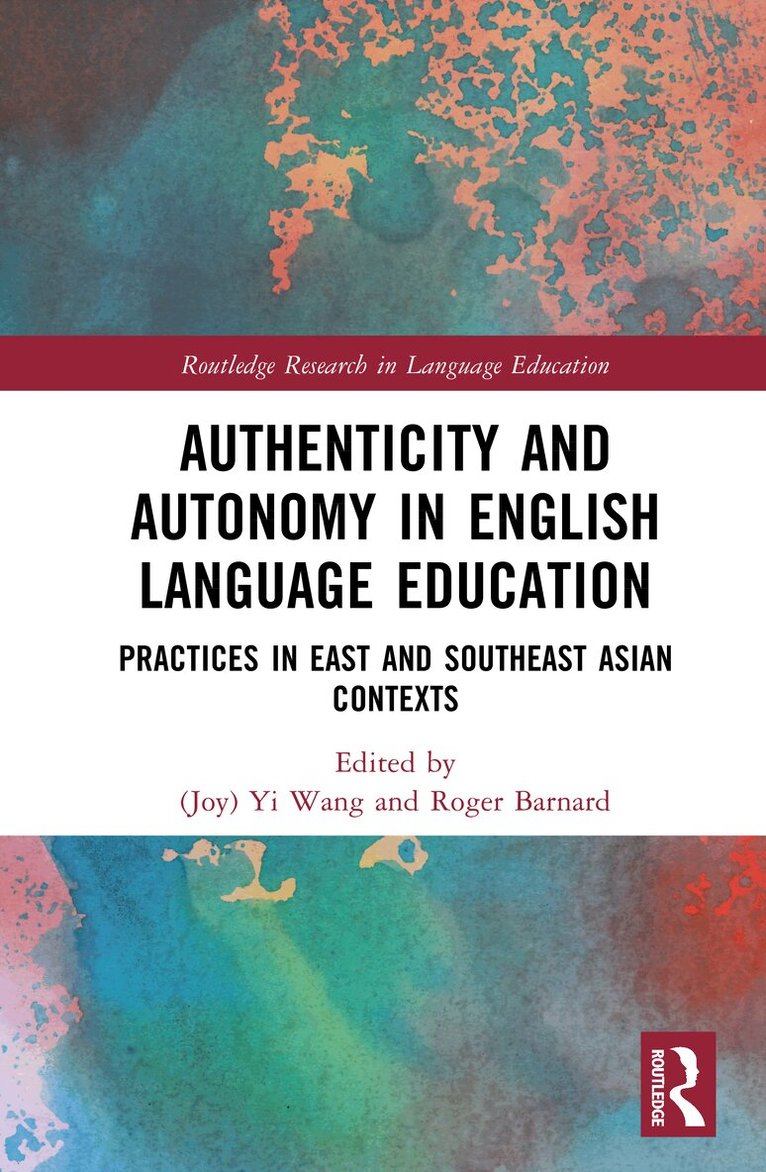
Authenticity and Autonomy in English Language Education
2405 kr
Kommande
Beskrivning
This volume brings together educators and researchers from across East and Southeast Asia – spanning Korea, Japan, China, Vietnam, Malaysia, Brunei, Macao, Indonesia, Thailand, and Singapore – to explore how authenticity and autonomy are reshaping English language education.Drawing on a unique three-take structure, practitioners share their first-hand experiences implementing authenticity and autonomy strategies; colleagues from comparable contexts offer insights; and international scholars provide expert commentary from fresh perspectives. In this way, the book showcases practitioner reflections, scholarly commentary, and dialogic interactions to illuminate how these concepts are enacted, negotiated, and challenged in diverse educational settings. The book responds to growing calls for context-sensitive, ethically grounded, and socially responsive pedagogy in applied linguistics. It offers a platform for educators and researchers to collaboratively reimagine language teaching and learning in ways that are locally situated yet globally resonant.Celebrating the rich diversity of approaches while identifying common threads that connect educators across borders, this book will be a valuable resource to scholars, academics and researchers in the fields of English language education, applied linguistics, and multicultural education.
Produktinformation
- Utgivningsdatum: 2026-11-12
- Mått: 156 x 234 x undefined mm
- Format: Inbunden
- Språk: Engelska
- Serie: Routledge Research in Language Education
- Antal sidor: 232
- Förlag: Taylor & Francis Ltd
- ISBN: 9781041361978
Utforska kategorier
Betyg & recensioner
0 recensioner
Inga recensioner tillgängliga.