• Fri frakt över 249 kr
  • •
  • Snabba leveranser
  • •
  • Billiga böcker
Kundservice

Du är på sajten för privatpersoner.

Företag, bibliotek eller offentlig verksamhet?

Du handlar på classic.bokus.com, där alla dina funktioner finns intakta.
Till classic.bokus.com
Bokus logotyp. Gå till startsidan.
  • Erbjudanden
  • Nyheter
  • Student
  • Topplistor
  • Barn & ungdom
  • Bokus Play
  • E-böcker
  • Pocketböcker
  • Spel & pussel

10% rabatt på allt med kod: NYSTART10 →

Sidfot

Mina sidor

    Hjälp

    • Kundservice
    • Vanliga frågor och svar
    • Frakt och leverans
    • Retur vid ångerrätt
    • Reklamera vara
    • Betalning
    • Köpvillkor
    • Allmänna villkor
    • Information om webbplatsens tillgänglighet

    Om Bokus

    • Om oss
    • Pressrum
    • För studenter
    • För företag
    • För bibliotek och offentlig verksamhet
    • För leverantörer
    • Hållbarhet

    Populärt

    • Aktuella erbjudanden
    • Presentkort
    • Studentlitteratur
    • Nya böcker
    • Topplistor
    • Signerade böcker
    • Engelska böcker

    Inspiration

    • Boktips
    • BookTok
    • Populära bokserier
    • Barnbokskaraktärer
    • Populära författare
    Logotyp för Bokus
    Följ oss på Facebook (extern länk)Följ oss på Instagram (extern länk)Följ oss på YouTube (extern länk)Följ oss på TikTok (extern länk)
    bokus @ CookiesAnpassa cookiesIntegritetspolicyKöpvillkor
    Till Citymail hemsida (extern länk)Till Budbee hemsida (extern länk)Till Postnord hemsida (extern länk)Till Schenker hemsida (extern länk)Till Early Bird hemsida (extern länk)Till Walleys hemsida (extern länk)
    1. Kultur
    2. Scenkonst och film
    3. Film

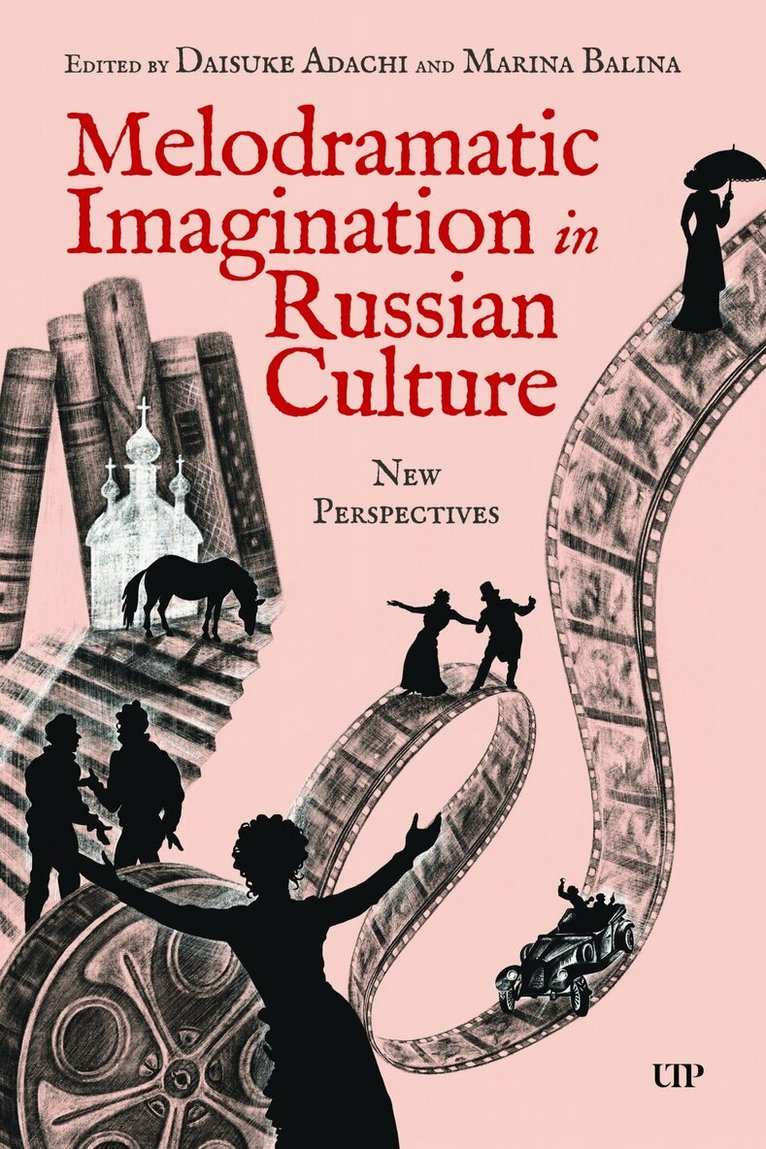
    Melodramatic Imagination in Russian Culture

    New Perspectives

    AvDaisuke Adachi,Marina Balina

    Inbunden, Engelska, 2026

    889 kr

    Slutsåld

    Beskrivning

    In modern culture, the term “melodrama” has lost its original meaning. We use it in our everyday assessments of human behaviour; our understanding of melodramatic gestures and behavioural codes now extends far beyond the theatrical environment. Today, we see the melodramatic mode employed in contemporary political discourse, media texts, and militaristic propaganda. What is it about melodrama that attracts a person of the twenty-first century? What explains the genre’s remarkable resilience over time? The essays in this volume examine these questions by focusing on Russian, Soviet, and post-Soviet melodrama, applying modern theories of melodrama to the analysis of melodramatic discourse in Russian culture. Russian studies professors Marina Balina and Daisuke Adachi explore new directions in the study of melodramatic discourse and address emerging spheres of mass culture, such as the communicative space of the internet. This collection significantly expands the scope of research: alongside the traditional genres of the melodramatic mode – literature, poetry, and film – the contributors examine melodrama and its deconstructions in interviews, egodocuments, young adult literature, and television series. The collection offers a historically multifaced but conceptually coherent analysis of melodrama, exposing the roots of its remarkable persistence in Russian culture.

    Produktinformation

    • Utgivningsdatum:2026-12-08
    • Mått:152 x 229 x 25 mm
    • Vikt:1 g
    • Format:Inbunden
    • Språk:Engelska
    • Antal sidor:392
    • Förlag:University of Toronto Press
    • ISBN:9781049800189

    Utforska kategorier

    • Film inom Kultur
    • Litteraturvetenskap inom Skönlitteratur
    • Kulturvetenskap inom Samhälle och politik

    Mer om författaren

    Marina Balina is a professor of Russian Studies at Illinois Wesleyan University and holds the Isaac Funk professorship.

    Innehållsförteckning

    • Introduction: Rethinking Russia’s Melodramatic CultureDaisuke AdachiPart I: Melodramatic Ethics: Empathy, Suffering, and Salvation1. Aristocracy, Victimhood, and the Demands of Justice in Lev Tolstoy’s Kholstomer Vadim Shneyder2. Melodrama, Young Adults, and the Pedagogy of Empathy in Russian Coming–of-Age LiteratureMarina Balina3. The Postmodernist “Moral Occult”: Liudmila Petrushevskaya and Linor GoralikMark LipovetskyPart II: Melodramatic Affect or the Melo/Drama of Emotions4. Melodramatic Heroines in Pre-revolutionary Russian Cinema Sawako Ogawa5. Nervous People: Trauma and Aesthetic Hysteria in the Late Stalinist MelodramaAnna Toropova6. Melodramatic Things and Bodies of Memory in Soviet Films about Individual Loss and Collective TraumaOksana Bulgakowa7. Vocal Supplements: How Late Soviet Melodrama Got Its Melos BackSerguei A. OushakinePart III: Melodramatizing Russia’s Politics: Past and Present8. The Melodramatic Imagination and Russian Prose of the 1830sMaria Mayofis9. Transforming Political Ideals into Melodrama: Kollontai’s The Workers’ Opposition and A Great Love Satoko Kitai10. The Birth of Melodrama from the Spirit of the Sublime in Socialist RealismEvgeny Dobrenko11. Political and Personal Melodrama in Contemporary Russian-Language Poetry Ilya KukulinPart IV: Melodrama and Subjectivity in Contemporary Media12. Staying Alive in Neoliberal Russia: Gender and Agency in An Ordinary Woman Elena Prokhorova and Alexander Prokhorov13. Left Melodrama on YouTube: Shaping the Personal as the Political on Katerina Gordeeva’s ShowLarissa Rudova14. Reinventing Ordinary Life: Melodramatic Narratives in the Russian Social Network VkontakteIrina Prus