• Fri frakt över 249 kr
  • •
  • Snabba leveranser
  • •
  • Billiga böcker
Kundservice

Du är på sajten för privatpersoner.

Företag, bibliotek eller offentlig verksamhet?

Du handlar på classic.bokus.com, där alla dina funktioner finns intakta.
Till classic.bokus.com
Bokus logotyp. Gå till startsidan.
  • Erbjudanden
  • Nyheter
  • Student
  • Topplistor
  • Barn & ungdom
  • Bokus Play
  • E-böcker
  • Pocketböcker
  • Spel & pussel

10% rabatt på allt med kod NYSTART10 →

Sidfot

Mina sidor

    Hjälp

    • Kundservice
    • Vanliga frågor och svar
    • Frakt och leverans
    • Retur vid ångerrätt
    • Reklamera vara
    • Betalning
    • Köpvillkor
    • Allmänna villkor
    • Information om webbplatsens tillgänglighet

    Om Bokus

    • Om oss
    • Pressrum
    • För studenter
    • För företag
    • För bibliotek och offentlig verksamhet
    • För leverantörer
    • Hållbarhet

    Populärt

    • Aktuella erbjudanden
    • Presentkort
    • Studentlitteratur
    • Nya böcker
    • Topplistor
    • Signerade böcker
    • Engelska böcker

    Inspiration

    • Boktips
    • BookTok
    • Populära bokserier
    • Barnbokskaraktärer
    • Populära författare
    Logotyp för Bokus
    Följ oss på Facebook (extern länk)Följ oss på Instagram (extern länk)Följ oss på YouTube (extern länk)Följ oss på TikTok (extern länk)
    bokus @ CookiesAnpassa cookiesIntegritetspolicyKöpvillkor
    Till Citymail hemsida (extern länk)Till Budbee hemsida (extern länk)Till Postnord hemsida (extern länk)Till Schenker hemsida (extern länk)Till Early Bird hemsida (extern länk)Till Walleys hemsida (extern länk)
    1. Medicin
    2. Medicin: allmänt
    3. Den medicinska professionen
    4. Medicinsk etik och läkaretik

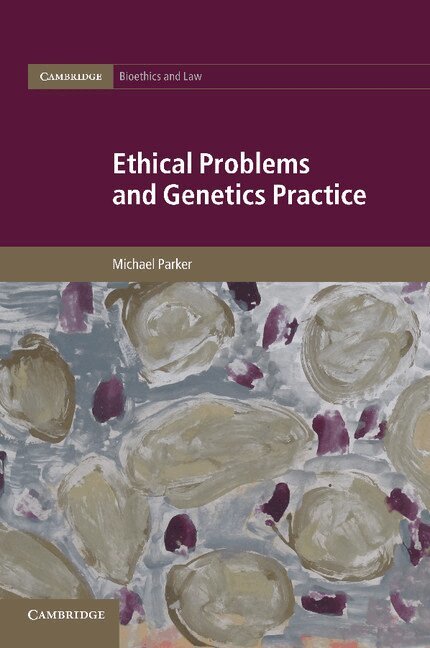
    Ethical Problems and Genetics Practice

    AvMichael Parker

    Inbunden, Engelska, 2012

    Del 19 i serien Cambridge Bioethics and Law

    974 kr

    Beställningsvara. Skickas inom 10-15 vardagar. Fri frakt över 249 kr.

    Fler format och utgåvor

    Häftad

    477 kr

    Beskrivning

    Ethical Problems and Genetics Practice provides a rich, case-based account of the ethical issues arising in the genetics clinic and laboratory. By analysing a wide range of evocative and often arresting cases from practice, Michael Parker provides a compelling insight into the complex moral world of the contemporary genetics professional and the challenges they face in the care of patients and their families. This book is essential reading for anyone interested in the ethical issues arising in everyday genetics practice. Ethical Problems and Genetics Practice is also a sustained engagement with the relationships between bioethics and social science. In proposing and exemplifying a new approach to bioethics, it makes a significant contribution to debates on methods and interdisciplinarity and will therefore also appeal to all those concerned with theoretical and methodological approaches to bioethics and social science.

    Produktinformation

    • Utgivningsdatum:2012-04-05
    • Mått:155 x 234 x 13 mm
    • Vikt:410 g
    • Format:Inbunden
    • Språk:Engelska
    • Serie:Cambridge Bioethics and Law
    • Antal sidor:182
    • Förlag:Cambridge University Press
    • ISBN:9781107020801

    Utforska kategorier

    • Medicinsk etik och läkaretik inom Medicin
    • Biovetenskap inom Naturvetenskap och teknik

    Mer om författaren

    Michael Parker is Professor of Bioethics and Director of the Ethox Centre at the University of Oxford, where his research focuses on the ethical implications of the clinical use of genetics and on the ethical aspects of collaborative global health research.

    Recensioner i media

    'This book is an extremely valuable addition to the ever-expanding library of contemporary bioethics texts. For me its real strength lies in the fact that it is very much grounded in real issues - using everyday practice and cases from clinical genetics settings - not simply theoretical 'what if' situations.' BioNews (bionews.org.uk)

    Innehållsförteckning

    • 1. Introduction; 2. The patient in the families; 3. Elective affinities; 4. Reproducing ethics; 5. Multi-professional practices; 6. Moral craft; 7. Methodological reflections.