• Fri frakt över 249 kr
  • •
  • Snabba leveranser
  • •
  • Billiga böcker
Kundservice

Du är på sajten för privatpersoner.

Företag, bibliotek eller offentlig verksamhet?

Du handlar på classic.bokus.com, där alla dina funktioner finns intakta.
Till classic.bokus.com
Bokus logotyp. Gå till startsidan.
  • Erbjudanden
  • Nyheter
  • Student
  • Topplistor
  • Barn & ungdom
  • Bokus Play
  • E-böcker
  • Pocketböcker
  • Spel & pussel

Må bättre, för mindre! Upp till 50% rabatt på hälsoböcker

Sidfot

Mina sidor

    Hjälp

    • Kundservice
    • Vanliga frågor och svar
    • Frakt och leverans
    • Retur vid ångerrätt
    • Reklamera vara
    • Betalning
    • Köpvillkor
    • Allmänna villkor
    • Information om webbplatsens tillgänglighet

    Om Bokus

    • Om oss
    • Pressrum
    • För studenter
    • För företag
    • För bibliotek och offentlig verksamhet
    • För leverantörer
    • Hållbarhet

    Populärt

    • Aktuella erbjudanden
    • Presentkort
    • Studentlitteratur
    • Nya böcker
    • Topplistor
    • Signerade böcker
    • Engelska böcker

    Inspiration

    • Boktips
    • BookTok
    • Populära bokserier
    • Barnbokskaraktärer
    • Populära författare
    Logotyp för Bokus
    Följ oss på Facebook (extern länk)Följ oss på Instagram (extern länk)Följ oss på YouTube (extern länk)Följ oss på TikTok (extern länk)
    bokus @ CookiesAnpassa cookiesIntegritetspolicyKöpvillkor
    Till Citymail hemsida (extern länk)Till Budbee hemsida (extern länk)Till Postnord hemsida (extern länk)Till Schenker hemsida (extern länk)Till Early Bird hemsida (extern länk)Till Walleys hemsida (extern länk)
    1. Ekonomi och Ledarskap
    2. Företagsekonomi
    3. Organisationsteori

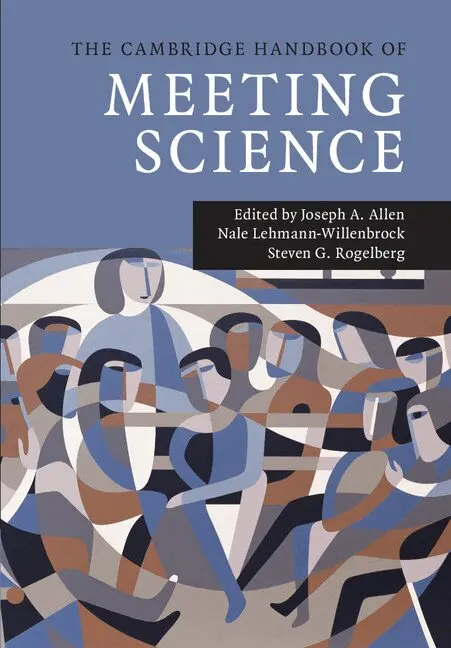
    The Cambridge Handbook of Meeting Science

    AvJoseph A. Allen,Nale Lehmann-Willenbrock

    Inbunden, Engelska, 2015

    Del i serien Cambridge Handbooks in Psychology

    2 851 kr

    Beställningsvara. Skickas inom 10-15 vardagar. Fri frakt över 249 kr.

    Beskrivning

    This first volume to analyze the science of meetings offers a unique perspective on an integral part of contemporary work life. More than just a tool for improving individual and organizational effectiveness and well-being, meetings provide a window into the very essence of organizations and employees' experiences with the organization. The average employee attends at least three meetings per week and managers spend the majority of their time in meetings. Meetings can raise individuals, teams, and organizations to tremendous levels of achievement. However, they can also undermine effectiveness and well-being. The Cambridge Handbook of Meeting Science assembles leading authors in industrial and organizational psychology, management, marketing, organizational behavior, anthropology, sociology, and communication to explore the meeting itself, including pre-meeting activities and post-meeting activities. It provides a comprehensive overview of research in the field and will serve as an invaluable starting point for scholars who seek to understand and improve meetings.

    Produktinformation

    • Utgivningsdatum:2015-07-15
    • Mått:183 x 257 x 46 mm
    • Vikt:1 540 g
    • Format:Inbunden
    • Språk:Engelska
    • Serie:Cambridge Handbooks in Psychology
    • Antal sidor:808
    • Förlag:Cambridge University Press
    • ISBN:9781107067189

    Utforska kategorier

    • Organisationsteori inom Ekonomi och Ledarskap

    Mer om författaren

    Joseph A. Allen is an assistant professor of Industrial and Organizational Psychology at the University of Nebraska, Omaha. Nale Lehmann-Willenbrock is an assistant professor of Social and Organizational Psychology at VU University Amsterdam, the Netherlands. Steven G. Rogelberg is University Professor of Psychology and Management and the Director of the Organizational Science program at the University of North Carolina, Charlotte.

    Recensioner i media

    'The Cambridge Handbook of Meeting Science contains many facets of meetings, including meetings held in different countries, virtual meetings, the interactions of people, plus even the 'chit chat' that occurs in the period before a meeting. It therefore provides a comprehensive examination of the information on meetings from numerous different perspectives and, as a result, will be an invaluable and unique addition to the library of universities and other educational establishments where management or business is studied. It will also be of use in large corporations.' Mabel Blades, Business, management

    Innehållsförteckning

    • Part I. Introduction: 1. An introduction to The Cambridge Handbook of Meeting Science: why now?; 2. Exploring meeting science: key questions and answers; 3. Five theoretical lenses for conceptualizing the role of meetings in organizational life; Part II. Pre-Meeting Activities and Context: Meeting Setup: 4. Meeting preparation and design characteristics; 5. Meeting training: a suggestion; Meeting Composition: 6. How differences make a difference: the role of team diversity in meeting processes and outcomes; 7. Meetings across cultures: cultural differences in meeting expectations and processes; Pre-Meeting Communication: 8. So much more than 'chitchat': a closer look at pre-meeting talk; Macro Meeting Context: 9. Meetings all over the world: structural and psychological characteristics of meetings in different countries; 10. Organizational meeting orientation: the construct, scales and research propositions; 11. A systemic view of meetings – windows on organization collective minding; Part III. The Meeting Itself: Capturing and Understanding Dynamics and Processes of the Meeting: 12. Meetings as interactional achievements: a conversation analytic perspective; 13. Multimodal perspectives on meeting interaction: recent trends in conversation analysis; 14. Toward a theory of strategic meeting interaction; 15. Social dynamics at work: meetings as a gateway; 16. Social networks in meetings: how do people connect?; 17. Effective leader behaviors in regularly held staff meetings: surveyed vs videotaped and coded observations; 18. They meet, they talk … but nothing changes: meetings as a focal context for studying change processes in organizations; 19. Relative status and emotion regulation in workplace meetings: a conceptual model; 20. Dynamic affect in team meetings: an interpersonal construct embedded in dynamic interaction processes; Tools and Models for Promoting Meeting Success: 21. Designing and executing effective meetings with codified best facilitation practices; 22. Finding the gorilla: the impact of complexity and diversity on meeting process; 23. Information utilization in meetings; 24. What is consensus and how is it achieved in meetings? Four types of consensus decision-making; 25. Creativity and meetings: do team meetings facilitate or hinder creative team performance?; Part IV. Special Types of Meetings: Post Event Meetings: 26. Debrief: the learning meeting; 27. Implementing after action review systems in organizations: key principles and practical considerations; Virtual Meetings: 28. Meeting organization strategy: the 'why' and 'how' of meetings with virtual presence; 29. The successful facilitation of virtual team meetings; Part V. Synthesis and Conclusion: 30. The science and practice of workplace meetings; 31. There's something about meetings: order and disorder in the study of meetings.