• Fri frakt över 249 kr
  • •
  • Snabba leveranser
  • •
  • Billiga böcker
Kundservice

Du är på sajten för privatpersoner.

Företag, bibliotek eller offentlig verksamhet?

Du handlar på classic.bokus.com, där alla dina funktioner finns intakta.
Till classic.bokus.com
Bokus logotyp. Gå till startsidan.
  • Erbjudanden
  • Nyheter
  • Student
  • Topplistor
  • Barn & ungdom
  • Bokus Play
  • E-böcker
  • Pocketböcker
  • Spel & pussel

10% rabatt på allt med kod: NYSTART10 →

Sidfot

Mina sidor

    Hjälp

    • Kundservice
    • Vanliga frågor och svar
    • Frakt och leverans
    • Retur vid ångerrätt
    • Reklamera vara
    • Betalning
    • Köpvillkor
    • Allmänna villkor
    • Information om webbplatsens tillgänglighet

    Om Bokus

    • Om oss
    • Pressrum
    • För studenter
    • För företag
    • För bibliotek och offentlig verksamhet
    • För leverantörer
    • Hållbarhet

    Populärt

    • Aktuella erbjudanden
    • Presentkort
    • Studentlitteratur
    • Nya böcker
    • Topplistor
    • Signerade böcker
    • Engelska böcker

    Inspiration

    • Boktips
    • BookTok
    • Populära bokserier
    • Barnbokskaraktärer
    • Populära författare
    Logotyp för Bokus
    Följ oss på Facebook (extern länk)Följ oss på Instagram (extern länk)Följ oss på YouTube (extern länk)Följ oss på TikTok (extern länk)
    bokus @ CookiesAnpassa cookiesIntegritetspolicyKöpvillkor
    Till Citymail hemsida (extern länk)Till Budbee hemsida (extern länk)Till Postnord hemsida (extern länk)Till Schenker hemsida (extern länk)Till Early Bird hemsida (extern länk)Till Walleys hemsida (extern länk)
    1. Samhälle och politik
    2. Samhälle och kultur
    3. Kultur och medier
    4. Kulturvetenskap

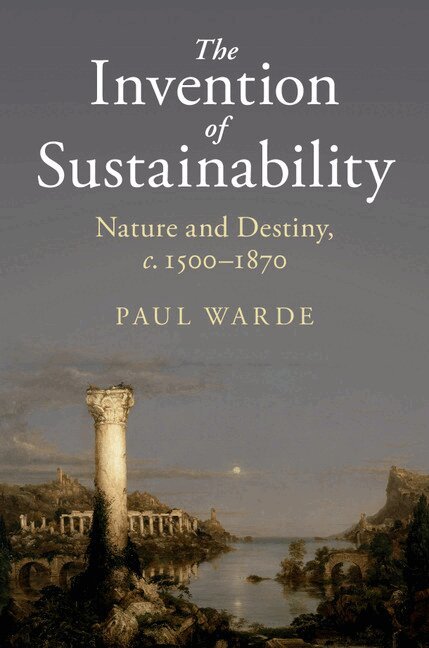
    The Invention of Sustainability

    Nature and Destiny, c.1500-1870

    AvPaul Warde

    Inbunden, Engelska, 2018

    664 kr

    Tillfälligt slut

    Fler format och utgåvor

    Häftad

    354 kr

    Beskrivning

    The issue of sustainability, and the idea that economic growth and development might destroy its own foundations, is one of the defining political problems of our era. This groundbreaking study traces the emergence of this idea, and demonstrates how sustainability was closely linked to hopes for growth, and the destiny of expanding European states, from the sixteenth century. Weaving together aspirations for power, for economic development and agricultural improvement, and ideas about forestry, climate, the sciences of the soil and of life itself, this book sets out how new knowledge and metrics led people to imagine both new horizons for progress, but also the possibility of collapse. In the nineteenth century, anxieties about sustainability, often driven by science, proliferated in debates about contemporary and historical empires and the American frontier. The fear of progress undoing itself confronted society with finding ways to live with and manage nature.

    Produktinformation

    • Utgivningsdatum:2018-07-12
    • Mått:157 x 235 x 28 mm
    • Vikt:750 g
    • Format:Inbunden
    • Språk:Engelska
    • Antal sidor:416
    • Förlag:Cambridge University Press
    • ISBN:9781107151147

    Utforska kategorier

    • Kulturvetenskap inom Samhälle och politik

    Mer om författaren

    Paul Warde is a Reader in Environmental History at the University of Cambridge. His previous publications include Ecology, Economy and State Formation in Early Modern Germany (Cambridge, 2006), Power to the People. Energy in Europe over the Last Five Centuries (2013), and The Future of Nature: Documents of Global Change (2013).

    Recensioner i media

    'This is an important book. A history of ideas that ranges widely over political economy, the state and the environment, The Invention of Sustainability is a great example of how to present a compelling argument while respecting complexity. Paul Warde brings together wonderfully rich evidence and makes his case lucidly. The result is a bold and very satisfying work.' David Blackbourn, author of The Conquest of Nature

    Innehållsförteckning

    • 1. Living from the land, c.1500–1620; 2. Governing the woods, c.1500–1700; 3. Ambition and experiment, c.1590–1740; 4. Paths to sustained growth, c.1650–1760; 5. Nature translated, c.1670–1830; 6. Theories of circulation, c.1740–1800; 7. Political economies of nature, c.1760–1840; 8. History and destiny, c.1700–1870; Conclusion: ends and beginnings.