• Fri frakt över 249 kr
  • •
  • Snabba leveranser
  • •
  • Billiga böcker
Kundservice

Du är på sajten för privatpersoner.

Företag, bibliotek eller offentlig verksamhet?

Du handlar på classic.bokus.com, där alla dina funktioner finns intakta.
Till classic.bokus.com
Bokus logotyp. Gå till startsidan.
  • Erbjudanden
  • Nyheter
  • Student
  • Topplistor
  • Barn & ungdom
  • Bokus Play
  • E-böcker
  • Pocketböcker
  • Spel & pussel

10% rabatt på allt med kod NYSTART10 →

Sidfot

Mina sidor

    Hjälp

    • Kundservice
    • Vanliga frågor och svar
    • Frakt och leverans
    • Retur vid ångerrätt
    • Reklamera vara
    • Betalning
    • Köpvillkor
    • Allmänna villkor
    • Information om webbplatsens tillgänglighet

    Om Bokus

    • Om oss
    • Pressrum
    • För studenter
    • För företag
    • För bibliotek och offentlig verksamhet
    • För leverantörer
    • Hållbarhet

    Populärt

    • Aktuella erbjudanden
    • Presentkort
    • Studentlitteratur
    • Nya böcker
    • Topplistor
    • Signerade böcker
    • Engelska böcker

    Inspiration

    • Boktips
    • BookTok
    • Populära bokserier
    • Barnbokskaraktärer
    • Populära författare
    Logotyp för Bokus
    Följ oss på Facebook (extern länk)Följ oss på Instagram (extern länk)Följ oss på YouTube (extern länk)Följ oss på TikTok (extern länk)
    bokus @ CookiesAnpassa cookiesIntegritetspolicyKöpvillkor
    Till Citymail hemsida (extern länk)Till Budbee hemsida (extern länk)Till Postnord hemsida (extern länk)Till Schenker hemsida (extern länk)Till Early Bird hemsida (extern länk)Till Walleys hemsida (extern länk)
    1. Samhälle och politik
    2. Politik och statsskick
    3. Statsvetenskap och politisk teori

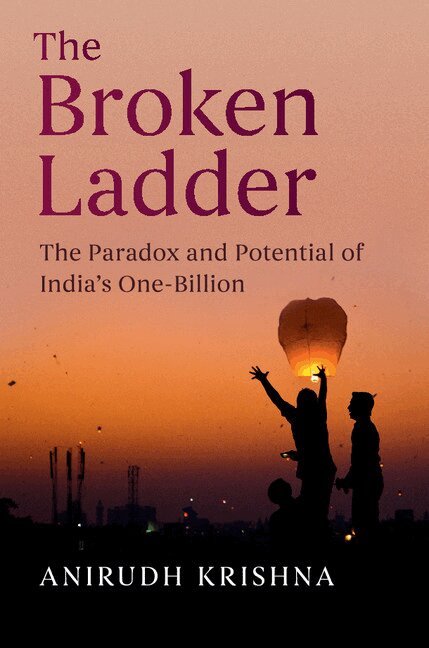
    The Broken Ladder

    The Paradox and Potential of India's One-Billion

    AvAnirudh Krishna

    Inbunden, Engelska, 2017

    423 kr

    Beställningsvara. Skickas inom 10-15 vardagar. Fri frakt över 249 kr.

    Fler format och utgåvor

    Häftad

    353 kr

    Beskrivning

    Despite becoming a global economic force, why does India win so few Olympic medals and have so many people living in poverty? Why have opportunities not become available more broadly? How can growing individuals assist with the task of building a growing economy? Krishna presents a refreshingly unusual perspective of emergent realities, drawing on the stories of everyday lives, of people like you and me and those less privileged. Through decades-long investigations, living in villages and slum communities, the author presents eye-opening details of missed opportunities and immense untapped talent that can be harnessed, with tremendous consequences for equity and growth. Offering possible solutions for inequality and those in need, The Broken Ladder is a comprehensive and fascinating account of development strategies in a fast-growing, yet largely agrarian, developing economy.

    Produktinformation

    • Utgivningsdatum:2017-08-07
    • Mått:159 x 235 x 21 mm
    • Vikt:590 g
    • Format:Inbunden
    • Språk:Engelska
    • Antal sidor:314
    • Förlag:Cambridge University Press
    • ISBN:9781108415927

    Utforska kategorier

    • Statsvetenskap och politisk teori inom Samhälle och politik
    • Konstitution: stat och regering inom Samhälle och politik

    Mer om författaren

    Anirudh Krishna's research investigates how poor communities and individuals in developing countries cope with the structural and personal constraints that result in poverty and powerlessness. He has written five other books and more than sixty journal articles. Awards include an honorary doctorate from Uppsala universitet, Sweden in 2011. Before returning to academia, Krishna worked for fourteen years with the Indian Administrative Service, managing diverse rural and urban development initiatives on behalf of the government. He has consulted with the World Bank, the United Nations, national governments, and a variety of development support organizations.

    Recensioner i media

    'This is a remarkable book pointing our attention to the ground-level realities and vulnerabilities of the poor that are overlooked by the glowing macro-economic growth stories about India. With vivid examples it highlights the micro situations (involving attitudes, beliefs, availability of information and credit, etc.) that make it so difficult to climb out of that poverty and vulnerability for otherwise highly motivated and talented people. The author's human case studies are quite touching as the analysis is incisive. I recommend this book to any reader who is interested in an empathetic understanding of the constraints, institutional failures and opportunities facing vast numbers of people in India.' Pranab Bardhan, University of California, Berkeley

    Innehållsförteckning

    • 1. Dollar economy and rupee economy; 2. Beyond 5-km villages; 3. Blue-polygon slums; 4. Preventing future poverty; 5. Plumbing a deep talent pool; 6. Attitudes, experiences, and information; 7. Democracy at the doorstep; 8. Looking ahead: growing the economy and developing individuals; Acknowledgments; Notes; Bibliography; Index.