• Fri frakt över 249 kr
  • •
  • Snabba leveranser
  • •
  • Billiga böcker
Kundservice

Du är på sajten för privatpersoner.

Företag, bibliotek eller offentlig verksamhet?

Du handlar på classic.bokus.com, där alla dina funktioner finns intakta.
Till classic.bokus.com
Bokus logotyp. Gå till startsidan.
  • Erbjudanden
  • Nyheter
  • Student
  • Topplistor
  • Barn & ungdom
  • Bokus Play
  • E-böcker
  • Pocketböcker
  • Spel & pussel

10% studentrabatt med kod TERM26

Sidfot

Mina sidor

    Hjälp

    • Kundservice
    • Vanliga frågor och svar
    • Frakt och leverans
    • Retur vid ångerrätt
    • Reklamera vara
    • Betalning
    • Köpvillkor
    • Allmänna villkor
    • Information om webbplatsens tillgänglighet

    Om Bokus

    • Om oss
    • Pressrum
    • För studenter
    • För företag
    • För bibliotek och offentlig verksamhet
    • För leverantörer
    • Hållbarhet

    Populärt

    • Aktuella erbjudanden
    • Presentkort
    • Studentlitteratur
    • Nya böcker
    • Topplistor
    • Signerade böcker
    • Engelska böcker

    Inspiration

    • Boktips
    • BookTok
    • Populära bokserier
    • Barnbokskaraktärer
    • Populära författare
    Logotyp för Bokus
    Följ oss på Facebook (extern länk)Följ oss på Instagram (extern länk)Följ oss på YouTube (extern länk)Följ oss på TikTok (extern länk)
    bokus @ CookiesAnpassa cookiesIntegritetspolicyKöpvillkor
    Till Citymail hemsida (extern länk)Till Budbee hemsida (extern länk)Till Postnord hemsida (extern länk)Till Schenker hemsida (extern länk)Till Early Bird hemsida (extern länk)Till Walleys hemsida (extern länk)
    1. Samhälle och politik
    2. Politik och statsskick
    3. Statsvetenskap och politisk teori

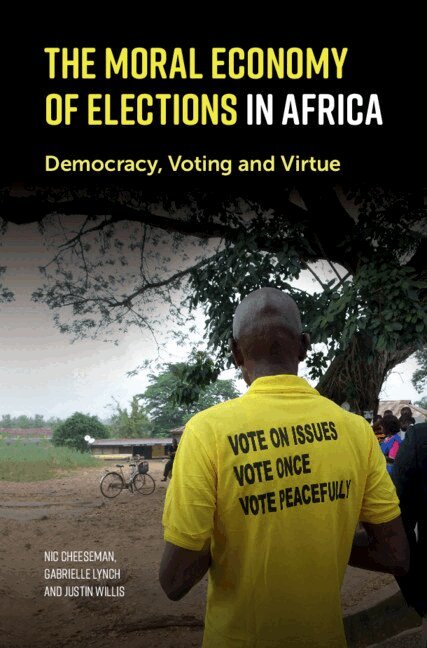
    The Moral Economy of Elections in Africa

    Democracy, Voting and Virtue

    AvNic Cheeseman,Gabrielle Lynch

    Inbunden, Engelska, 2021

    1 402 kr

    Beställningsvara. Skickas inom 10-15 vardagar. Fri frakt över 249 kr.

    Fler format och utgåvor

    Häftad

    443 kr

    Beskrivning

    Do elections turn people into democratic citizens? Elections have long been seen as a way to foster democracy, development and security in Africa, with many hoping that the secret ballot would transform states. Adopting a new approach that focusses on the moral economy of elections, Nic Cheeseman, Gabrielle Lynch and Justin Willis show how elections are shaped by competing visions of what it means to be a good leader, bureaucrat or citizen. Using a mixed-methods study of elections in Ghana, Kenya and Uganda, they explore moral claims made by officials, politicians, civil society, international observers and voters themselves. This radical new lens reveals that elections are the site of intense moral contestation, which helps to explain why there is such vigourous participation in processes that often seem flawed. Demonstrating the impact of these debates on six decades of electoral practice, they explain why the behaviour of those involved so frequently transgresses national law and international norms, as well as the ways in which such transgressions are evaluated and critiqued - so that despite the purported significance of 'vote-buying', the candidates that spend the most do not always win.

    Produktinformation

    • Utgivningsdatum:2021-02-18
    • Mått:155 x 230 x 25 mm
    • Vikt:690 g
    • Format:Inbunden
    • Språk:Engelska
    • Antal sidor:376
    • Förlag:Cambridge University Press
    • ISBN:9781108417235

    Utforska kategorier

    • Statsvetenskap och politisk teori inom Samhälle och politik

    Mer om författaren

    Nic Cheeseman is Professor of Democracy and International Development at the University of Birmingham. He is the author or editor of ten books, including Democracy in Africa (2015) and How to Rig an Election (2018), and his research has won a number of prizes including the Frank Cass Award for the best article in Democratization (2015) and the Joni Lovenduski Prize for outstanding professional achievement by a midcareer scholar (2019) from the UK Political Studies Association. He is the founding editor of the Oxford Encyclopedia of African Politics and the founder of www.democracyinafrica.org. Gabrielle Lynch is Professor of Comparative Politics at the University of Warwick. She is the author of over 30 articles and book chapters, and author or editor of five books, including I Say to You: Ethnic Politics and the Kalenjin in Kenya (2011) and Performances of Injustice: The Politics of Truth, Justice and Reconciliation in Kenya (2018). She is the Vice President of the British Institute in Eastern Africa and Deputy Chair of the Review of African Political Economy, and wrote a regular column in Kenya's Saturday Nation (2014-2018) and The East African (2015-2017). Justin Willis is Professor in History at Durham University. He is the author of Mombasa, the Swahili and the Making of the Mijikenda (1993), Potent Brews: A Social History of Alcohol in East Africa 1850-1999 (2002) and co-editor of The Sudan Handbook (2011) – well as numerous articles on the history and politics of Ghana, Kenya, Sudan, and Uganda. He has previously served as Director of the British Institute in Eastern Africa.

    Recensioner i media

    'A fresh and nuanced exploration of elections in Africa through the lens of moral virtue. How do political actors – citizens, politicians, officials – endeavor to 'do the right thing' (as they see it) about voting, seeking office and managing the polls? Using multiple research methods, the authors uncover a range of complex popular conceptions of good leadership and proper elections. They find that, in resolving tensions between civic virtue and patrimonial obligation, many Africans are constructing forms of political accountability that are culturally authentic.' Michael Bratton, Michigan State University

    Innehållsförteckning

    • Introduction. Writing African elections; 1. Towards a moral economy of elections in Africa; 2. Elections, states and citizens: a history of the ballot in Ghana, Kenya and Uganda; Part I. Promoting Civic Virtue: National Exercises: 3. Making states and citizens through the ballot; 4. The eyes of the world are upon us: the aspirations and limitations of international election observation; 5. Creating democrats: Civil society and voter education; Part II. The Moral Economy in Action: 6. Performing virtue: politicians, leadership and election campaigns; 7. Navigating multiple moralities: popular expectations and experiences of the polls; 9. Conclusion: the electoral fallacy revisited.