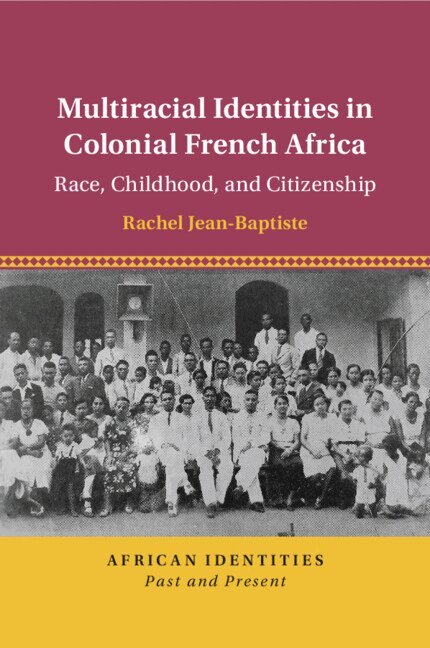
Häftad, Engelska, 2025
Multiracial Identities in Colonial French Africa
Race, Childhood, and Citizenship
Del i serien African Identities: Past and Present
479 kr
Skickas tisdag 10/11. Fri frakt över 249 kr.
Beskrivning
Produktinformation
- Utgivningsdatum: 2025-06-05
- Mått: 229 x 151 x 21 mm
- Vikt: 465 g
- Format: Häftad
- Språk: Engelska
- Serie: African Identities: Past and Present
- Antal sidor: 319
- Förlag: Cambridge University Press
- ISBN: 9781108733311
Utforska kategorier
Mer om författaren
Rachel Jean-Baptiste is Associate Professor of history at the University of California, Davis. She has previously published Conjugal Rights: Marriage, Sexuality, and Urban Life in Colonial Libreville, Gabon (2014), as well as articles in edited books and academic journals. She is co-president of the Coordinating Council for Women in History and serves on the boards of the African Studies Association and the UK editorial collective of Gender and History.
Recensioner i media
'This wonderful book opens up the question of race in Africa in two ways: departing from colonial visions of métissage, it follows instead how multiracial Africans themselves lived, conceived, and debated their identities in the French empire. Secondly, Jean-Baptiste demonstrates that local actors acted first and foremost as global thinkers, inventing forms of multiracial internationalism that still matter enormously today.' Florence Bernault, Center for History, Science Po
Betyg & recensioner
0 recensioner
Inga recensioner tillgängliga.