• Fri frakt över 249 kr
  • •
  • Snabba leveranser
  • •
  • Billiga böcker
Kundservice

Du är på sajten för privatpersoner.

Företag, bibliotek eller offentlig verksamhet?

Du handlar på classic.bokus.com, där alla dina funktioner finns intakta.
Till classic.bokus.com
Bokus logotyp. Gå till startsidan.
  • Erbjudanden
  • Nyheter
  • Student
  • Topplistor
  • Barn & ungdom
  • Bokus Play
  • E-böcker
  • Pocketböcker
  • Spel & pussel

10% rabatt på allt med kod: NYSTART10 →

Sidfot

Mina sidor

    Hjälp

    • Kundservice
    • Vanliga frågor och svar
    • Frakt och leverans
    • Retur vid ångerrätt
    • Reklamera vara
    • Betalning
    • Köpvillkor
    • Allmänna villkor
    • Information om webbplatsens tillgänglighet

    Om Bokus

    • Om oss
    • Pressrum
    • För studenter
    • För företag
    • För bibliotek och offentlig verksamhet
    • För leverantörer
    • Hållbarhet

    Populärt

    • Aktuella erbjudanden
    • Presentkort
    • Studentlitteratur
    • Nya böcker
    • Topplistor
    • Signerade böcker
    • Engelska böcker

    Inspiration

    • Boktips
    • BookTok
    • Populära bokserier
    • Barnbokskaraktärer
    • Populära författare
    Logotyp för Bokus
    Följ oss på Facebook (extern länk)Följ oss på Instagram (extern länk)Följ oss på YouTube (extern länk)Följ oss på TikTok (extern länk)
    bokus @ CookiesAnpassa cookiesIntegritetspolicyKöpvillkor
    Till Citymail hemsida (extern länk)Till Budbee hemsida (extern länk)Till Postnord hemsida (extern länk)Till Schenker hemsida (extern länk)Till Early Bird hemsida (extern länk)Till Walleys hemsida (extern länk)
    1. Samhälle och politik
    2. Samhälle och kultur
    3. Sociala grupper och identitet

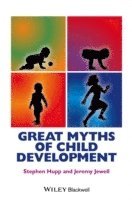
    Great Myths of Child Development

    AvStephen Hupp,Jeremy D. Jewell

    Häftad, Engelska, 2015

    Del i serien Great Myths of Psychology

    197 kr

    Beställningsvara. Skickas inom 5-8 vardagar. Fri frakt över 249 kr.

    Fler format och utgåvor

    Inbunden

    652 kr

    Beskrivning

    Great Myths of Child Development reveals the latest evidence-based science behind the myths and misconceptions about the developing child.   Shatters the most commonly-held child development mythsReveals the science behind such topical issues as twin-telepathy, sex-prediction, and imaginary friendsCovers hot-button issues like childhood vaccines, spankings, “time-outs,” and breastfeeding of older childrenFeatures numerous pop culture references and examples drawn from popular TV shows and movies, such as Duck Dynasty, Modern Family and Mad MenPoints to a wealth of supplementary resources for interested parents—from evidence-based treatments and self-help books to relevant websites

    Produktinformation

    • Utgivningsdatum:2015-02-06
    • Mått:152 x 229 x 11 mm
    • Vikt:272 g
    • Format:Häftad
    • Språk:Engelska
    • Serie:Great Myths of Psychology
    • Antal sidor:208
    • Förlag:John Wiley and Sons Ltd
    • ISBN:9781118521236

    Utforska kategorier

    • Sociala grupper och identitet inom Samhälle och politik
    • Barnpsykologi och utvecklingspsykologi inom Psykologi och pedagogik

    Mer om författaren

    Stephen Hupp is a Professor of Clinical Child and School Psychology at Southern Illinois University Edwardsville. Dr. Hupp is also a Licensed Clinical Psychologist and consultant for the East St. Louis Head Start program.  Jeremy Jewell is a Professor at Southern Illinois University Edwardsville and Director of the Clinical Child and School Psychology graduate program. Dr. Jewell was awarded the SIUE Undergraduate Research and Creative Activity (URCA) Mentor Award in 2012.

    Recensioner i media

    "the book is intriguing since it undertakes to question some widely held and strong beliefs, not only for parents who might read it but to the field of academic child development. Having studied children’s development as a researcher, clinician, and parent, I found the questioning of “facts” refreshing and important and would recommend it as an additional reading for students interested in child development."  (PsycCRITIQUES 2016)

    Innehållsförteckning

    • Preface xIntroduction 11 Beginnings 9#1 Identical twins have a telepathic connection that originates in the womb 10#2 Couples dealing with infertility are more likely to get pregnant if they adopt 16#3 Parents can predict the sex of a fetus by examining the shape of the mother’s body 22#4 All boys have one Y chromosome (and all girls don’t) 27#5 The attachment parenting approach strengthens the mother–infant bond 34Speed busting for beginnings 41#6 Identical twins have identical genes 41#7 A woman who is already pregnant can’t get pregnant again 42#8 The Chinese lunar calendar accurately predicts the sex of a baby 42#9 Female fetuses have faster heart rates than male fetuses 43#10 Epidurals create a high risk of harm during delivery 43#11 More babies are born during a full moon 44#12 Pre-chewing a baby’s food has no known risks 442 Growth, Body, & Mind 47#13 Letting babies “cry it out” during bedtime is harmful to their development 48#14 Sugar intake causes children to be hyperactive 55#15 Using a baby walker will help a toddler walk sooner 60#16 Showing cognitively stimulating videos to babies boosts their intelligence 65#17 Using “baby talk” with an infant delays their ability to speak normally 71#18 Vaccines caused the rise in autism diagnoses 77Speed busting for growth, body, & mind 85#19 A good response to stimulant medication is proof that a child has ADHD 85#20 Requiring children to “clean their plates” promotes healthy eating habits 86#21 Dyslexia’s defining feature is letter reversal 86#22 Most babies can learn to read with the right learning program 87#23 Educational kinesiology promotes learning in children 87#24 Facilitated communication is effective for children with autism 87#25 Dolphin-assisted therapy effectively treats children with special needs 883 Emotions & Behavior 92#26 Bed-wetting is a sign of serious emotional problems 93#27 Most antidepressants for children with depression are approved by the FDA 99#28 Drawings contain specific signs useful in identifying subconscious problems 106#29 Most toddlers go through a “terrible twos” stage 115#30 Kids can be “scared straight” from delinquency 122Speed busting for emotions & behavior 129#31 Parents can usually tell when their child is depressed 129#32 Young girls are more likely to have clinical depression than young boys 130#33 Helping children avoid their fears is the best way to decrease their anxiety 130#34 Adults can usually tell if a child is lying 131#35 Seeing other people be aggressive will decrease children’s aggressive drive 131#36 School homicides are on the rise 132#37 Drug Abuse Resistance Education (DARE) prevents drug use 1324 Social Environment 135#38 An “only child” is likely to be selfish, spoiled, and socially incompetent 136#39 Divorce ruins most kids’ lives 142#40 If you “spare the rod” you will “spoil the child” 148#41 Brief time-outs are too weak to help decrease real behavior problems 156#42 Daycare damages the attachment between children and parents 162#43 Imaginary friends are a sign of social-emotional problems in children 168Speed busting for social environment 174#44 Birth order is a powerful predictor of a child’s personality 174#45 The most common reason for sibling fights is the rivalry for parental love 174#46 Parent–child relationship disruptions can be repaired with holding therapy 174#47 Fathers use more corporal punishment than mothers 175#48 Rewards usually decrease the desirable behavior they’re intended to increase 175#49 Praise undermines children’s ability to be successful 176#50 Parents were not permissive when I was a kid 177Postscript: Closing Thoughts 180Index 189