• Fri frakt över 249 kr
  • •
  • Snabba leveranser
  • •
  • Billiga böcker
Kundservice

Du är på sajten för privatpersoner.

Företag, bibliotek eller offentlig verksamhet?

Du handlar på classic.bokus.com, där alla dina funktioner finns intakta.
Till classic.bokus.com
Bokus logotyp. Gå till startsidan.
  • Erbjudanden
  • Nyheter
  • Student
  • Topplistor
  • Barn & ungdom
  • Bokus Play
  • E-böcker
  • Pocketböcker
  • Spel & pussel

10% rabatt på allt med kod: NYSTART10 →

Sidfot

Mina sidor

    Hjälp

    • Kundservice
    • Vanliga frågor och svar
    • Frakt och leverans
    • Retur vid ångerrätt
    • Reklamera vara
    • Betalning
    • Köpvillkor
    • Allmänna villkor
    • Information om webbplatsens tillgänglighet

    Om Bokus

    • Om oss
    • Pressrum
    • För studenter
    • För företag
    • För bibliotek och offentlig verksamhet
    • För leverantörer
    • Hållbarhet

    Populärt

    • Aktuella erbjudanden
    • Presentkort
    • Studentlitteratur
    • Nya böcker
    • Topplistor
    • Signerade böcker
    • Engelska böcker

    Inspiration

    • Boktips
    • BookTok
    • Populära bokserier
    • Barnbokskaraktärer
    • Populära författare
    Logotyp för Bokus
    Följ oss på Facebook (extern länk)Följ oss på Instagram (extern länk)Följ oss på YouTube (extern länk)Följ oss på TikTok (extern länk)
    bokus @ CookiesAnpassa cookiesIntegritetspolicyKöpvillkor
    Till Citymail hemsida (extern länk)Till Budbee hemsida (extern länk)Till Postnord hemsida (extern länk)Till Schenker hemsida (extern länk)Till Early Bird hemsida (extern länk)Till Walleys hemsida (extern länk)
    1. Naturvetenskap och teknik
    2. Geovetenskap
    3. Miljövetenskap och miljöpolitik

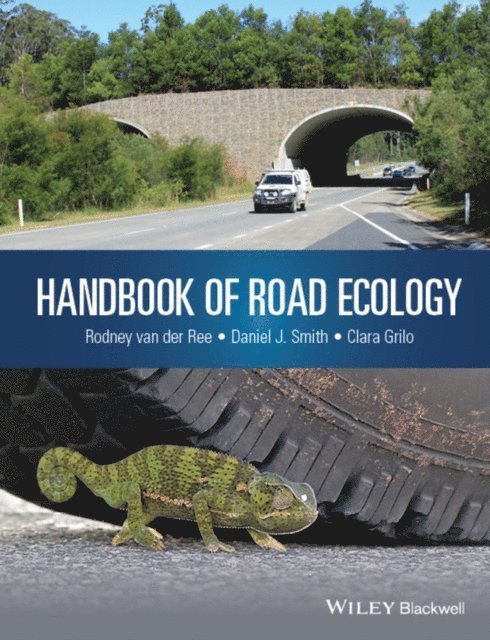
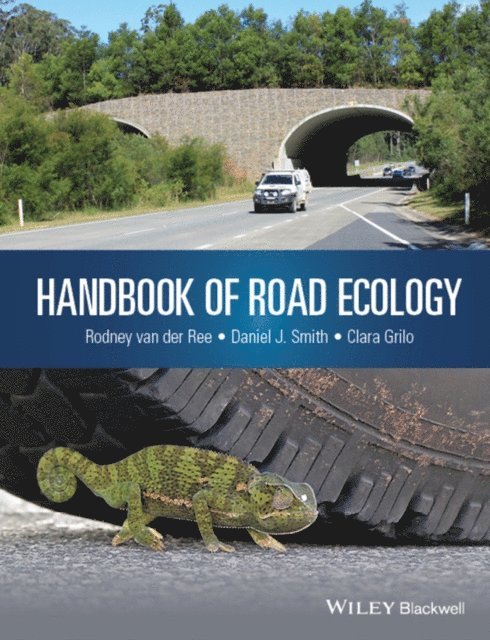
    Handbook of Road Ecology

    AvRodney van der Ree,Daniel J. Smith

    Inbunden, Engelska, 2015

    1 454 kr

    Beställningsvara. Skickas inom 5-8 vardagar. Fri frakt över 249 kr.

    Beskrivning

    Winner of the IENE Project Award 2016.This authoritative volume brings together some of the world’s leading researchers, academics, practitioners and transportation agency personnel to present the current status of the ecological sustainability of the linear infrastructure – primarily road, rail and utility easements – that dissect and fragment landscapes globally. It outlines the potential impacts, demonstrates how this infrastructure is being improved, and how broad ecological principles are applied to mitigate the impact of road networks on wildlife. Research and monitoring is an important aspect of road ecology, encompassing all phases of a transportation project. This book covers research and monitoring to span the entire project continuum – starting with planning and design, through construction and into maintenance and management. It focuses on impacts and solutions for species groups and specific regions, with particular emphasis on the unique challenges facing Asia, South America and Africa.Other key features: Contributions from authors originating from over 25 countries, including from all continentsEach chapter summarizes important lessons, and includes lists of further reading and thoroughly up to date referencesHighlights principles that address key points relevant to all phases in all road projectsExplains best-practices based on a number of successful international case studiesChapters are "stand-alone", but they also build upon and complement each other; extensive cross-referencing directs the reader to relevant material elsewhere in the bookHandbook of Road Ecology offers a comprehensive summary of approximately 30 years of global efforts to quantify the impacts of roads and traffic and implement effective mitigation. As such, it is essential reading for those involved in the planning, design, assessment and construction of new roads; the management and maintenance of existing roads; and the modifying or retrofitting of existing roads and problem locations. This handbook is an accessible resource for both developed and developing countries, including government transportation agencies, Government environmental/conservation agencies, NGOs, and road funding and donor organisations.

    Produktinformation

    • Utgivningsdatum:2015-06-05
    • Mått:196 x 254 x 31 mm
    • Vikt:1 352 g
    • Format:Inbunden
    • Språk:Engelska
    • Antal sidor:560
    • Förlag:John Wiley and Sons Ltd
    • ISBN:9781118568187

    Utforska kategorier

    • Miljövetenskap och miljöpolitik inom Naturvetenskap och teknik
    • Byggnadsteknik inom Naturvetenskap och teknik
    • Biovetenskap inom Naturvetenskap och teknik

    Mer om författaren

    About the Editors:Associate Professor Rodney van der Ree has studied the impacts of human activities on biodiversity since the mid 1990s. His current focus includes urban ecology and road ecology, with a strong emphasis on improving researchand monitoring and ensuring evidence-based information contributes to the design and management of infrastructure. Rodney is currently the Deputy Director of the Australian Research Centre for Urban Ecology at the Royal Botanic Gardens Melbourne and The University of Melbourne. He was awarded the Graeme Caughley Travelling fellowship in 2014 to promote and enhance road ecology in developing countries.Daniel Smith is a research associate and member of the graduate faculty in the Department of Biology at the University of Central Florida and a member of the National Academies Transportation Research Board Subcommittee on Ecology and Transportation. Dr. Smith has 20+ years of experience in the fields of ecology and environmental planning. His primary focus is studying movement patterns and habitat use of terrestrial vertebrates and integrating conservation, transportation and land-use planning. He received the 2014 landconservation and planning award from the Florida Wildlife Federation for his outstanding contributions to sound use and management of Florida’s natural resources.Clara Grilo obtained her doctorate in Conservation Biology from the University of Lisbon (Portugal). Her primaryinterest is applied ecological research in support of active conservation projects. Over the last years, much of her research has focused on the impact of anthropogenic changes to the landscape and effects on wildlife. Currently,she is coordinating research projects on road ecology, namely the effects of roads on the abundance, spatial behavior, population genetic structure and risk of mortality on owls and mammals and the effectiveness of measures to reduce the negative effects of roads on wildlife.

    Recensioner i media

    “In conclusion, the book provides a very important contribution to the understanding of the effects of linear infrastructures on wildlife. It is 'reader friendly' and practice driven, and I'm sure it will generate both further research and collaboration in the field, so that the highest beneficiary will be the natural vegetation and fauna.”  (Bulletin of the Eurasian Dry Grassland Group, 1 November 2015)“Authors focused and wrote concisely, which means the contents are readily digestible and consequently easy to use for students in both academic and more technical and practical disciplines… Another major strength of the Handbook of Road Ecology is its comprehensive international coverage. Each of the three editors is from a different continent, and the other contributors cover an impressively diverse range of countries, developed and developing, and cultures. This means that in addition to providing a comprehensive compendium for people seeking information on ecologically sustainable road construction and planning, the volume is also valuable for learning from approaches and solutions applied in different regions…The cross-referencing of chapters is helpful and enables readers to find other chapters relevant to a particular topic with ease. The editors have clearly put considerable effort into ensuring the book is concise and easy to use for all those who are interested in the challenges of ecologically sustainable construction and planning of roads. Each chapter begins with a succinct summary and bullet points and ends with suggestions for further reading, which makes it easy to use as a reference work from which relevant information can be located easily and quickly. The book is richly illustrated with colored photographs and figures." Conservation Biology, 00: 0 (2017)

    Innehållsförteckning

    • Notes on Contributors ixForeword xxRichard T. T. FormanPreface xxiiAcknowledgements xxivAbout the companion website xxvi1 The ecological effects of linear infrastructure and traffic: Challenges and opportunities of rapid global growth 1Rodney van der Ree, Daniel J. Smith and Clara Grilo2 Bad roads, good roads 10William F. Laurance3 Why keep areas road‐free? The importance of roadless areas 16Nuria Selva, Adam Switalski, Stefan Kreft and Pierre L. Ibisch4 Incorporating biodiversity issues into road design: The road agency perspective 27Kevin Roberts and Anders Sjölund5 Improving environmental impact assessment and road planning at the landscape scale 32Jochen A. G. Jaeger6 What transportation agencies need in environmental impact assessments and other reports to minimise ecological impacts 43Josie Stokes7 Principles underpinning biodiversity offsets and guidance on their use 51Yung En Chee8 Construction of roads and wildlife mitigation measures: Pitfalls and opportunities 60Cameron Weller9 Ensuring the completed road project is designed, built and operated as intended 65Rodney van der Ree, Stephen Tonjes and Cameron Weller10 Good science and experimentation are needed in road ecology 71Rodney van der Ree, Jochen A. G. Jaeger, Trina Rytwinski and Edgar A. van der Grift11 Field methods to evaluate the impacts of roads on wildlife 82Daniel J. Smith and Rodney van der Ree12 Case study: A robust method to obtain defendable data on wildlife mortality 96Éric Guinard, Roger Prodon and Christophe Barbraud13 Road–wildlife mitigation planning can be improved by identifying the patterns and processes associated with wildlife-vehicle collisions 101Kari Gunson and Fernanda Zimmermann Teixeira14 Incorporating landscape genetics into road ecology 110Paul Sunnucks and Niko Balkenhol15 Guidelines for evaluating use of wildlife crossing structures 119Edgar A. van der Grift and Rodney van der Ree16 Guidelines for evaluating the effectiveness of road mitigation measures 129Edgar A. van der Grift, Rodney van der Ree and Jochen A. G. Jaeger17 How to maintain safe and effective mitigation measures 138Rodney van der Ree and Stephen Tonjes18 Understanding and mitigating the negative effects of road lighting on ecosystems 143Bradley F. Blackwell, Travis L. DeVault and Thomas W. Seamans19 Ecological impacts of road noise and options for mitigation 151Kirsten M. Parris20 Fencing: A valuable tool for reducing wildlife-vehicle collisions and funnelling fauna to crossing structures 159Rodney van der Ree, Jeffrey W. Gagnon and Daniel J. Smith21 Wildlife crossing structures: An effective strategy to restore or maintain wildlife connectivity across roads 172Daniel J. Smith, Rodney van der Ree and Carme Rosell22 Recreational co‐use of wildlife crossing structures 184Rodney van der Ree and Edgar A. van der Grift23 Predator-prey interactions at wildlife crossing structures: Between myth and reality 190Cristina Mata, Roberta Bencini, Brian K. Chambers and Juan E. Malo24 Wildlife warning signs and animal detection systems aimed at reducing wildlife-vehicle collisions 198Marcel P. Huijser, Christa Mosler‐Berger, Mattias Olsson and Martin Strein25 Use of reflectors and auditory deterrents to prevent wildlife-vehicle collisions 213Gino D’Angelo and Rodney van der Ree26 Ecological effects of railways on wildlife 219Benjamin Dorsey, Mattias Olsson and Lisa J. Rew27 Impacts of utility and other industrial linear corridors on wildlife 228A. David M. Latham and Stan Boutin28 The impacts of roads and traffic on terrestrial animal populations 237Trina Rytwinski and Lenore Fahrig29 Insects, snails and spiders: The role of invertebrates in road ecology 247Heinrich Reck and Rodney van der Ree30 Case study: Protecting Christmas Island’s iconic red crabs from vehicles 258Rob Muller and Mike Misso31 Making a safe leap forward: Mitigating road impacts on amphibians 261Andrew J. Hamer, Thomas E. S. Langton and David Lesbarrères32 Reptiles: Overlooked but often at risk from roads 271Kimberly M. Andrews, Tom A. Langen and Richard P. J. H. Struijk33 Flight doesn’t solve everything: Mitigation of road impacts on birds 281Angela Kociolek, Clara Grilo and Sandra Jacobson34 Bats and roads 290Isobel M. Abbott, Anna Berthinussen, Emma Stone, Martijn Boonman, Markus Melber and John Altringham35 Carnivores: Struggling for survival in roaded landscapes 300Clara Grilo, Daniel J. Smith and Nina Klar36 Case study: Roads and jaguars in the Mayan forests 313Eugenia Pallares, Carlos Manterola, Dalia A. Conde and Fernando Colchero37 Case study: Finding the middle road – grounded approaches to mitigate highway impacts in tiger reserves 317Sanjay Gubbi AND H.C. Poornesha38 Case study: African wild dogs and the fragmentation menace 322Brendan Whittington‐Jones and Harriet Davies‐Mostert39 Roads, traffic and verges: Big problems and big opportunities for small mammals 325Fernando Ascensão, Scott LaPoint and Rodney van der Ree40 Reducing road impacts on tree‐dwelling animals 334Kylie Soanes and Rodney van der Ree41 Case study: Canopy bridges for primate conservation 341Andrea Donaldson and Pamela Cunneyworth42 Transportation and large herbivores 344Patricia Cramer, Mattias Olsson, Michelle E. Gadd, Rodney van der Ree and Leonard E. Sielecki43 Case study: The Mount Kenya elephant corridor and underpass 353Susie Weeks44 Form and function: A more natural approach to infrastructure, fish and stream habitats 357Paul J. Wagner45 Solutions to the impacts of roads and other barriers on fish and fish habitat 364Fabrice Ottburg and Matt Blank46 The function and management of roadside vegetation 373Suzanne J. Milton, W. Richard J. Dean, Leonard E. Sielecki and Rodney van der Ree47 Roads in the arid lands: Issues, challenges and potential solutions 382Enhua Lee, David B. Croft and Tamar Achiron‐Frumkin48 Road ecology in an urbanising world 391Darryl Jones, Hans Bekker and Rodney van der Ree49 Tropical ecosystem vulnerability and climatic conditions: Particular challenges for road planning, construction and maintenance 397Miriam Goosem50 The influence of economics, politics and environment on road ecology in South America 407Alex Bager, Carlos E. Borghi and Helio Secco51 Highway construction as a force in the destruction of the Amazon forest 414Philip M. Fearnside52 Road ecology in South India: Issues and mitigation opportunities 425K. S. Seshadri and T. Ganesh53 Planning roads through sensitive Asian landscapes: Regulatory issues, ecological implications and challenges for decision‐making 430Asha Rajvanshi and Vinod B. Mathur54 Setjhaba SA, South Afrika: A South African perspective of an emerging transport infrastructure 439Wendy Collinson, Dan Parker, Claire Patterson‐Abrolat, Graham Alexander and Harriet Davies‐Mostert55 Unfenced reserves, unparalleled biodiversity and a rapidly changing landscape: Roadways and wildlife in East Africa 448Clinton W. Epps, Katarzyna Nowak , and Benezeth Mutayoba56 Expected effects of a road across the Serengeti 455Michelle E. Gadd57 China: Building and managing a massive road and rail network and protecting our rich biodiversity 465Yun Wang, Yaping Kong and Jiding Chen58 Railways, roads and fences across Kazakhstan and Mongolia threaten the survival of wide‐ranging wildlife 472Kirk A. Olson and Rodney van der Ree59 Best‐practice guidelines and manuals 479Marguerite Trocmé60 Case study: The role of non‐governmental organisations (NGOs) and advocates in reducing the impacts of roads on wildlife 485Patricia White  61 Case study: Building a community of practice for road ecology 488Paul J. Wagner and Andreas Seiler62 Wildlife/roadkill observation and reporting systems 492Fraser Shilling, Sarah E. Perkins and Wendy CollinsonGlossary 502Species 509Index 513