• Fri frakt över 249 kr
  • •
  • Snabba leveranser
  • •
  • Billiga böcker
Kundservice

Du är på sajten för privatpersoner.

Företag, bibliotek eller offentlig verksamhet?

Du handlar på classic.bokus.com, där alla dina funktioner finns intakta.
Till classic.bokus.com
Bokus logotyp. Gå till startsidan.
  • Erbjudanden
  • Student
  • Topplistor
  • Barn & ungdom
  • Bokus Play
  • E-böcker
  • Ljudböcker
  • Pocketböcker
  • Spel och pussel

Pocketfynda! Hundratals böcker för 49 kr/st →

Sidfot

Mina sidor

    Hjälp

    • Kundservice
    • Vanliga frågor och svar
    • Frakt och leverans
    • Retur vid ångerrätt
    • Reklamera vara
    • Betalning
    • Köpvillkor
    • Allmänna villkor
    • Information om webbplatsens tillgänglighet

    Om Bokus

    • Om oss
    • Pressrum
    • För studenter
    • För företag
    • För bibliotek och offentlig verksamhet
    • För leverantörer
    • Hållbarhet

    Populärt

    • Aktuella erbjudanden
    • Presentkort
    • Studentlitteratur
    • Nya böcker
    • Topplistor
    • Signerade böcker
    • Engelska böcker

    Inspiration

    • Boktips
    • BookTok
    • Barnbokskaraktärer
    • Populära författare
    Logotyp för Bokus
    Följ oss på Facebook (extern länk)Följ oss på Instagram (extern länk)Följ oss på YouTube (extern länk)Följ oss på TikTok (extern länk)
    bokus @ CookiesAnpassa cookiesIntegritetspolicyKöpvillkor
    Till Citymail hemsida (extern länk)Till Budbee hemsida (extern länk)Till Postnord hemsida (extern länk)Till Schenker hemsida (extern länk)Till Early Bird hemsida (extern länk)Till Walleys hemsida (extern länk)
    1. Historia och arkeologi
    2. Historia
    3. Forntidens historia

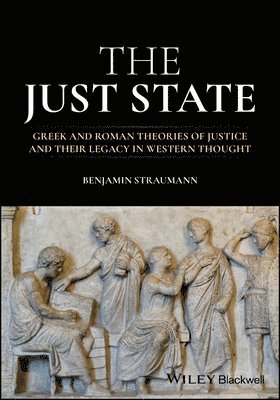
    Just State

    Greek and Roman Theories of Justice and Their Legacy in Western Thought

    AvBenjamin Straumann

    Häftad, Engelska, 2025

    537 kr

    Beställningsvara. Skickas inom 5-8 vardagar. Fri frakt över 249 kr.

    Fler format och utgåvor

    E-bok

    707 kr

    E-bok

    707 kr

    Beskrivning

    An intellectual history of one of the most important contributions to Western society The Just State explores influential Greek and Roman ideas about justice and their institutional context, and discusses their legacy in later political thought. Bringing Greco-Roman and modern ideas into conversation with each other, Benjamin Straumann traces the history of ancient political thought by focusing on classical ideas about justice. With a readable narrative style, Straumann places Greek and Roman theories of justice in their historical context, starting from Homer and the pre-Socratic period through to the later Roman Empire, and outlines the respective contribution of the Greek and Roman traditions of thinking about justice to early modern and Enlightenment political thought. Concise chapters address Athenian democracy, the Sophist movement, the political philosophies of Plato and Aristotle, the origins of constitutionalism in the Roman Republic, classical influences on the American and French revolutions, and more. Highlighting how modern debates on justice can be enriched by an engagement with their classical foundations, The Just State: Examines the impact of Greek and Roman political thought on modern ideas and institutionsDiscusses the emergence of the city-state and the origins of Greek political philosophyDescribes the political ideas of the Hellenistic philosophical schools, such as the Stoic idea of natural lawSurveys the political philosophy found in influential works by Plato, Aristotle, Cicero, St. Augustine, and other classical thinkersExplores the reception history of Roman ideas about justice from the re-discovery of the Roman law of the Digest c. 1100 CE to early modern thought about politicsThe Just State: Greek and Roman Theories of Justice and their Legacy in Western Thought is an excellent textbook for undergraduate classes on the history of political thought and graduate seminars on classical political theory and ancient philosophy.

    Produktinformation

    • Utgivningsdatum:2025-03-13
    • Mått:175 x 252 x 23 mm
    • Vikt:499 g
    • Format:Häftad
    • Språk:Engelska
    • Antal sidor:288
    • Förlag:John Wiley and Sons Ltd
    • ISBN:9781118634684

    Utforska kategorier

    • Forntidens historia inom Historia och arkeologi
    • Statsvetenskap och politisk teori inom Samhälle och politik
    • Filosofiska discipliner inom Filosofi och religion

    Mer om författaren

    BENJAMIN STRAUMANN is ERC Professor of History at the University of Zurich and Research Professor of Classics at New York University. He is also Alberico Gentili Senior Fellow at New York University School of Law. His publications include Roman Law in the State of Nature: The Classical Foundations of Hugo Grotius’ Natural Law (Cambridge, 2015) and Crisis and Constitutionalism: Roman Political Thought from the Fall of the Republic to the Age of Revolution (Oxford, 2016).

    Recensioner i media

    "The book is very accessibly written and offers readers both a powerful overview of the grand sweep of western political thought while also suggesting provocative connections between thinkers often considered antithetical… By pressing on some of the less palatable implications of Greek virtue-theory, Straumann pushes us to imagine whether we might prefer the slightly more skeptical and self-restrained Roman vision of politics, which abandons aspirations of perfection in favor of a more attainable notion of political justice."Michael Hawley, Grotiana

    Innehållsförteckning

    • Preface and Acknowledgments xMaps and Figures xiAbbreviations and Text Editions xiiIntroduction: Why Greeks and Romans? Why Ideas? 1The Gradual Encroachment of Ideas 2Why Greeks and Romans? 5The Use and Energy of Ideas and Concepts 10The Cult of Contingency, or: Is Everything Constructed? 12Overview of Contents 13Part I The Greek Debate 151 The Polis, Equality, and the Growth of Political Thought 17The World of Homer’s Poems and the Emergence of Greek Political Life 17Hesiod’s Justice 23The Ancient Near Eastern Context 25The Polis and Greek Colonization 27A Mere Spider’s Web? Solon and the Rise of Written Law 312 Athenian Democracy, Early Antidemocratic and Democratic Thought, and the Sophist Movement 38The Historical Background: Athenian Democracy in Practice in the Fifth Century 42Antidemocratic Sentiment and Early Elements of Democratic Theory 45Accountability 47The Sophists 503 Knowledge, Paternalistic Justice, and Law: Plato 56The Republic, a Theory of Justice? 56The Ideal State: Women, Communism, Rule of Reason 59Plato and Democracy 64Plato, the Law and the Laws 704 The State as Teacher: Aristotle 78The Unity of Politics and Ethics 78Aristotle’s Criticism of Plato and His Views on Women and Slavery 80Justice and the Classification of Constitutions 85Is Aristotle’s Best State Just? 91The Second-Best: Democracy, Law, and Rights in Aristotle’s Politics 93Aristotle and Liberalism 1015 The Epicurean Contract and Stoic Natural Law 103Epicurean Ideas about Justice as Contract 103The Stoics on Ethics and Politics 108What Goods Are Relevant? 109Stoic Antipolitics? 110Egalitarianism and Cosmopolitanism 111A New Idea: Natural Law 113Did the Stoics Have the Concept of Rights? 115Conclusion 116Part II The Roman Contribution 1196 The Roman Republic and the Origins of Constitutionalism 121Institutional Background: The Popular Assemblies 122Institutional Background: The Magistrates and the Right of Appeal 126Institutional Background: The Senate 130Criminal Courts 131Constitutional Conflict and the Emergence of Constitutionalism 132Polybius on Rome’s Well-Balanced Constitution 137An Ambassador Conception of Representation 141The Constitutional Machine Runs Itself (Until It Does Not) 142Appendix: The Achaean League, an Early Model of Federalism 1437 Justice, Not Happiness: Cicero’s Roman Political Thought 145Does this Egalitarian Anthropology Imply the Equality of Women? 147Cicero’s Theory of the State 148Cicero’s Constitutionalism 149A New Theory of Justice? Cicero on the Just State 150Controlling the State: The State as a Guarantor of Rights 152Controlling the State: Property Rights and Justice in the Strict Sense 155Magistrates as Representatives and Fiduciaries 158Cicero’s Use of the Idea of Natural Law 160Natural Law and Natural (Even Human?) Rights Outside the State 1638 The Principate, the Rise of Christianity, and Augustine’s Peace 166Augustus and the Principate: Autocracy or Legal Order? 166The Rise of Christianity 174Lactantius 177Ambrose 180The Tranquility of Order: Augustine 182Just War and Religious Toleration 184Part III Ancient and Modern Justice: Virtue, Peace, or Rights? 1879 Greek Justice: Virtue and the Common Good 189Thomas Aquinas and Aristotelian Theory 191Property and the Common Good 195Does the Common Good Imply Justice or Justice the Common Good? 198The Legacy of Perfectionism 19910 Roman Justice: Law and Rights 203The Rediscovery of Roman Law 204The State of Nature 207A New Natural Law for the State of Nature 210Sovereignty and Government 214The Roman Tradition in the Eighteenth Century 217Conclusion: Natural Law and Roman Law 21911 Ideas in Action: The Atlantic Revolutions 220The “Real American Revolution” 220Ancient Founders and American Constitution-Making 228The French Experience 236Rousseau, Sparta, and Rome 236Rights Declarations and Constitutions 240Implications and Consequences: Slavery, Women, Property 241Conclusion: The Three Traditions of Virtue, Peace, and Justice 244Bibliography 250Index 260