• Fri frakt över 249 kr
  • •
  • Snabba leveranser
  • •
  • Billiga böcker
Kundservice

Du är på sajten för privatpersoner.

Företag, bibliotek eller offentlig verksamhet?

Du handlar på classic.bokus.com, där alla dina funktioner finns intakta.
Till classic.bokus.com
Bokus logotyp. Gå till startsidan.
  • Erbjudanden
  • Nyheter
  • Student
  • Topplistor
  • Barn & ungdom
  • Bokus Play
  • E-böcker
  • Pocketböcker
  • Spel & pussel

10% rabatt på allt med kod: NYSTART10 →

Sidfot

Mina sidor

    Hjälp

    • Kundservice
    • Vanliga frågor och svar
    • Frakt och leverans
    • Retur vid ångerrätt
    • Reklamera vara
    • Betalning
    • Köpvillkor
    • Allmänna villkor
    • Information om webbplatsens tillgänglighet

    Om Bokus

    • Om oss
    • Pressrum
    • För studenter
    • För företag
    • För bibliotek och offentlig verksamhet
    • För leverantörer
    • Hållbarhet

    Populärt

    • Aktuella erbjudanden
    • Presentkort
    • Studentlitteratur
    • Nya böcker
    • Topplistor
    • Signerade böcker
    • Engelska böcker

    Inspiration

    • Boktips
    • BookTok
    • Populära bokserier
    • Barnbokskaraktärer
    • Populära författare
    Logotyp för Bokus
    Följ oss på Facebook (extern länk)Följ oss på Instagram (extern länk)Följ oss på YouTube (extern länk)Följ oss på TikTok (extern länk)
    bokus @ CookiesAnpassa cookiesIntegritetspolicyKöpvillkor
    Till Citymail hemsida (extern länk)Till Budbee hemsida (extern länk)Till Postnord hemsida (extern länk)Till Schenker hemsida (extern länk)Till Early Bird hemsida (extern länk)Till Walleys hemsida (extern länk)
    1. Naturvetenskap och teknik
    2. Teknik och industri
    3. Tillverkningsteknik

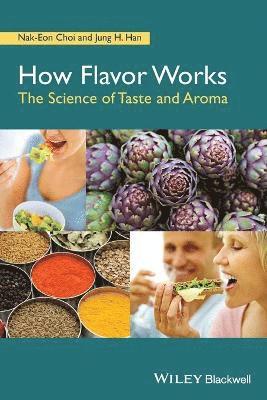
    How Flavor Works

    The Science of Taste and Aroma

    AvNak-Eon Choi,Jung H. Han

    Häftad, Engelska, 2015

    1 208 kr

    Beställningsvara. Skickas inom 3-6 vardagar. Fri frakt över 249 kr.

    Beskrivning

    Taste is the number one driving force in the decision to purchase a food product and food consumption is the most critical function for living organisms to obtain the energy and resources essential to their vitality. Flavor and aroma are therefore universally important concepts: intrinsic to human well-being and pleasure, and of huge significance for the multi-trillion dollar global food business.How Flavor Works: the Science of Taste and Aroma offers a fascinating and accessible primer on the concepts of flavor science for all who have an interest in food and related topics. Professionals and students of food science and technology who do not already specialize in flavor science will find it a valuable reference on a topic crucial to how consumers perceive and enjoy food products. In this regard, it will also be of interest to product developers, marketers and food processors. Other readers with a professional (eg culinary and food service) or personal interest in food will also find the book interesting as it provides a user-friendly account of the mechanisms of flavor and aroma which will provide new insights into their craft.

    Produktinformation

    • Utgivningsdatum:2015-02-06
    • Mått:154 x 229 x 13 mm
    • Vikt:395 g
    • Format:Häftad
    • Språk:Engelska
    • Antal sidor:240
    • Förlag:John Wiley and Sons Ltd
    • ISBN:9781118865477

    Utforska kategorier

    • Tillverkningsteknik inom Naturvetenskap och teknik

    Mer om författaren

    Nak-Eon Choi is Research Director at Sias Co, Ltd, Seoul, South Korea.Jung H. Han, PhD CFS is an Adjunct Associate Professor in the Department of Food Science and Human Nutrition atthe University of Illinois at Urbana/Champaign, USA.

    Recensioner i media

    "Anyone with an interest in foods, flavours or fragrances (dare I say most of us!) will definitely 'sniff out' something of value from this book."  (Chemistry in Australia, 1 October 2015)"Other readers with a professional (e.g. culinary and food service) or personal interest in food will also find the book interesting as it provides a user-friendly account of the mechanisms of flavor and aroma which will provide new insights into their craft."  (Biotech, Agro, Soc & Env, 1 September 2015)

    Innehållsförteckning

    • Preface xiAbout the Authors xiii1 What is Taste? 1Four basic tastes, as proposed by Aristotle 5Taste is complex 7Most food ingredients are tasteless, odorless, and colorless 7Variations in odor during fermentation and aging due to changes in molecular weight 102% is not a small amount 122 The Origins of Taste: Why do we Taste? 15Sweetness is for identifying energy sources (Carbohydrates) 15Umami is a tool used to search for proteins 22Carbohydrates are for sweetness, proteins are for umami, but what are lipids for? 28Saltiness: the ocean was the source of all life 30The role of salt in cooking is not merely to provide saltiness 33The contrast effect 33The suppression effect 34Acidity monitors the biological metabolism 34Bitterness: if it’s bitter, spit it out! 37Some people enjoy bitter tastes 39The reason we consume caffeine despite its bitterness 40The olfactory sense is the dominant sensory perception of animals 42The search for food 42Avoid danger! 43Know who it is! 44Find a mate! 45References 463 Taste is General Science 47Taste improves with harmonized combinations 48The taste of meals = saltiness + umami + savory flavor 48The taste of dessert (and fruit) = sweetness + sourness + sweet odor 49Tastes influence odors 50Food has to be dissolved for us to taste and chewed to enhance the taste 52The main ingredients influence taste and odor 53Sound has an influence on taste 55Visuals, colors, and food styles 55Why does color exist? 57The basic structure of pigment: why are there no naturally blue foods? 59Perception varies with individual differences and conditions 61Differences due to age and sex 61Individual variation is also significant 63Differences due to race and history 65The preference for smells is constantly changing 66References 674 How do we Smell Odors? 69Olfactory receptors are G-protein coupled receptors 69G-Receptors differentiate isomers, resulting in different odors 71G-Receptors perceive multiple chemical substances 73G-Receptors work simply as on/off switches 75Depending on the binding affinity to receptors, similar molecules can be recognized as completely different tastes and odors 76The broad spectrum of the olfactory sense 77The transduction of sensory signals 79Olfactory fatigue is also a functional activity for life 80The recognition and integration of perceptions 82Parts of the brain 82Continuous circulations in the loop 83G-Receptors can perceive light 85Understanding G-receptors can provide many answers 85Pheromones are not mysterious substances 89References 895 What Creates Smell? 91Odorous molecules are mainly created by plants 91Why do plants produce aroma compounds? 92Attracting bacteria, insects, and animals 92As a defensive mechanism 94Attacking tools 95Coincidental byproducts 96Animals generally smell odorants, not produce them 97Animal-origin raw materials 97Unconditional surrender to pheromones 98Is body odor a coincidental byproduct? 99Most flavors that we enjoy are created by cooking 100Flavor production by enzymatic or microbial fermentations 101Flavor production by heat processes 104Flavor production by pyrolysis: smoke flavor 106Compound flavor: creation of new flavors by mixing various odors 107References 1086 Technological Advancements Brought about by the Love of Flavors 109Why do people combine flavors? 112How many flavors are there in the world and how many ingredients are required to make all of these flavors? 114How many odorous chemicals are needed to create a tomato flavor? 116Perfumers and flavorists create flavors 119Olfactory training: flavorists must first distinguish odorous chemicals before creating compound flavors 120Compounding flavors: aromas are completed through imagination 124To become a perfumer, a heavy smoking habit and age do not matter 126The important factor is harmony 126Applications of compound flavors 128Types of odorants 128Synthetic flavors versus natural flavors: which is safer? 129Advantages and limitations of natural flavors 137Advantages and limitations of compound flavors 138References 1397 How Flavors Influence us 141Brain development began with the olfactory sense 141The human olfactory sense is less sensitive and inarticulate 144Humans’ sense of smell has degenerated greatly 145Proust phenomenon: odor-evoked autobiographical memory 146Sensorial preference changes destinies 147Do silkworms only eat mulberry leaves? 148Humans live with smells 149Stage of development 149What happens if you can no longer feel taste or smell? 150Are humans free from pheromones 152The healing power of aromas 156Aromatherapy 157Aromachology 158Phytoncide 159Is geosmin foul or pleasant? 161Multiple chemical sensitivity (mcs): there are people who are really intolerant to odorous chemicals 162References 1648 Taste is Regulated by Flavor, and Flavor is Regulated by the Brain 167The sense of smell is directly connected to the imbic system, in other words, to survival and emotion 167Neuroplasticity in the brain 169Is synesthesia a malfunction or a blessing? 170Taste is a typical phenomenon of synesthesia and neuroplasticity 172Orbitofrontal cortex: where sight, taste, smell, and touch meet 173Taste is a part of pleasure, and that pleasure becomes a part of taste 174Experience affects taste: familiar foods are preferred 176The feeling of disgust can be acquired through learning 177Taste is affected by temperature 178Price: expectation affects the taste 179Prejudices are effective at distorting perceived senses 180Even the data from an expert research firm cannot promise success in sales 181Sensorial perception is an illusion 183Taste and aroma do not exist 185A good product image makes it taste better 185References 1879 The Future of Taste and Aroma 189Raw ingredient resources gradually become simplified and their original aromas disappear 189More scientific technologies will be incorporated into the culinary arts 190What is the difference between cooking and the processing of foods? 192Aroma-releasing television or movies 194Is the taste of processed foods inferior to that of natural foods? 196Is it true that obsessions with flavors and seasonings have decreased? 199Do technological developments of taste modifications induce obesity or become a key solution to the problem? 201Technology of satiety: technology of cognitive science for taste and olfactory senses is the technology of the future 202Satiety control 203The era of supernormal stimuli 205References 20610 Concluding Remarks 207References 211Index 213