• Fri frakt över 249 kr
  • •
  • Snabba leveranser
  • •
  • Billiga böcker
Kundservice

Du är på sajten för privatpersoner.

Företag, bibliotek eller offentlig verksamhet?

Du handlar på classic.bokus.com, där alla dina funktioner finns intakta.
Till classic.bokus.com
Bokus logotyp. Gå till startsidan.
  • Erbjudanden
  • Nyheter
  • Student
  • Topplistor
  • Barn & ungdom
  • Bokus Play
  • E-böcker
  • Pocketböcker
  • Spel & pussel

10% rabatt på allt med kod: NYSTART10 →

Sidfot

Mina sidor

    Hjälp

    • Kundservice
    • Vanliga frågor och svar
    • Frakt och leverans
    • Retur vid ångerrätt
    • Reklamera vara
    • Betalning
    • Köpvillkor
    • Allmänna villkor
    • Information om webbplatsens tillgänglighet

    Om Bokus

    • Om oss
    • Pressrum
    • För studenter
    • För företag
    • För bibliotek och offentlig verksamhet
    • För leverantörer
    • Hållbarhet

    Populärt

    • Aktuella erbjudanden
    • Presentkort
    • Studentlitteratur
    • Nya böcker
    • Topplistor
    • Signerade böcker
    • Engelska böcker

    Inspiration

    • Boktips
    • BookTok
    • Populära bokserier
    • Barnbokskaraktärer
    • Populära författare
    Logotyp för Bokus
    Följ oss på Facebook (extern länk)Följ oss på Instagram (extern länk)Följ oss på YouTube (extern länk)Följ oss på TikTok (extern länk)
    bokus @ CookiesAnpassa cookiesIntegritetspolicyKöpvillkor
    Till Citymail hemsida (extern länk)Till Budbee hemsida (extern länk)Till Postnord hemsida (extern länk)Till Schenker hemsida (extern länk)Till Early Bird hemsida (extern länk)Till Walleys hemsida (extern länk)
    1. Psykologi och pedagogik
    2. Pedagogik
    3. Högskola och universitet

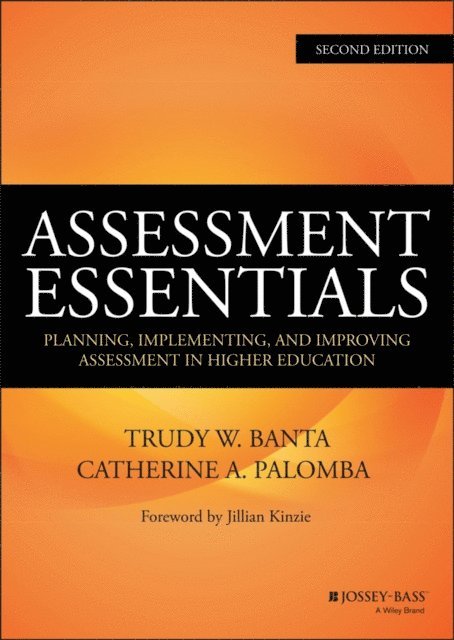
    Assessment Essentials

    Planning, Implementing, and Improving Assessment in Higher Education

    AvTrudy W. Banta,Catherine A. Palomba

    Inbunden, Engelska, 2014

    552 kr

    Beställningsvara. Skickas inom 5-8 vardagar. Fri frakt över 249 kr.

    Beskrivning

    A comprehensive expansion to the essential higher education assessment text This second edition of Assessment Essentials updates the bestselling first edition, the go-to resource on outcomes assessment in higher education. In this thoroughly revised edition, you will find, in a familiar framework, nearly all new material, examples from more than 100 campuses, and indispensable descriptions of direct and indirect assessment methods that have helped to educate faculty, staff, and students about assessment.Outcomes assessment is of increasing importance in higher education, especially as new technologies and policy proposals spotlight performance-based success measures. Leading authorities Trudy Banta and Catherine Palomba draw on research, standards, and best practices to address the timeless and timeliest issues in higher education accountability. New topics include: Using electronic portfolios in assessmentRubrics and course-embedded assessmentAssessment in student affairsAssessing institutional effectivenessAs always, the step-by-step approach of Assessment Essentials will guide you through the process of developing an assessment program, from the research and planning phase to implementation and beyond, with more than 100 examples along the way. Assessment data are increasingly being used to guide everything from funding to hiring to curriculum decisions, and all faculty and staff will need to know how to use them effectively. Perfect for anyone new to the assessment process, as well as for the growing number of assessment professionals, this expanded edition of Assessment Essentials will be an essential resource on every college campus.

    Produktinformation

    • Utgivningsdatum:2014-12-23
    • Mått:185 x 236 x 31 mm
    • Vikt:658 g
    • Format:Inbunden
    • Språk:Engelska
    • Antal sidor:368
    • Upplaga:2
    • Förlag:John Wiley & Sons Inc
    • Medarbetare:Jillian Kinzie
    • ISBN:9781118903322

    Utforska kategorier

    • Högskola och universitet inom Psykologi och pedagogik
    • Examination och betygsättning inom Psykologi och pedagogik

    Mer om författaren

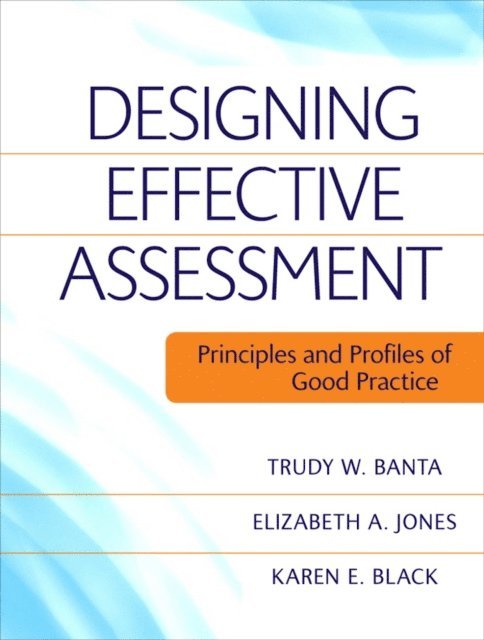
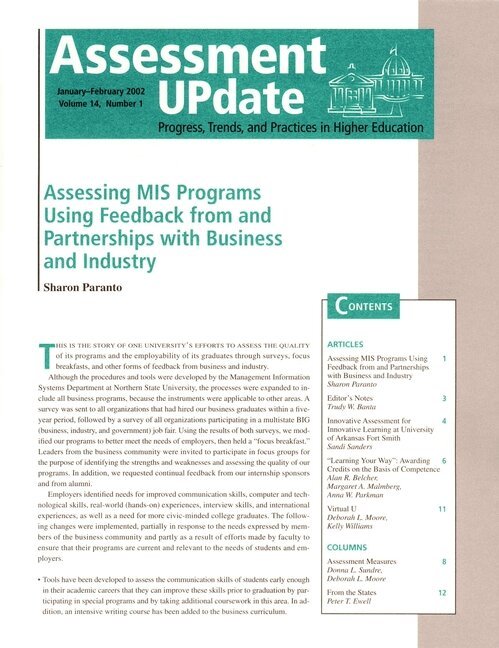
    TRUDY W. BANTA is a professor of higher education and senior advisor to the chancellor for academic planning and evaluation at Indiana University-Purdue University Indianapolis. She is the founding editor of Assessment Update, a bimonthly periodical published by Jossey-Bass.CATHERINE A. PALOMBA is director emeritus of assessment and institutional research at Ball State University.

    Innehållsförteckning

    • List of Exhibits and Figures xiiiForeword xvJillian KinziePreface xixAbout the Authors xxiii1. Defining Assessment 1Some Definitions 1Pioneering in Assessment 3Quality Assurance: An International Perspective 7Assessment Purposes 9Values and Guiding Principles 112. The Essentials of Assessment 15Planning Effective Assessment 16Engaging Stakeholders • Establishing Purpose • Designing a Thoughtful Approach to Assessment Planning • Creating a Written Plan • Timing AssessmentImplementing Effective Assessment 22Providing Leadership • Selecting or Designing Data Collection Approaches • Providing Resources • Educating Faculty and Staff • Assessing Resources and Processes as Well as Outcomes • Sharing FindingsImproving and Sustaining Assessment 31Obtaining Credible Evidence • Ensuring the Use of Assessment Findings • Reexamining the Assessment ProcessAdditional Thoughts 363. Engaging Faculty and Students in Assessment 39Involving Faculty in Assessment 41Faculty Responsibility • Assessment Resources for Faculty • Faculty Rewards • Maximizing the Role of Faculty and Faculty Acceptance • Some Stumbling Blocks in Understanding Assessment • The Nature of ResistanceInvolving Students in Assessment 54Student Responsibility • Resources for Students • Student Rewards • Maximizing Student Acceptance of AssessmentActing with Integrity 634. Setting Expectations and Preparing to Select Measures 65Intentions for Learning: Goals, Objectives, Outcomes 65Defining Terms • Learning TaxonomiesDeveloping Statements of Expectations 69Statement Content • Curriculum Maps • Using Matrices and Other ToolsSelecting Methods and Approaches 73Inventories of Existing Activities • Developing Criteria for Choosing Methods • An Overview of Methods • Use of Existing Information • Locally Developed versus Commercial Measures • Comparing Potential Methods to CriteriaDesigning Instruments 85Recognizing the Uniqueness of Designing Instruments for Assessment • Enlisting Help from Campus Experts • Enhancing Instrument Reliability and ValidityDetermining Approaches for Implementation 87Research Strategies • Identifying Eligible Participants • Sampling and Sample SizePutting Everything Together 915. Using Direct Measures 93Using Classroom Assignments for Outcomes Assessment 93 Performance Assessment 95Types of Performance Assessment • Using Performance Measures for Outcomes Assessment • Designing Effective AssignmentsRubrics 100VALUE Rubrics • Some Rubric IssuesAggregating Assessment Results in and across Courses 104Using Objective Tests for Outcomes Assessment 105Advantages and Disadvantages of Objective Tests • Developing Good Tests and Writing Good Items • Implications for Students Electronic Portfolios 110Using E-Portfolios for Outcomes Assessment • Choices for E-Portfolios • Student Reflection • Scoring • Resources and Training • Feedback • Impact on Students • Using Results • Developing E-Portfolios • Appeal of Portfolios and Some Cautions6. Using Indirect Assessment Methods 121Using Surveys in Assessment 121Topics for Assessment Surveys • Selecting and Using Various Target Groups • Response Types and Scales • Writing Survey Questions • Questionnaire Administration • National Surveys for AssessmentUsing Focus Groups in Assessment 132Topics, Target Groups, and Participants • The Moderator’s Role • Developing Questions and Summarizing Results • Other ConsiderationsAdditional Indirect Methods 136Interviews • Written Materials • Documents and RecordsQualitative versus Quantitative Approaches 141Classroom Assessment Techniques 1427. Assessing Learning in the Major 145Capstone Experiences and Courses 146Capstone Experiences • Capstone CoursesPortfolios 150Experiential Education 152Internships • Service-Learning • Applied ProjectsGroup Work and Team-Building Skills 160Employer Involvement 162Employers as Assessors • Employers as Advisors • Employer SurveysIntentional Learning 1658. Assessing Learning in General Education 167The Nature of General Education 167Assessment Choices and Issues 170Agreeing on Program Purposes and Learning Objectives • Selecting an Assessment Approach for General Education • Generating, Reporting, and Using ResultsUsing Commercial Instruments and the Voluntary System of Accountability 175Assessing Specific Aspects of General Education 178Critical Thinking and Problem Solving • Writing • Information Literacy • Oral Communication • Ethical Reasoning • Values and AttitudesThe Degree Qualifications Profile 189Assessing General Education Outcomes within the Major 1909. Assessing Student Learning and Program Effectiveness in Student Affairs 193Foundations for Assessment in Student Affairs 193Mission, Goals, and Objectives 197Goals and Objectives • Mapping OutcomesLeadership and Preparation for Assessment in Student Affairs 199Committees, Offices, and Assessment Teams • Resources and TrainingAssessment Frameworks, Models, and Diagrams 204Assessment Plans and Methods 205Planning Templates and Guides • MethodsReporting and Sharing Results 208Reporting Templates • Evaluating Reports • Communicating ResultsEthical Behavior 210Improving Assessment 212Rewards for Assessment 21210. Analyzing, Reporting, and Using Assessment Results 215Helping Faculty and Staff Use Their Assessment Results 215Encouraging Reflection and Collaboration • Providing Mentors • Sharing Materials • Communicating about How Assessment Results Have Been Used • Linking Assessment Results to Important ProcessesAssessment Reporting by Departments and Programs 221Outcomes • Methods • Findings • Action Plans • Follow-Up • Closing the Loop • Reflections on the ProcessSummarizing Reports 225Managing Data 226Assessing Unit Reports 226Making the Process Transparent 228Institutional Assessment Reporting 229Theme Reports • Extracts for Colleges and Departments • Oral Reports • Comprehensive Reports • Institutional Data and DashboardsAnalyzing Assessment Information 234Descriptive and Comparative Information • Impact of Various Response Scales on Analysis • Qualitative Analysis • Multivariate Analysis • Data Mining and Learning AnalyticsDisplaying Results 239Other Considerations 24011. Assessing Institutional Effectiveness 241Linking Assessment and Institutional Planning: An Example 242Organizing to Assess Institutional Effectiveness 245Assessment Leaders • Assessment Committees • Leadership in Units • Central OfficesPlanning and Institutional Improvement at IUPUI 248Testing Center • Office of Institutional Effectiveness • Office of Institutional Research • Office of Program Review • Office of the Economic ModelAdministering an Assessment Plan 252Planning Levels • Using Assessment Information • Assessing and Facilitating AssessmentConsidering Costs 258Linking Assessment to Other Valued Processes 25912. Summing Up 263A Time of Transition 263Current Practice 265Purposes • Assessment Approaches • Stakeholder Involvement • TechnologyContinuing Challenges 268Assessment’s Effect on Individual Students • Alternative Ways to Credential Students • Sharing Assessment Information and Results • Assessment Costs and Benefits • Finding a Home for Assessment • Creating a Culture of AssessmentReferences 279Name Index 311Subject Index 317