• Fri frakt över 249 kr
  • •
  • Snabba leveranser
  • •
  • Billiga böcker
Kundservice

Du är på sajten för privatpersoner.

Företag, bibliotek eller offentlig verksamhet?

Du handlar på classic.bokus.com, där alla dina funktioner finns intakta.
Till classic.bokus.com
Bokus logotyp. Gå till startsidan.
  • Erbjudanden
  • Student
  • Topplistor
  • Barn & ungdom
  • Bokus Play
  • E-böcker
  • Ljudböcker
  • Pocketböcker
  • Spel och pussel

Pocketfynda! Hundratals böcker för 49 kr/st →

Sidfot

Mina sidor

    Hjälp

    • Kundservice
    • Vanliga frågor och svar
    • Frakt och leverans
    • Retur vid ångerrätt
    • Reklamera vara
    • Betalning
    • Köpvillkor
    • Allmänna villkor
    • Information om webbplatsens tillgänglighet

    Om Bokus

    • Om oss
    • Pressrum
    • För studenter
    • För företag
    • För bibliotek och offentlig verksamhet
    • För leverantörer
    • Hållbarhet

    Populärt

    • Aktuella erbjudanden
    • Presentkort
    • Studentlitteratur
    • Nya böcker
    • Topplistor
    • Signerade böcker
    • Engelska böcker

    Inspiration

    • Boktips
    • BookTok
    • Barnbokskaraktärer
    • Populära författare
    Logotyp för Bokus
    Följ oss på Facebook (extern länk)Följ oss på Instagram (extern länk)Följ oss på YouTube (extern länk)Följ oss på TikTok (extern länk)
    bokus @ CookiesAnpassa cookiesIntegritetspolicyKöpvillkor
    Till Citymail hemsida (extern länk)Till Budbee hemsida (extern länk)Till Postnord hemsida (extern länk)Till Schenker hemsida (extern länk)Till Early Bird hemsida (extern länk)Till Walleys hemsida (extern länk)
    1. Naturvetenskap och teknik
    2. Matematik och naturvetenskap
    3. Biologi
    4. Zoologi

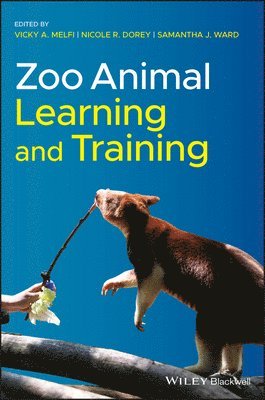
    Zoo Animal Learning and Training

    AvVicky A. Melfi,Vicky A. Melfi

    Inbunden, Engelska, 2020

    746 kr

    Beställningsvara. Skickas inom 5-8 vardagar. Fri frakt över 249 kr.

    Beskrivning

    Comprehensively explains animal learning theories and current best practices in animal training within zoosThis accessible, up-to-date book on animal training in a zoo/aquaria context provides a unified approach to zoo animal learning, bringing together the art and science of animal training. Written by experts in academia and working zoos, it incorporates the latest information from the scientific community along with current best practice, demystifying the complexities of training zoo animals. In doing so, it teaches readers how to effectively train animals and to fully understand the consequences of their actions.Zoo Animal Learning and Training starts with an overview of animal learning theory. It describes the main categories of animal learning styles; considers the diverse natural history of zoo animals; reviews the research undertaken which demonstrates ultimate benefits of learning; and highlights the advantages and disadvantages of the different approaches. It also shows how the direct application of learning theory can be integrated into zoo animal management; discusses how other factors might affect development; and investigates situations and activities from which animals learn. It also explores the theoretical basis that determines whether enrichments are successful. Provides an easily accessibly, jargon-free introduction to the subjectExplores different training styles, providing theoretical background to animal learning theory as well as considerations for practical training programme – including how to set them up, manage people and animals within them and their consequencesIncludes effective skills and ‘rules of thumb’ from professional animal trainersOffers commentary on the ethical and welfare implications of training in zoosFeatures contributions from global experts in academia and the zoo professionUniquely features both academic and professional perspectivesZoo Animal Learning and Training is an important book for students, academics and professionals. Suited to senior undergraduate students in zoo biology, veterinary science, and psychology, and for post-graduate students in animal management, behaviour and conservation, as well as zoo biology. It is also beneficial to those working professionally in zoos and aquaria at different levels.

    Produktinformation

    • Utgivningsdatum:2020-02-20
    • Mått:180 x 257 x 23 mm
    • Vikt:976 g
    • Format:Inbunden
    • Språk:Engelska
    • Antal sidor:384
    • Förlag:John Wiley and Sons Ltd
    • ISBN:9781118968536

    Utforska kategorier

    • Zoologi inom Naturvetenskap och teknik
    • Djurböcker inom Djur och Natur

    Mer om författaren

    VICKY A. MELFI, PHD, is Professor at Hartpury University, Research Associate at the University of Sydney, and Managing Editor of the Journal of Zoo and Aquaria Research, published by the European Association of Zoos and Aquaria (EAZA). NICOLE R. DOREY, PHD, is a Senior Lecturer at the University of Florida, a Certified Applied Animal Behaviorist (CAAB) and has actively served as a board member for a number of professional organizations. She also conducts and consults on research and training at zoos. SAMANTHA J. WARD, PHD, is a Senior Lecturer in Animal Science at Nottingham Trent University, and is currently on the BIAZA research committee and also sits as the welfare expert on Defra's Zoo Executive Committee.

    Innehållsförteckning

    • Notes on Contributors xiForeword xxiPreface xxvAcknowledgements xxviiPart A Demystifying Zoo Animal Training 11 Learning Theory 3Nicole R. Dorey2 The Cognitive Abilities of Wild Animals 15Lindsay R. Mehrkam3 The Ultimate Benefits of Learning 35Kathy Baker and Vicky A. Melfi4 Choosing the Right Method: Reinforcement vs Punishment 53Ken RamirezModality BoxesConsideration of what modalities animals use to communicate with one another; as training programmes are based on good communication between the zoo professional and animal they are working with.Box A1 Animal Vision 69Andrew SmithBox A2 Do You Hear What I Hear? Hearing and Sound in Animals 73Erik Miller‐KleinBox A3 Making Sense of Scents: Olfactory Perception in Animals 77Neil JordanPart B Types of Learning That Can Be Achieved in a Zoo Environment 815 What is There to Learn in a Zoo Setting? 83Fay Clark6 Environmental Enrichment: The Creation of Opportunities for Informal Learning 101Robert John Young, Cristiano Schetini de Azevedo, and Cynthia Fernandes Cipreste7 The Art of ‘Active’ Training 119Steve Martin8 Integrating Training into Animal Husbandry 143Marty Sevenich‐MacPhee9 Us and Them: Human–Animal Interactions as Learning Events 167Geoff Hosey and Vicky A. MelfiTaxa Specific BoxesConsideration of species specific differences in cognitive ability are explored in academic boxes and the considerations necessary to practically implement training with different species are explored in professional boxes below.Box B1 Elephant Training in Zoos 183Greg A. VicinoBox B2 Human–Elephant Interactions in Semi‐captive Asian Elephants of Myanmar 187Khyne U. MarBox B3 Elephant Cognition: An Overview 191Sarah L. Jacobson and Joshua M. PlotnikBox B4 Marine Mammal Training 197Sabrina BrandoBox B5 Cognitive Abilities of Marine Mammals 203Gordon B. BauerBox B6 The Application of Positive Reinforcement Training to Enhance Welfare of Primates in Zoological Collections 211Jim MackieBox B7 Species‐specific Considerations: Primate Learning 217Betsy HerrelkoBox B8 Training Reptiles in Zoos: A Professional Perspective 221Richard GibsonBox B9 The Learning Repertoire of Reptiles 227Gordon M. BurghardtBox B10 Training Birds from a Zoo Professional’s Perspective 231Heidi HellmuthBox B11 Learning and Cognition in Birds 235Jackie ChappellBox B12 Species‐specific Considerations when Planning and Implementing Training with Aquatics 239Heather WilliamsBox B13 The Cognitive Abilities of Fish 243Culum BrownPart C More Than A to B: How Zoo Animal Training Programmes Can Impact Zoo Operations and Mission 24710 Making Training Educational for Zoo Visitors 249Katherine Whitehouse‐Tedd, Sarah Spooner, and Gerard Whitehouse‐Tedd11 Welfare Implications of Zoo Animal Training 271Vicky A. Melfi and Samantha J. Ward12 Training Animals in Captivity or the Wild, so They Can Return to the Wild 289Jonathan Webb13 Last but in Fact Most Importantly … Health and Safety 309Tim SullivanBigger Training Consideration BoxesFor some of the topics we felt it might be helpful to provide a box outside to the general text to consider some bigger concepts in animal training. These include ‘training multiple animals’ by Kirstin Anderson-Hansen and a concluding positive note on including training within zoo animal management programmes by Gary Priest.Box C1 Training Animals in a Group Setting 327Kirstin Anderson‐HansenBox C2 This Generation’s Challenge 333Gary PriestGlossary 335Index 339