• Fri frakt över 249 kr
  • •
  • Snabba leveranser
  • •
  • Billiga böcker
Kundservice

Du är på sajten för privatpersoner.

Företag, bibliotek eller offentlig verksamhet?

Du handlar på classic.bokus.com, där alla dina funktioner finns intakta.
Till classic.bokus.com
Bokus logotyp. Gå till startsidan.
  • Erbjudanden
  • Nyheter
  • Student
  • Topplistor
  • Barn & ungdom
  • Bokus Play
  • E-böcker
  • Pocketböcker
  • Spel & pussel

10% rabatt på allt med kod NYSTART10 →

Sidfot

Mina sidor

    Hjälp

    • Kundservice
    • Vanliga frågor och svar
    • Frakt och leverans
    • Retur vid ångerrätt
    • Reklamera vara
    • Betalning
    • Köpvillkor
    • Allmänna villkor
    • Information om webbplatsens tillgänglighet

    Om Bokus

    • Om oss
    • Pressrum
    • För studenter
    • För företag
    • För bibliotek och offentlig verksamhet
    • För leverantörer
    • Hållbarhet

    Populärt

    • Aktuella erbjudanden
    • Presentkort
    • Studentlitteratur
    • Nya böcker
    • Topplistor
    • Signerade böcker
    • Engelska böcker

    Inspiration

    • Boktips
    • BookTok
    • Populära bokserier
    • Barnbokskaraktärer
    • Populära författare
    Logotyp för Bokus
    Följ oss på Facebook (extern länk)Följ oss på Instagram (extern länk)Följ oss på YouTube (extern länk)Följ oss på TikTok (extern länk)
    bokus @ CookiesAnpassa cookiesIntegritetspolicyKöpvillkor
    Till Citymail hemsida (extern länk)Till Budbee hemsida (extern länk)Till Postnord hemsida (extern länk)Till Schenker hemsida (extern länk)Till Early Bird hemsida (extern länk)Till Walleys hemsida (extern länk)
    1. Naturvetenskap och teknik
    2. Matematik och naturvetenskap
    3. Kemi
    4. Analytisk kemi

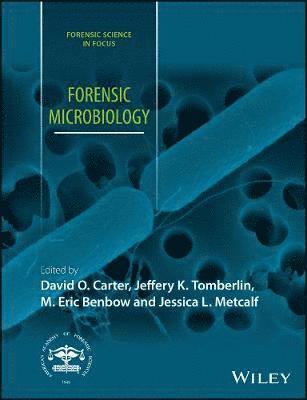
    Forensic Microbiology

    AvDavid O. Carter,David O. Carter

    Inbunden, Engelska, 2017

    Del i serien Forensic Science in Focus

    1 493 kr

    Beställningsvara. Skickas inom 5-8 vardagar. Fri frakt över 249 kr.

    Beskrivning

    Forensic Microbiology focuses on newly emerging areas of microbiology relevant to medicolegal and criminal investigations: postmortem changes, establishing cause of death, estimating postmortem interval, and trace evidence analysis. Recent developments in sequencing technology allow researchers, and potentially practitioners, to examine microbial communities at unprecedented resolution and in multidisciplinary contexts. This detailed study of microbes facilitates the development of new forensic tools that use the structure and function of microbial communities as physical evidence.  Chapters cover: Experiment designData analysisSample preservationThe influence of microbes on results from autopsy, toxicology, and histologyDecomposition ecologyTrace evidenceThis diverse, rapidly evolving field of study has the potential to provide high quality microbial evidence which can be replicated across laboratories, providing spatial and temporal evidence which could be crucial in a broad range of investigative contexts.  This book is intended as a resource for students, microbiologists, investigators, pathologists, and other forensic science professionals.

    Produktinformation

    • Utgivningsdatum:2017-04-21
    • Mått:193 x 246 x 28 mm
    • Vikt:1 157 g
    • Format:Inbunden
    • Språk:Engelska
    • Serie:Forensic Science in Focus
    • Antal sidor:424
    • Förlag:John Wiley & Sons Inc
    • ISBN:9781119062554

    Utforska kategorier

    • Analytisk kemi inom Naturvetenskap och teknik
    • Klinisk medicin och internmedicin inom Medicin
    • Biologi inom Naturvetenskap och teknik

    Mer om författaren

    Edited byDavid O. CarterForensic Sciences Unit, Chaminade University of Honolulu, USAJeffery K. TomberlinDepartment of Entomology, Texas A&M University, USAM. Eric BenbowDepartment of Entomology, Michigan State University, USAJessica L. MetcalfDepartment of Animal Sciences, Colorado State University, USA

    Innehållsförteckning

    • About the editors, xviList of contributors, xixForeword, xxiiSeries preface, xxivPreface, xxv1 A primer on microbiology, 1David O. Carter, Emily N. Junkins and Whitney A. Kodama1.1 Introduction, 11.2 Microbial characteristics, 21.3 Microorganisms and their habitats, 71.4 Competition for resources, 101.5 The ecology of some forensically relevant bacteria, 111.6 Archaea and microbial eukaryotes, 201.7 Conclusions, 212 History, current, and future use of microorganisms as physical evidence, 25Zachary M. Burcham and Heather R. Jordan2.1 Introduction, 252.2 Methods for identification, 262.3 Estimating PMI, 302.4 Cause of death, 362.5 Trace evidence, 402.6 Other medicolegal aspects, 432.7 Needs that must be met for use in chain of custody, 482.8 Summary, 493 Approaches and considerations for forensic microbiology decomposition research, 56M. Eric Benbow and Jennifer L. Pechal3.1 Introduction, 563.2 Challenges of human remains research, 573.3 Human remains research during death investigations, 583.4 Human surrogates in research, 603.5 Considerations for field studies, 613.6 Descriptive and hypothesis]driven research, 623.7 Experiment design, 653.8 Validation studies, 694 Sampling methods and data generation, 72Jennifer L. Pechal, M. Eric Benbow and Tawni L. Crippen4.1 Introduction, 724.2 Materials, 734.3 Sample collection techniques, 794.4 Sample preservation, storage, and handling techniques, 804.5 Data considerations, 864.6 Conclusions, 905 An introduction to metagenomic data generation, analysis, visualization, and interpretation, 94Baneshwar Singh, Tawni L. Crippen and Jeffery K. Tomberlin5.1 Introduction, 945.2 DNA extraction, 965.3 DNA sequencing, 995.4 Marker gene data analysis, visualization, and interpretation, 1075.5 Multi]omics data analysis, visualization, and interpretation, 1145.6 Statistical analysis, 1175.7 Major challenges and future directions, 1186 Culture and long]term storage of microorganisms for forensic science, 127Emily N. Junkins, Embriette R. Hyde and David O. Carter6.1 Introduction, 1276.2 The value of culturing microorganisms, 1286.3 Collection and handling of samples, 1326.4 Protocols, 1346.5 Conclusions, 1437 Clinical microbiology and virology in the context of the autopsy, 146Elisabeth J. Ridgway, Bala M. Subramanian and Mohammad Raza7.1 Introduction, 1467.2 The historical view of autopsy microbiology, 1477.3 Which samples should you collect and how?, 1497.4 Which methods are available for the diagnosis of infection?, 1547.5 How do you put the results into context?, 1567.6 What are the risks of transmission of infection in the postmortem room?, 1637.7 How does autopsy microbiology contribute to the diagnosis of specific conditions?, 1648 Postmortem bacterial translocation, 192Vadim Mesli, Christel Neut and Valery Hedouin8.1 Introduction, 1928.2 Bacterial translocation in health and disease, 1958.3 Bacterial translocation in humans, 1988.4 Physiological changes after death influencing the selection of commensal bacteria, 2008.5 Consequences of bacterial translocation, 2049 Microbial impacts in postmortem toxicology, 212Jared W. Castle, Danielle M. Butzbach, G. Stewart Walker, Claire E. Lenehan, Frank Reith and K. Paul Kirkbride9.1 Introduction, 2129.2 Microbial factors complicating postmortem toxicological analyses, 2139.3 Precautions taken to limit microbial impacts, 2149.4 Experimental protocols used to investigate postmortem drug and metabolite degradation due to microbial activity, 2189.5 Examples of microbially mediated drug degradation, 21910 Microbial communities associated with decomposing corpses, 245Embriette R. Hyde, Jessica L. Metcalf, Sibyl R. Bucheli, Aaron M. Lynne and Rob Knight10.1 Introduction, 24510.2 The soil microbiology of decomposition, 24810.3 Freshwater and marine decomposition, 25210.4 The microbiology of nonhuman models of terrestrial decomposition, 25510.5 The microbiology of terrestrial human decomposition, 25810.6 Is there a universal decomposition signature?, 26310.7 Using microbial signatures to estimate PMI, 26411 Arthropod–microbe interactions on vertebrate remains: Potential applications in the forensic sciences, 274Jeffery K. Tomberlin, M. Eric Benbow, Kate M. Barnes and Heather R. Jordan11.1 Introduction, 27411.2 Framework for understanding microbe–arthropod interactions on vertebrate remains, 28211.3 Postcolonization interval, 28711.4 Future directions and conclusion, 29711.5 Acknowledgments, 29812 Microbes, anthropology, and bones, 312Franklin E. Damann and Miranda M.E. Jans12.1 Introduction, 31212.2 Bone microstructure, 31312.3 Microbially mediated decomposition, 31512.4 Bone bioerosion, 31712.5 Reconstructing postmortem histories, 32213 Forensic microbiology in built environments, 328Simon Lax and Jack A. Gilbert13.1 Introduction, 32813.2 The human skin microbiome, 32813.3 The microbiota of the built environment, 32913.4 Tools for the forensic classification of the built environment microbiome, 33213.5 Forensic microbiology of the built environment, 33514 Soil bacteria as trace evidence, 339David R. Foran, Ellen M. Jesmok and James M. Hopkins14.1 The forensic analysis of soil, 33914.2 Assessing the biological components of soil, 34014.3 Bacteria in soil, 34114.4 Molecular techniques for the forensic analysis of soil, 34214.5 Soil microbial profile data analysis methods, 34514.6 Feasibility of next]generation sequencing for forensic soil analysis, 35014.7 Consensus on methodologies for soil collection and analysis, 35315 DNA profiling of bacteria from human hair: Potential and pitfalls, 358Silvana R. Tridico, Dáithí C. Murray, Michael Bunce and K. Paul Kirkbride15.1 An introduction to human hair as a forensic substrate, 35815.2 Current research into hair microbiomes, 36115.3 Importance of hair sample collection, storage, and isolation of microbial DNA, 36515.4 DNA sequencing of hair microbiomes, 36715.5 Conclusions and future directions, 369Perspectives on the future of forensic microbiology, 376David O. Carter, Jeffery K. Tomberlin, M. Eric Benbow and Jessica L. MetcalfIndex, 379