• Fri frakt över 249 kr
  • •
  • Snabba leveranser
  • •
  • Billiga böcker
Kundservice

Du är på sajten för privatpersoner.

Företag, bibliotek eller offentlig verksamhet?

Du handlar på classic.bokus.com, där alla dina funktioner finns intakta.
Till classic.bokus.com
Bokus logotyp. Gå till startsidan.
  • Erbjudanden
  • Nyheter
  • Student
  • Topplistor
  • Barn & ungdom
  • Bokus Play
  • E-böcker
  • Pocketböcker
  • Spel & pussel

10% rabatt på allt med kod NYSTART10 →

Sidfot

Mina sidor

    Hjälp

    • Kundservice
    • Vanliga frågor och svar
    • Frakt och leverans
    • Retur vid ångerrätt
    • Reklamera vara
    • Betalning
    • Köpvillkor
    • Allmänna villkor
    • Information om webbplatsens tillgänglighet

    Om Bokus

    • Om oss
    • Pressrum
    • För studenter
    • För företag
    • För bibliotek och offentlig verksamhet
    • För leverantörer
    • Hållbarhet

    Populärt

    • Aktuella erbjudanden
    • Presentkort
    • Studentlitteratur
    • Nya böcker
    • Topplistor
    • Signerade böcker
    • Engelska böcker

    Inspiration

    • Boktips
    • BookTok
    • Populära bokserier
    • Barnbokskaraktärer
    • Populära författare
    Logotyp för Bokus
    Följ oss på Facebook (extern länk)Följ oss på Instagram (extern länk)Följ oss på YouTube (extern länk)Följ oss på TikTok (extern länk)
    bokus @ CookiesAnpassa cookiesIntegritetspolicyKöpvillkor
    Till Citymail hemsida (extern länk)Till Budbee hemsida (extern länk)Till Postnord hemsida (extern länk)Till Schenker hemsida (extern länk)Till Early Bird hemsida (extern länk)Till Walleys hemsida (extern länk)
    1. Naturvetenskap och teknik
    2. Matematik och naturvetenskap
    3. Biologi

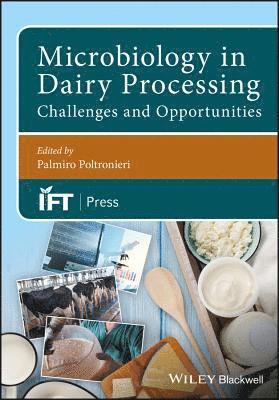
    Microbiology in Dairy Processing

    Challenges and Opportunities

    AvPalmiro Poltronieri

    Inbunden, Engelska, 2017

    Del i serien Institute of Food Technologists Series

    2 491 kr

    Beställningsvara. Skickas inom 11-20 vardagar. Fri frakt över 249 kr.

    Beskrivning

    An authoritative guide to microbiological solutions to common challenges encountered in the industrial processing of milk and the production of milk productsMicrobiology in Dairy Processing offers a comprehensive introduction to the most current knowledge and research in dairy technologies and lactic acid bacteria (LAB) and dairy associated species in the fermentation of dairy products. The text deals with the industrial processing of milk, the problems solved in the industry, and those still affecting the processes. The authors explore culture methods and species selective growth media, to grow, separate, and characterize LAB and dairy associated species, molecular methods for species identification and strains characterization, Next Generation Sequencing for genome characterization, comparative genomics, phenotyping, and current applications in dairy and non-dairy productions.In addition, Microbiology in Dairy Processing covers the Lactic Acid Bacteria and dairy associated species (the beneficial microorganisms used in food fermentation processes): culture methods, phenotyping, and proven applications in dairy and non-dairy productions. The text also reviews the potential future exploitation of the culture of novel strains with useful traits such as probiotics, fermentation of sugars, metabolites produced, bacteriocins. This important resource: Offers solutions both established and novel to the numerous challenges commonly encountered in the industrial processing of milk and the production of milk productsTakes a highly practical approach, tackling the problems faced in the workplace by dairy technologistsCovers the whole chain of dairy processing from milk collection and storage though processing and the production of various cheese typesWritten for laboratory technicians and researchers, students learning the protocols for LAB isolation and characterisation, Microbiology in Dairy Processing is the authoritative reference for professionals and students.

    Produktinformation

    • Utgivningsdatum:2017-11-17
    • Mått:173 x 246 x 23 mm
    • Vikt:816 g
    • Format:Inbunden
    • Språk:Engelska
    • Serie:Institute of Food Technologists Series
    • Antal sidor:352
    • Förlag:John Wiley and Sons Ltd
    • ISBN:9781119114802

    Utforska kategorier

    • Biologi inom Naturvetenskap och teknik
    • Tillverkningsteknik inom Naturvetenskap och teknik

    Mer om författaren

    Palmiro Poltronieri, PhD, is a Researcher at the Institute of the Sciences of Food Productions (CNR-ISPA), National Research Council of Italy. He obtained his Ph.D. in Cellular and Molecular Biology and Pathology in 1995 at the Institute of Chemical Biology, Medical Faculty of Verona University. Working in the Microbiology laboratory since 1999, he has established collaboration with the principal laboratories working in the field of food microbiology.

    Innehållsförteckning

    • List of contributors xvForeword xixPreface xxiAcknowledgements xxiii1 Milk fat components and milk quality 1Iolanda Altomonte, Federica Salari and Mina Martini1.1 Introduction 11.1.1 Milk fat globules 21.1.2 Milk fat and fatty acid composition 41.2 Conclusions 7References 72 Spore]forming bacteria in dairy products 11Sonia Garde Lopez]Brea, Natalia Gomez]Torres and Marta Avila Arribas2.1 Introduction 112.2 The bacterial spore 132.2.1 Structure and chemical composition of bacterial spores 142.2.1.1 Exosporium 142.2.1.2 Spore coat 142.2.1.3 Outer spore membrane 152.2.1.4 Cortex and germ cell wall 152.2.1.5 Inner spore membrane 152.2.1.6 The core spore 152.2.2 Spore resistance 162.2.3 Life cycle of spore]forming bacteria 172.3 Spore]forming bacteria important for the dairy industry 182.3.1 Class Bacilli 182.3.1.1 Bacillus genus 192.3.1.1.1 Bacillus cereus 192.3.1.1.2 Other Bacillus species 202.3.1.1.3 Importance of Bacillus spp. in the dairy industry 212.3.1.2 Geobacillus and Anoxybacillus genera 242.3.1.3 Paenibacillus genus 252.3.2 Class Clostridia 252.3.2.1 Clostridium botulinum 262.3.2.2 Clostridium perfringens 282.3.2.3 Clostridium tyrobutyricum and related species 282.4 Control strategies to prevent poisoning and spoilage of milk and dairy products by spore]forming bacteria 302.5 Conclusions 31References 323 Psychrotrophic bacteria 37Milena Brasca, Marilu Decimo, Stefano Morandi, Solimar Goncalves Machado, Francois Bagliniere and Maria Cristina Dantas Vanetti3.1 Introduction 373.2 Sources of psychrotrophic bacteria contamination of milk 383.3 Important spoilage psychrotrophic bacteria in milk 423.4 Molecular tools to characterize psychrotrophic bacteria 433.5 Influence of psychrotrophic contamination of raw milk on dairy product quality 453.5.1 Bacterial proteases and proteolytic changes in milk 463.5.2 Bacterial lipases and phospholipases and their significance in milk 493.6 Regulation of extracellular enzymes 523.7 Control of psychrotrophic bacteria and related enzymes 533.8 Conclusions 54References 544 Stabilization of milk quality by heat treatments 63Palmiro Poltronieri and Franca Rossi4.1 Introduction 634.2 Thermal treatments of milk 634.2.1 Thermization 634.2.2 Pasteurization 644.2.3 Grade A pasteurized milk 664.3 Milk sterilization 674.3.1 Control of proper time/temperature setting for safety of milk and milk products 674.4 Diseases associated with unpasteurized milk, or post]pasteurization dairy]processing contamination 684.5 Conclusions 68References 685 Genomics of LAB and dairy]associated species 71Palmiro Poltronieri, Franca Rossi, Cesare Camma, Francesco Pomilio and Cinzia Randazzo5.1 Introduction 715.2 Genomics of lab and dairy]associated species 715.2.1 Next]generation sequencing of strains, dairy starter genomics and metagenomics 725.2.2 Pacific Bioscience single]molecule real]time sequencing technology 735.2.3 Illumina MySeq and HiSeq 2000 735.2.4 Ion Torrent platform 735.3 NGS platform applied to sequencing of microbial communities 745.3.1 Pangenomics 745.3.2 Omic technologies: transcriptomics, proteomics, functional genomics, systems biology 755.4 Metabolomics and proteomics 765.4.1 Subcellular localisation (SLC): secretion systems for secreted proteins 775.4.2 Interactome for cell adhesion and pathogen exclusion 785.4.3 Lab peptidome 795.5 Comparative genomics of dairy]associated bacteria: the lactobacillus genus complex, streptococci/lactococci, enterococci, propionibacteria and bifidobacteria 795.5.1 Comparative genomics of Lb. rhamnosus and Lb. casei 835.5.2 Lb. casei core genome and ecotype differences in dairy adapted strains 845.6 Clustered Regularly Interspaced Short Palindromic Repeats (CRISPR) in adaptive immunity 845.7 Regulation in carbon metabolism 855.7.1 Transcriptional and posttranscriptional regulation in carbon metabolism 855.7.2 Two]component systems and phosphorylation in sugar substrate regulation 865.7.3 Regulatory RNAs and alternative sigma factors in gene expression 875.8 Conclusions 88References 886 Metabolism and biochemistry of LAB and dairy]associated species 97Palmiro Poltronieri, Giovanna Battelli and Nicoletta Pasqualina Mangia6.1 Introduction 976.2 Carbohydrate substrates, glycolysis and energy production 986.2.1 Pentose phosphate pathway 996.2.2 Citrate fermentation 996.3 Proteolysis, protein substrates and amino acid availability influencing gene expression 1006.3.1 Cell]envelope proteinases: the Prt system 1016.3.2 Oligopeptide permeases and other transporters for peptides and amino acids 1016.3.3 Peptidolysis and free amino acids 1026.3.4 Peptidolysis and catabolite repression 1056.3.5 Amino acid biosynthesis and auxotrophy 1056.4 Lipolysis, lipases, esterases 1066.5 Aroma and flavour products of metabolism 1076.5.1 Aldehydes, alcohols and carboxylic acids 1106.5.2 Amino acids as precursor flavour compounds 1126.6 Nonenzymatic production of flavours 1136.7 Methods of analysis of flavours in dairy products: HPLC, gas chromatography/ mass analysis (GC/MS) 1146.8 Natural biodiversity of strains in dairy productions 1156.9 Conclusions 116References 1177 Growth needs and culture media for LAB and dairy]associated species 123Giuseppe Blaiotta, Maria Aponte and Palmiro Poltronieri7.1 Introduction 1237.2 Established culture media for lactobacilli 1237.2.1 Rogosa agar 1247.2.2 MRS medium 1257.2.3 Skim milk and whey agar 1257.3 M17 medium for selection and enumeration of lactococci and streptococci 1267.3.1 St. thermophilus agar 1267.4 Selective media for lactobacilli 1277.4.1 MRS vancomycin 1277.4.2 Additional selective agents 1287.4.3 MRSV plus selective agents for Lb. casei group enumeration 1297.4.4 MRS]salicin, MRS]sorbitol, MRS]ribose, MRS gluconate agar 1297.4.5 MRS]clindamycin]ciprofloxacin agar 1297.4.6 MMV medium for Lb. casei group enumeration 1307.4.7 MRS containing fructose (MRSF) 1307.4.8 mMRS]BPB 1317.4.9 MRS]NNLP agar and chromogenic agars for complex communities 1317.4.10 Homofermentative]heterofermentative differential medium 1317.5 Media for the isolation of bifidobacteria 1327.5.1 MRS]NNLP agar 1337.5.2 BSM, WSP, TOS]MUP 1337.5.3 MRS]ABC 1347.6 Phenotyping 1347.7 Conclusions 135References 1358 LAB species and strain identification 139Cinzia Randazzo, Alessandra Pino, Koenraad Van Hoorde and Cinzia Caggia8.1 Introduction 1398.2 Genotypic fingerprinting methods 1408.3 Culture]dependent approaches 1428.3.1 Random amplification of polymorphic DNA 1428.3.2 ARDRA and RFLP 1438.3.3 Ribotyping 1438.3.4 Repetitive element sequence]based PCR 1448.3.5 Amplified fragment length polymorphism 1458.3.6 Pulsed field gel electrophoresis 1458.4 Non]genotypic fingerprinting methods 1468.5 Culture]independent approaches 1478.5.1 Culture]independent methods for qualitative analysis of dairy foods microbiota 1478.5.2 Culture]independent methods for quantitative analysis of dairy foods microbiota 1508.6 Novel high]throughput techniques: sequencing and metagenomics 1518.7 Conclusions 152References 1529 LAB strains with bacteriocin synthesis genes and their applications 161Lorena Sacchini, Giacomo Migliorati, Elisabetta Di Giannatale, Francesco Pomilio and Franca Rossi9.1 Introduction 1619.2 Bacteriocins from lab 1619.3 Potential for use of lab bacteriocins as food preservatives 1649.4 Bacteriocins produced by dairy lab 1659.5 Identification of lab]producing bacteriocins 1689.6 A novel approach for screening lab bacteriocins 1709.7 Biotechnological interventions for bacteriocin engineering 1719.8 Conclusions 172References 17210 Starter strains and adjunct non]starter lactic acid bacteria (NSLAB) in dairy products 177Paola Dolci and Luca Cocolin10.1 Introduction 17710.2 Controlled fermentation 17710.2.1 Natural versus selected lactic acid bacteria starters 17810.2.2 Starter strains: selection parameter approaches and strain concept 17910.2.3 Starter culture formulation 18010.3 Adjunct non]starter lactic acid bacteria 18110.3.1 Biodiversity and adaptation to cheese environment 18110.3.2 Prospective in industrial application 18210.3.3 Biopreservation and health benefits 18310.4 Conclusions 185References 18511 Milk Fat: stability, separation and technological transformation 191Gianluigi Scolari11.1 Introduction 19111.1.1 Composition and physical state of milk fat 19211.1.2 Melting point of milk fat 19411.2 Physical instability of milk fat 19411.3 Milk fat separation 19511.3.1 Flocculation or natural creaming 19511.3.2 Milk fat separation by centrifugation 19711.4 Partial coalescence 19911.4.1 General aspects 19911.4.2 Barrier against coalescence 20111.4.2.1 Low molecular mass surfactants 20111.4.2.2 Large sized surfactants (casein micelle) 20211.4.2.3 Polymeric surfactants (proteins and polysaccharides) 20311.4.2.4 Mixed films 20311.5 Foam in milk and cream 20411.5.1 General aspects 20411.5.1.1 Foam formation without surfactants 20411.5.1.2 Foam formation with surfactants 20511.5.1.3 Drainage of dispersion liquid in foam 20611.5.2 Foam from cream containing more than 30% milk fat 20711.6 Whipped cream and butter 20911.6.1 Technological factors affecting whipped cream and butter production 20911.7 Churning process 21011.7.1 Type of cream 21011.7.2 Physical (crystallization) and biological maturation of cream before churning 21211.7.3 Churning technology 21511.7.4 Continuous churning 21611.7.5 Moulding and packaging 21711.8 Conclusions 217References 21812 Biological traits of lactic acid bacteria: industrial relevance and new perspectives in dairy applications 219Diego Mora, Fabio Dal Bello and Stefania Arioli12.1 Introduction 21912.2 Selecting fermenting bacteria for their ability to have a respiratory metabolism 22012.3 Selecting galactose]positive yogurt cultures: working “against the natural evolution of the species” 22112.4 Accelerating the milk acidification process by selecting proteinase]positive strains 22212.5 Accelerating the milk acidification process by selecting urease]negative S. thermophilus strains 22412.6 Protective cultures for dairy applications: “work but please do not grow and do not modify the sensory profile of the product” 22512.7 Selection of starter culture free of transferable antibiotic]resistance mechanisms 22712.8 Conclusions 228References 22913 Lactic acid bacteria bacteriophages in dairy products: problemsand solutions 233Giorgio Giraffa, Miriam Zago and Domenico Carminati13.1 Introduction 23313.2 Phage classification 23413.3 Phage]host interactions 23613.4 Sources of contamination 23813.4.1 Milk and cheese whey 23813.4.2 Dairy cultures 23913.4.2.1 The lysogenic state 23913.5 Phage detection and quantification 24013.6 Methods to control phage contamination 24213.6.1 Phage inactivation by physical treatments 24213.6.2 Phage inactivation by chemical treatments 24413.6.3 Phage control by biological approaches 24513.7 Conclusions 24614 Lactic acid bacteria: a cell factory for delivering functional biomolecules in dairy products 251Tiziana Silvetti, Stefano Morandi and Milena Brasca14.1 Introduction 25114.2 Vitamins 25314.2.1 Vitamin B2 or Riboflavin 25414.2.2 Vitamin B9 or Folate 25514.2.3 Vitamin B12 or cobalamin 25614.2.4 Vitamin K: menaquinone 25714.2.5 Other B]group vitamins 25814.3 Minerals 25814.4 Bioactive compounds 26114.4.1 Anti]hypertensive peptides 26214.4.2 Antioxidative peptides 26314.4.3 Bioactive amines 26514.4.4 Immune system affecting peptides 26714.4.5 Opioid peptides 26714.4.6 Metal]binding peptides 26814.4.7 Conjugated linoleic acid and conjugated linolenic acid 26814.5 Low]calorie sweeteners 26914.6 Exopolysaccharides (EPS) 27114.7 Conclusions 273References 27315 Dairy technologies in yogurt production 279Panagiotis Sfakianakis and Constantina Tzia15.1 Introduction 27915.2 Yogurt types 28015.3 Yogurt manufacturing process 28115.3.1 Initial treatment of milk 28115.3.2 Standardization of milk components – fat and SNF content 28315.3.3 Homogenization 28415.3.4 Heat treatment 28615.3.5 Fermentation process 28815.3.5.1 Monitoring of fermentation process – prediction of fermentation evolution 29015.3.6 Post]fermentation processing 29215.3.6.1 Cooling – addition of additives 29215.3.6.2 Addition of fruit 29215.3.6.3 Packaging 29415.3.7 Quality control of yogurt production 29415.4 Conclusions 295References 29516 Milk protein composition and sequence differences in milk and fermented dairy products affecting digestion and tolerance to dairy products 299Maria Gabriella Giuffrida, Marzia Giribaldi, Laura Cavallarin and Palmiro Poltronieri16.1 Introduction 29916.2 Caseins 30116.2.1 Gene polymorphisms in κ]casein genes 30216.2.2 Gene polymorphisms in β]casein gene 30316.3 Proteolytic release of bioactive peptides in fermented milk and cheese 30416.4 Minor milk proteins 30516.4.1 Lactoferrin 30516.4.2 β]Lactoglobulin (β]LG) 30616.4.3 α]Lactalbumin (α]LA) 30616.5 Proteins with bioactive roles 30716.6 MFGM-associated proteins 30816.7 Cow’s milk protein allergy (CMPA) 30816.8 Conclusions 309References 309Index 315