• Fri frakt över 249 kr
  • •
  • Snabba leveranser
  • •
  • Billiga böcker
Kundservice

Du är på sajten för privatpersoner.

Företag, bibliotek eller offentlig verksamhet?

Du handlar på classic.bokus.com, där alla dina funktioner finns intakta.
Till classic.bokus.com
Bokus logotyp. Gå till startsidan.
  • Erbjudanden
  • Nyheter
  • Student
  • Topplistor
  • Barn & ungdom
  • Bokus Play
  • E-böcker
  • Pocketböcker
  • Spel & pussel

10% rabatt på allt med kod: NYSTART10 →

Sidfot

Mina sidor

    Hjälp

    • Kundservice
    • Vanliga frågor och svar
    • Frakt och leverans
    • Retur vid ångerrätt
    • Reklamera vara
    • Betalning
    • Köpvillkor
    • Allmänna villkor
    • Information om webbplatsens tillgänglighet

    Om Bokus

    • Om oss
    • Pressrum
    • För studenter
    • För företag
    • För bibliotek och offentlig verksamhet
    • För leverantörer
    • Hållbarhet

    Populärt

    • Aktuella erbjudanden
    • Presentkort
    • Studentlitteratur
    • Nya böcker
    • Topplistor
    • Signerade böcker
    • Engelska böcker

    Inspiration

    • Boktips
    • BookTok
    • Populära bokserier
    • Barnbokskaraktärer
    • Populära författare
    Logotyp för Bokus
    Följ oss på Facebook (extern länk)Följ oss på Instagram (extern länk)Följ oss på YouTube (extern länk)Följ oss på TikTok (extern länk)
    bokus @ CookiesAnpassa cookiesIntegritetspolicyKöpvillkor
    Till Citymail hemsida (extern länk)Till Budbee hemsida (extern länk)Till Postnord hemsida (extern länk)Till Schenker hemsida (extern länk)Till Early Bird hemsida (extern länk)Till Walleys hemsida (extern länk)
    1. Hälsa och familj
    2. Relationer

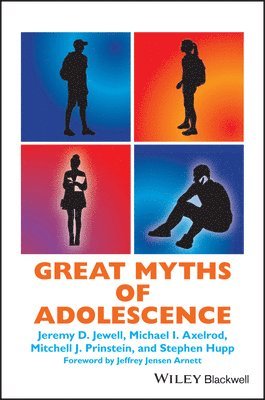
    Great Myths of Adolescence

    AvJeremy D. Jewell,Michael I. Axelrod

    Häftad, Engelska, 2018

    Del i serien Great Myths of Psychology

    154 kr

    Beställningsvara. Skickas inom 5-8 vardagar. Fri frakt över 249 kr.

    Fler format och utgåvor

    Inbunden

    853 kr

    Beskrivning

    A research-based guide to debunking commonly misunderstood myths about adolescenceGreat Myths of Adolescence contains the evidence-based science that debunks the myths and commonly held misconceptions concerning adolescence. The book explores myths related to sex, drugs and self-control, as well as many others. The authors define each myth, identify each myth's prevalence and present the latest and most significant research debunking the myth. The text is grounded in the authors’ own research on the prevalence of belief in each myth, from the perspective of college students. Additionally, various pop culture icons that have helped propagate the myths are discussed.Written by noted experts, the book explores a wealth of topics including: The teen brain is fully developed by 18; Greek life has a negative effect on college students academically; significant mood disruptions in adolescence are inevitable; the millennial generation is lazy; and much more. This important resource: Shatters commonly held and topical myths relating to gender, education, technology, sex, crime and moreBased in empirical and up-to-date research including the authors' ownLinks each myth to icons of pop culture who/which have helped propagate themDiscusses why myths are harmful and best practices related to the various topicsA volume in the popular Great Myths of Psychology seriesWritten for undergraduate students studying psychology modules in Adolescence and developmental psychology, students studying childhood studies and education studies, Great Myths of Adolescence offers an important guide that debunks misconceptions about adolescence behavior. This book also pairs well with another book by two of the authors, Great Myths of Child Development.

    Produktinformation

    • Utgivningsdatum:2018-12-07
    • Mått:152 x 229 x 13 mm
    • Vikt:272 g
    • Format:Häftad
    • Språk:Engelska
    • Serie:Great Myths of Psychology
    • Antal sidor:208
    • Förlag:John Wiley and Sons Ltd
    • Medarbetare:JeffreyJensen Arnett
    • ISBN:9781119248774

    Utforska kategorier

    • Relationer inom Hälsa och familj
    • Sociala grupper och identitet inom Samhälle och politik
    • Barnpsykologi och utvecklingspsykologi inom Psykologi och pedagogik

    Mer om författaren

    Jeremy D. Jewell, PhD, is a Professor at Southern Illinois University Edwardsville and Director of the Clinical Child and School Psychology graduate program. He was awarded the SIUE Undergraduate Research and Creative Activity Mentor Award in 2012 and the Hoppe Research Professor Award in 2016.Michael I. Axelrod, PhD, is Director of the Human Development Center and a Professor in the Department of Psychology at the University of Wisconsin—Eau Claire.Mitchell J. Prinstein, PhD, ABPP, is John Van Seters Distinguished Professor of Psychology and Neuroscience and Director of Graduate Studies in the Department of Psychology and Neuroscience at the University of North Carolina at Chapel Hill.Stephen Hupp, PhD, is a Professor of Clinical Child and School Psychology at Southern Illinois University Edwardsville. He is a Licensed Clinical Psychologist and consultant for the East St. Louis Head Start program.

    Innehållsförteckning

    • Foreword xPreface xviiIntroduction 11 Development of the Body, Brain, and Mind 71 Adolescence ends at 18 years old 82 Girls are universally experiencing puberty sooner in recent years 163 The teen brain is fully developed by age 18 244 Anorexia treatment usually requires teens to be separated from their parents 335 Technology has made teens better at multitasking 38Mini myths for development of the body, brain, and mind 466 Pubertal "early bloomers" fare better than "late bloomers" 467 Teens can study better while listening to music 488 The "Freshman 15": College students gain 15 pounds their freshman year 509 Horses are helpful in the treatment of eating disorders, autism spectrum, and more 5110 The onset of puberty is very upsetting to most teens 5211 Male teens are much less likely than females to be preoccupied with their physical appearance 5412 Most teens hardly ever engage in leisure reading these days 5513 Greek life has a negative effect on college students academically 5614 Paying for prep courses is the best way to make large gains on the SAT 572 Development of the Self 5915 Significant mood disruptions in adolescence are inevitable 6016 Teens should have a job in high school to build character 6417 Risky behavior in adolescence is inevitable 6818 Taking care of an infant simulator doll increases abstinence from sexual activity 7219 College placement tests are useless at predicting academic success in college 77Mini myths for development of the self 8220 College students' lives are full of random hook]ups 8221 Teaching teens about contraception makes them more likely to engage in sexual activity 8422 Abstinence]only sex education programs are effective at keeping teens abstinent 8523 The HPV vaccine increases teen sex 8624 The millennial generation is lazy 8725 High school football players are more likely to become seriously injured than cheerleaders 8826 Offenders hide sexual interest when using the internet to initiate sex offenses against teens 9027 Conversion therapy effectively turns homosexual teens into straight teens 9128 Teens underestimate the consequences of risky behavior and adults do not 943 The Social Environment 9629 More quality time with teens can make up for less quantity of time 9630 Successful transition from adolescence to adulthood is achieved through detachment from parents 9831 Popular teens are usually mean 10732 Peer pressure only causes teens to make bad decisions 11233 Boys only use sticks and stones to hurt while girls use words instead 117Mini myths for the social environment 12134 Most teens have a strained relationship with their parents 12135 Asking teens if they have thought about suicide "plants a seed" and makes them more likely to actually attempt suicide 12336 Teens only listen to their peers 12537 When girls are sexually assaulted it is usually by a stranger 12538 Most college students graduate in 4 years 12639 College is the happiest time of one's life 1274 Problems in Modern Society 13040 Teens these days are worse behaved than those of previous generations 13041 School violence is on the rise 13942 Boot camps get teens "on the right path" 14943 Most teens party with drugs or alcohol on weekends 15444 DARE programs prevent teen drug use 15845 Listening to heavy metal or rap music makes teens more likely to defy authority 165Mini myths for problems in modern society 17346 Teens have the highest suicide rate 17347 Goggles mimicking drunkenness help prevent impaired driving 17448 Teens can be "scared straight" 17649 Sexting is only a teen problem 17750 Traditional High School Driver education courses have a strong record of making teens safe drivers 178Index 180