• Fri frakt över 249 kr
  • •
  • Snabba leveranser
  • •
  • Billiga böcker
Kundservice

Du är på sajten för privatpersoner.

Företag, bibliotek eller offentlig verksamhet?

Du handlar på classic.bokus.com, där alla dina funktioner finns intakta.
Till classic.bokus.com
Bokus logotyp. Gå till startsidan.
  • Erbjudanden
  • Nyheter
  • Student
  • Topplistor
  • Barn & ungdom
  • Bokus Play
  • E-böcker
  • Pocketböcker
  • Spel & pussel

10% rabatt på allt med kod NYSTART10 →

Sidfot

Mina sidor

    Hjälp

    • Kundservice
    • Vanliga frågor och svar
    • Frakt och leverans
    • Retur vid ångerrätt
    • Reklamera vara
    • Betalning
    • Köpvillkor
    • Allmänna villkor
    • Information om webbplatsens tillgänglighet

    Om Bokus

    • Om oss
    • Pressrum
    • För studenter
    • För företag
    • För bibliotek och offentlig verksamhet
    • För leverantörer
    • Hållbarhet

    Populärt

    • Aktuella erbjudanden
    • Presentkort
    • Studentlitteratur
    • Nya böcker
    • Topplistor
    • Signerade böcker
    • Engelska böcker

    Inspiration

    • Boktips
    • BookTok
    • Populära bokserier
    • Barnbokskaraktärer
    • Populära författare
    Logotyp för Bokus
    Följ oss på Facebook (extern länk)Följ oss på Instagram (extern länk)Följ oss på YouTube (extern länk)Följ oss på TikTok (extern länk)
    bokus @ CookiesAnpassa cookiesIntegritetspolicyKöpvillkor
    Till Citymail hemsida (extern länk)Till Budbee hemsida (extern länk)Till Postnord hemsida (extern länk)Till Schenker hemsida (extern länk)Till Early Bird hemsida (extern länk)Till Walleys hemsida (extern länk)
    1. Naturvetenskap och teknik
    2. Teknik och industri
    3. Agronomi och lantbruk

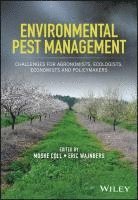
    Environmental Pest Management

    Challenges for Agronomists, Ecologists, Economists and Policymakers

    AvMoshe Coll,Eric Wajnberg

    Inbunden, Engelska, 2017

    1 926 kr

    Beställningsvara. Skickas inom 11-20 vardagar. Fri frakt över 249 kr.

    Beskrivning

    A wide-ranging, interdisciplinary exploration of key topics that interrelate pest management, public health and the environmentThis book takes a unique, multidimensional approach to addressing the complex issues surrounding pest management activities and their impacts on the environment and human health, and environmental effects on plant protection practices.It features contributions by a distinguished group of authors from ten countries, representing an array of disciplines. They include plant protection scientists and officers, economists, agronomists, ecologists, environmental and public health scientists and government policymakers. Over the course of eighteen chapters, those experts share their insights into and analyses of an array of issues of vital concern to everyone with a professional interest in this important subject.The adverse effects of pest control have become a subject of great concern worldwide, and researchers and enlightened policymakers have at last begun to appreciate the impact of environmental factors on our ability to manage pest populations. Moreover, while issues such as pesticide toxicity have dominated the global conversation about pest management, economic and societal considerations have been largely neglected. Environmental Pest Management: Challenges for Agronomists, Ecologists, Economists and Policymakers is the first work to provide in-depth coverage of all of these pressing issues between the covers of one book. Offers a unique multi-dimensional perspective on the complex issues surrounding pest management activities and their effect on the environment and human healthAddresses growing concerns about specific pest management strategies, including the use of transgenic crops and biological controlsAnalyses the influence of global processes, such as climate change, biological invasions and shifts in consumer demand, and ecosystem services and disservices on pest suppression effortsExplores public health concerns regarding biodiversity, pesticide use and food safetyIdentifies key economic drivers of pest suppression research, strategies and technologiesProposes new regulatory approaches to create sustainable and viable crop protection systems in the framework of agro-environmental schemesOffering a timely and comprehensively-unique treatment of pest management and its environmental impacts in a single, inter-disciplinary volume, this book is a valuable resource for scientists in an array of disciplines, as well as government officials and policymakers. Also, teachers of undergraduate and graduate level courses in a variety of fields are sure to find it a highly useful teaching resource.

    Produktinformation

    • Utgivningsdatum:2017-10-06
    • Mått:175 x 246 x 25 mm
    • Vikt:1 021 g
    • Format:Inbunden
    • Språk:Engelska
    • Antal sidor:448
    • Förlag:John Wiley & Sons Inc
    • ISBN:9781119255550

    Utforska kategorier

    • Agronomi och lantbruk inom Naturvetenskap och teknik
    • Samhällsmedicin och preventiv medicin inom Medicin
    • Tillverkningsteknik inom Naturvetenskap och teknik

    Mer om författaren

    Moshe Coll, PhD, Department of Entomology, The Hebrew University of Jerusalem, is an applied ecologist with more than a quarter century of experience researching herbivore-plant interactions, predator-prey dynamics in agricultural and natural habitats, and biological and integrated pest control. Eric Wajnberg, PhD, INRA, Sophia Antipolis, France, is a population biologist specialising in population genetics, behavioural ecology and statistical modelling. An expert in biological pest control, he has studied insect parasitoids for thirty years.

    Innehållsförteckning

    • List of Contributors xiPreface xvMoshe Coll and Eric Wajnberg1 Environmental Pest Management: A Call to Shift from a Pest‐Centric to a System‐Centric Approach 1Moshe Coll and Eric Wajnberg1.1 Introduction 11.2 Modern Developments in Pest Control 11.3 The Disillusionment with Integrated Pest Management 31.4 A Call for Environmental Pest Management 11Acknowledgements 13References 13Part I General Background 192 Approaches in Plant Protection: Science, Technology, Environment and Society 21Deborah K. Letourneau, Margaret I. FitzSimmons and Diego J. Nieto2.1 Introduction 212.2 History of Plant Protection Approaches 222.3 Integrated Pest Management: What Does it Take? 312.4 Transforming Agriculture Systems for IPM 41Acknowledgments 43References 433 The Economics of Alternative Pest Management Strategies: Basic Assessment 55Clement A. Tisdell, David Adamson and Bruce Auld3.1 Introduction 553.2 Economic Decisions at Farm Level Based on Threshold Models Assuming Use of a Given Pest Control Technique and Certainty 563.3 Uncertainties and Economic Decisions at Farm Level About Pest Control: Assumes a Given Pest Control Technique and Applies the Threshold Approach 603.4 Choice of Alternative Pest Control Techniques at Farm Level Assuming Certainty 643.5 The Economics of the Timing of Pest Control and the Optimal Choice of Techniques Given Uncertainty 663.6 A Note on Biological Pest Control 703.7 Discussion of the Modelling of the Economics of Pest Management at the Farm Level 713.8 Concluding Comments 73References 73Part II Impact of Pest Management Practices on the Environment 774 Effects of Chemical Control on the Environment 79Francisco Sánchez‐Bayo4.1 Introduction 794.2 Pesticides in Agriculture 794.3 Impacts of Pesticides on the Environment 834.4 Concluding Remarks 94References 955 Environmental Impacts of Arthropod Biological Control: An Ecological Perspective 105David E. Jennings, Jian J. Duan and Peter A. Follett5.1 Introduction 1055.2 The ‘Invasion’ Process of Establishing Non‐native Biocontrol Agents 1065.3 Ecological Processes Underlying the Environmental Impact of Biocontrol 1075.4 Ecological Impact Assessment and Cost–benefit Analysis 1115.5 Case Study I: Biocontrol of Emerald Ash Borer (Agrilus planipennis) 1125.6 Case Study II: Biocontrol of Tamarisk (Tamarix spp.) 1155.7 Concluding Remarks 119Acknowledgements 120References 1206 Effects of Transgenic Crops on the Environment 131Peter B. Woodbury, Antonio DiTommaso, Janice Thies, Matthew Ryan and John Losey6.1 Range and Scope of Transgenic Crops 1316.2 Conceptual Framework 1326.3 Primary Effects 1326.4 Secondary Effects 1346.5 Tertiary Effects: Broader Spatial and Temporal Scales 1376.6 Quantifying Risks and Benefits of Transgenic Traits 1406.7 Variation Among Countries in Risk Assessment and Management 1436.8 Conclusions 143References 144Part III Influence of Unmanaged Habitats on Pest Management 1517 Ecosystem Services Provided by Unmanaged Habitats in Agricultural Landscapes 153Stefano Colazza, Morgan W. Shields, Ezio Peri and Antonino Cusumano7.1 Introduction 1537.2 Global Importance of Arthropod Natural Enemies in Pest Management 1557.3 Importance of Multitrophic Interactions to Biological Pest Control 1567.4 Importance of Unmanaged Vegetation for Biological Control 1587.5 Landscape Use to Maximize Biological Control 1637.6 Conclusions 164References 1658 The Role of Ecosystem Disservices in Pest Management 175Mark A.K. Gillespie and Steve D. Wratten8.1 Introduction 1758.2 EDS and Unmanaged Habitats 1788.3 Landscape Context and the EDS from Unmanaged Habitats 1868.4 Managing for EDS from Unmanaged Habitats 1888.5 Conclusions and Future Research 189References 190Part IV Effects of Global Changes on Pest Management 1959 Effect of Climate Change on Insect Pest Management 197Nigel R. Andrew and Sarah J. Hill9.1 Introduction 1979.2 Observed Climate Changes Influencing Agro‐Ecosystems 1989.3 Insect Responses to Climate Change 1989.4 Overview of Insect Pests in Agro‐Ecosystems and Climate Change 2029.5 How Climate Change and Insect Responses May Affect Various Ecological Processes Important for Plant Protection 2079.6 Climate Change and IPM Approaches 2109.7 Directions for Future Research 214Acknowledgements 214References 21510 Effects of Biological Invasions on Pest Management 225George K. Roderick and Maria Navajas10.1 Invasion Science 22510.2 Invasions – A Natural Process? 23310.3 Perception and Value of Introduced and Invasive Alien Species 23410.4 When to Act, and Why? 23510.5 How Best to Control Invasive Species? 23510.6 Case Studies 23610.7 Conclusions 238Acknowledgements 240References 240Part V Pest Control and Public Health 24911 Pesticides and Human Health 251Jane A. Hoppin and Catherine E. LePrevost11.1 Introduction 25111.2 Human Exposure to Pesticides 25111.3 Acute Toxicity 25411.4 Chronic Human Health Effects 25711.5 Conclusions 265References 26612 Human Health Concerns Related to the Consumption of Foods from Genetically Modified Crops 275Javier Magaña‐Gómez and Ana Maria Calderón de la Barca12.1 History of GM Foods and Associated Food Safety Concerns 27512.2 Status and Commercial Traits Regarding Genetically Modified Organisms 27712.3 The Bases for Unintended Health Risks 28112.4 Guidelines and Approaches Used for Risk Assessment of GM Foods 28212.5 Recent Research on in vivo Evaluation of GM Foods Consumption 28312.6 Shortcomings and Research Needs in the Risk Assessment of Genetically Modified Foods 28612.7 Conclusion 290References 290Part VI Policies Related to Environmental Pest Management 29713 Effectiveness of Pesticide Policies: Experiences from Danish Pesticide Regulation 1986–2015 299Anders Branth Pedersen and Helle Ørsted Nielsen13.1 Introduction 29913.2 Denmark – a Pioneer in Pesticide Policies 30013.3 Effects 30613.4 Comparing Denmark to the EU and Internationally 31513.5 Conclusion 319References 31914 Impacts of Exotic Biological Control Agents on Non‐target Species and Biodiversity: Evidence, Policy and Implications 325Barbara I.P. Barratt and Clark A.C. Ehlers14.1 Environmental Safety of Biological Control 32514.2 Legislation and Regulation of Biological Control 32714.3 Risk Assessment 32914.4 Postrelease Validation of Predicted Outcomes 33714.5 Implications of Biological Control Regulation Policy: What has it Meant for Biological Control Practice? 33914.6 The Future for Biological Control Regulation 340Acknowledgements 341References 34115 Pesticides in Food Safety versus Food Security 347Pieter Spanoghe15.1 Introduction 34715.2 Use of Plant Protection Products in Farming Systems 34815.3 Food Security in a Changing World 35315.4 Food Safety and Pesticides in a Global Market 35615.5 Towards Sustainability 36215.6 Conclusion 364References 36416 External Costs of Food Production: Environmental and Human Health Costs of Pest Management 369Nir Becker16.1 Introduction: Pesticide Externalities 36916.2 Background: The Impact of Pesticide Use 37016.3 The Challenge in Estimating Externalities from Pesticide Use 37316.4 Externality Estimation Methods 37516.5 Overview of Existing Studies on Externalities of Pesticides 37616.6 Integrated Pest Management 37816.7 The Role of Information 37916.8 Conclusion 380References 38117 The Role of Pest Management in Driving Agri‐environment Schemes in Switzerland 385Felix Herzog, Katja Jacot, Matthias Tschumi and Thomas Walter17.1 Introduction 38517.2 Policy Context of the Swiss Agricultural Sector 38617.3 Ecological Focus Areas for Biodiversity Protection 38817.4 Ecosystem Service Provision as a New Paradigm 39417.5 Conclusion 398References 399Part VII Concluding Remarks, Take-Home Messages and a Call for Action 40518 Environmental Pest Management: The Need for Long‐term Governmental Commitment 407Moshe Coll and Eric Wajnberg18.1 The Prevalence of a Pest‐centric, Bottom‐up Approach to Pest Control 40718.2 The Main Messages Presented in this Volume 40818.3 The Role of Governments in Pest Management 41218.4 Characteristics of Top‐down, Environmental Pest Management 414Acknowledgements 416References 416Index 419