• Fri frakt över 249 kr
  • •
  • Snabba leveranser
  • •
  • Billiga böcker
Kundservice

Du är på sajten för privatpersoner.

Företag, bibliotek eller offentlig verksamhet?

Du handlar på classic.bokus.com, där alla dina funktioner finns intakta.
Till classic.bokus.com
Bokus logotyp. Gå till startsidan.
  • Erbjudanden
  • Nyheter
  • Student
  • Topplistor
  • Barn & ungdom
  • Bokus Play
  • E-böcker
  • Pocketböcker
  • Spel & pussel

10% rabatt på allt med kod NYSTART10 →

Sidfot

Mina sidor

    Hjälp

    • Kundservice
    • Vanliga frågor och svar
    • Frakt och leverans
    • Retur vid ångerrätt
    • Reklamera vara
    • Betalning
    • Köpvillkor
    • Allmänna villkor
    • Information om webbplatsens tillgänglighet

    Om Bokus

    • Om oss
    • Pressrum
    • För studenter
    • För företag
    • För bibliotek och offentlig verksamhet
    • För leverantörer
    • Hållbarhet

    Populärt

    • Aktuella erbjudanden
    • Presentkort
    • Studentlitteratur
    • Nya böcker
    • Topplistor
    • Signerade böcker
    • Engelska böcker

    Inspiration

    • Boktips
    • BookTok
    • Populära bokserier
    • Barnbokskaraktärer
    • Populära författare
    Logotyp för Bokus
    Följ oss på Facebook (extern länk)Följ oss på Instagram (extern länk)Följ oss på YouTube (extern länk)Följ oss på TikTok (extern länk)
    bokus @ CookiesAnpassa cookiesIntegritetspolicyKöpvillkor
    Till Citymail hemsida (extern länk)Till Budbee hemsida (extern länk)Till Postnord hemsida (extern länk)Till Schenker hemsida (extern länk)Till Early Bird hemsida (extern länk)Till Walleys hemsida (extern länk)
    1. Naturvetenskap och teknik
    2. Teknik och industri
    3. Biokemisk teknik

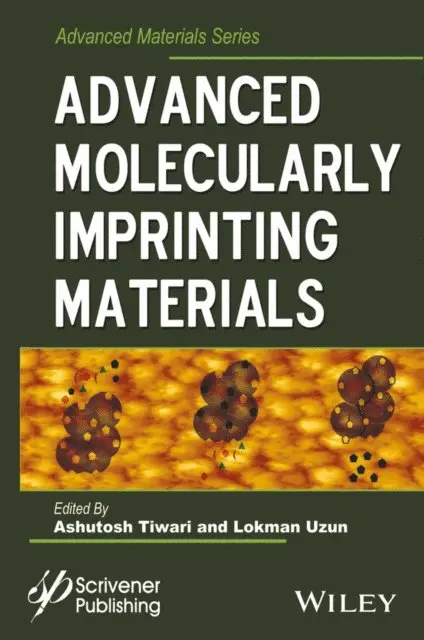
    Advanced Molecularly Imprinting Materials

    AvAshutosh Tiwari,Lokman Uzun

    Inbunden, Engelska, 2016

    Del i serien Advanced Material Series

    2 768 kr

    Beställningsvara. Skickas inom 5-8 vardagar. Fri frakt över 249 kr.

    Beskrivning

    Molecularly imprinted polymers (MIPs) are an important functional material because of their potential implications in diverse research fields. The materials have been developed for a range of uses including separation, environmental, biomedical and sensor applications. In this book, the chapters are clustered into two main sections: Strategies to be employed when using the affinity materials, and rational design of MIPs for advanced applications. In the first part, the book covers the recent advances in producing MIPs for sample design, preparation and characterizations. In the second part, the chapters demonstrate the importance and novelty of creation of recognition imprinted on the materials and surfaces for a range of microbial detection sensors in the biomedical, environmental and food safety fields as well as sensing human odor and virus monitoring systems.         Part 1: Strategies of affinity materials Molecularly imprinted polymersMIP nanomaterialsMicro- and nanotraps for solid phase extractionCarbonaceous affinity nanomaterialsFluorescent MIPsMIP-based fiber optic sensorsPart 2: Rational design of MIP for advanced applications MIP-based biomedical and environmental sensorsAffinity adsorbents for environmental biotechnologyMIP in food safetyMIP-based virus monitoringMIP-based drug delivery and controlled releaseBiorecognition imprints on the biosensor surfacesMIP-based sensing of volatile organic compounds in human body odourMIP-based microcantilever sensor system

    Produktinformation

    • Utgivningsdatum:2016-12-09
    • Mått:155 x 231 x 36 mm
    • Vikt:1 066 g
    • Format:Inbunden
    • Språk:Engelska
    • Serie:Advanced Material Series
    • Antal sidor:720
    • Förlag:John Wiley & Sons Inc
    • ISBN:9781119336297

    Utforska kategorier

    • Biokemisk teknik inom Naturvetenskap och teknik
    • Biomedicinsk teknik inom Medicin
    • Maskinteknik och material inom Naturvetenskap och teknik

    Mer om författaren

    Ashutosh Tiwari is Secretary General, International Association of Advanced Materials; Chairman and Managing Director of Tekidag AB (Innotech); Associate Professor and Group Leader, Smart Materials and Biodevices at the world premier Biosensors and Bioelectronics Centre, IFM-Linköping University; Editor-in-Chief, Advanced Materials Letters; a materials chemist and docent in the Applied Physics with the specialization of Biosensors and Bioelectronics from Linköping University, Sweden. He has more than 100 peer-reviewed primary research publications in the field of materials science and nanotechnology and has edited/authored more than 35 books on advanced materials and technology.Lokman Uzun is an Associate Professor at Hacettepe University, Department of Chemistry, Ankara, Turkey and Associate Editor of Advanced Materials Letters. He has received his PhD in 2008 from Institute of Science in (Bio)Chemistry, Hacettepe University and has published 105 papers in SCI journals. His research interests are mainly materials science, surface modification, affinity interaction, polymer science, especially molecularly imprinted polymers and their applications in biosensors, bioseparation, food safety, and environmental sciences. He has produced novel polymers to detect, separate and purify important biological molecules, remove or deplete toxic molecules such as heavy metal ions, bilirubin, antibiotics, organic pollutants, and undesired proteins from serum and aqueous solutions.

    Innehållsförteckning

    • Preface xiiiPart 1 Strategies of Affinity Materials1 Recent Molecularly Imprinted Polymer-based Methods for Sample Preparation 3Antonio Martín-Esteban1.1 Introduction 31.2 Molecularly Imprinted Solid-phase Extraction 61.3 Molecularly Imprinted Solid-phase Microextraction 141.4 Molecularly Imprinted Stir Bar Sorptive Extraction 171.5 Other Formats 181.6 Conclusions 20References 212 A Genuine Combination of Solvent-free Sample Preparation Technique and Molecularly Imprinted Nanomaterials 29Santanu Patra, Ekta Roy, Rashmi Madhuri and Prashant K. Sharma2.1 Introduction 302.2 Molecularly Imprinted Polymer Modified Fiber for Solid-phase Microextraction 402.3 In-tube Solid-phase Microextraction Technique 552.4 Monolithic Fiber 582.5 Micro-solid-phase Extraction 702.6 Stir-bar Sorptive Extraction 732.7 Conclusion and Future Scope 76Acknowledgments 76Abbreviations 77References 783 Fluorescent Molecularly Imprinted Polymers 89Kornelia Gawlitza, Wei Wan, Sabine Wagner and Knut Rurack3.1 Introduction 893.2 Classes of Emitters to Endow MIPs with Fluorescence 913.3 Fluorescent Molecularly Imprinted Silica 1083.4 Post-imprinting of MIPs 1113.5 fMIPs as Labels 1133.6 Formats for fMIPs 1153.7 Conclusion 119References 1204 Molecularly Imprinted Polymer-based Micro- and Nanotraps for Solid-phase Extraction 129Rıdvan Say, Rüstem Keçili and Arzu Ersöz4.1 Introduction 1304.2 MIPs as SPE Materials 1304.3 Conclusions 149References 1535 Imprinted Carbonaceous Nanomaterials: A Tiny Looking Big Thing in the Field of Selective and Secific Analysis 165Ekta Roy, Santanu Patra, Rashmi Madhuri and Prashant K. Sharma5.1 Introduction 1665.2 Graphene-modified Imprinted Polymer 1795.3 Carbon Nanotubes-modified Imprinted Polymer 1905.4 Combination of graphene, CNTs, and MIPs 1975.5 Graphene Quantum Dots and/or Carbon Dots 1985.6 Fullerene 2015.7 Activated carbon 2025.8 Conclusions 203Acknowledgments 204List of abbreviations 204References 2056 Molecularly Imprinted Materials for Fiber-optic Sensor Platforms 217Yavuz Orhan Yaman, Necdet Başaran, Kübra Karayagiz, Zafer Vatansever, Cengiz Yegin, Önder Haluk Tekbaş and Müfrettin Murat Sari6.1 Introduction 2186.2 Material Aspect: Morphology and Physical Forms of MIPs in FO Sensors 2236.3 Molecularly Imprinting Technology for Fiber-optic Sensors 2316.4 State-of-the-art Fiber-optic Sensors Applications Using Molecularly Imprinted Materials 2686.5 Conclusion 273References 274Part 2 Rational Design of MIP for Advanced Applications7 Molecularly Imprinted Polymer-based Sensors for Biomedical and Environmental Applications 285Anca Florea, Oana Hosu, Bianca Ciui and Cecilia Cristea7.1 Introduction 2857.2 Molecularly Imprinted Polymers for Analytes of Biomedical Interest 2967.3 Molecularly Imprinted Polymers for Analytes of Environmental Interest 3067.4 Conclusion 314Acknowledgments 316References 3168 Molecularly Imprinted Polymers: The Affinity Adsorbents for Environmental Biotechnology 327Bo Mattiasson and Gizem Ertürk8.1 Introduction 3278.2 Molecularly Imprinted Polymers 3298.3 Monomers 3298.4 Cross-linking Agents 3318.5 Mode of Polymerization 3328.6 Cryogels 3348.7 Process Technology 3368.8 Applications 338References 3459 Molecular Imprinting Technology for Sensing and Separation in Food Safety 353Baran Önal Ulusoy, Mehmet Odabaşi and Neşe Hayat Aksoy9.1 Food Safety 3549.2 Food Analysis 3559.3 Current Separation Methods Used for Food Safety Purposes 3569.4 What Is MIP? 3579.5 MIP Applications Used for Food Safety Purposes 359References 37710 Advanced Imprinted Materials for Virus Monitoring 389Zeynep Altintas10.1 Introduction 39010.2 Virus Imprinting 39310.3 Artificial MIP Receptors for Viruses 39810.4 Virus Monitoring and Detection Using Biomimetic Sensors 39910.5 Virus Imprinting for Separation Technologies 40110.6 Conclusions 405References 40611 Design and Evaluation of Molecularly Imprinted Polymers as Drug Delivery Systems 413André Luís Morais Ruela and Gislaine Ribeiro Pereira11.1 Introduction 41411.2 Synthesis and Characterization of MIPs Intended for Drug Release Using Non-covalent Approaches 41811.3 Design and Evaluation of Drug Delivery Systems Based on MIPs 43611.4 Conclusions 445References 44612 Molecularly Imprinted Materials for Controlled Release Systems 455Yagmur Yegin, Gökhan Yilmaz, Ömer Karakoç, Cengiz Yegin, Servet Çete, Mustafa Akbulut and Müfrettin Murat Sari12.1 Introduction 45612.2 Selectivity, Release Mechanism and Functionality of MIPs-based CR Systems 45912.3 Molecularly Imprinted Polymers Production for Controlled Release 48212.4 Controlled Release Applications Using Molecularly Imprinted Materials-based Controlled Release 49112.5 Conclusion 506References 50713 Molecular Imprinting: The Creation of Biorecognition Imprints on the Biosensor Surfaces 523Gizem Ertürk and Bo Mattiasson13.1 Introduction 52313.2 Molecular Imprinting 52413.3 Microcontact Imprinting 52513.4 Capacitive Biosensors 52913.5 Surface Plasmon Resonance Biosensors 54113.6 Concluding Remarks 549References 55014 Molecular Imprinted Polymers for Sensing of Volatile Organic Compounds in Human Body Odor 561Sunil Kr. Jha14.1 Introduction 56214.2 MIP-QCM Sensor Array Preparation 57314.3 Chemical Vapor Sensing 57614.4 Analysis Outcomes 60314.5 Conclusion 624Acknowledgments 624References 62415 Development of Molecularly Imprinted Polymer-based Microcantilever Sensor System 637Meltem Okan and Memed Duman15.1 Introduction to Mass Sensors 63715.2 Principles of Mass Sensors 64015.4 Molecularly Imprinted Polymer Technology 65515.5 Molecularly Imprinted Polymer-based QCM Sensors 65815.6 Ongoing Studies on Molecularly Imprinted Polymers-based Microcantilevers 661Acknowledgments 669References 669