• Fri frakt över 249 kr
  • •
  • Snabba leveranser
  • •
  • Billiga böcker
Kundservice

Du är på sajten för privatpersoner.

Företag, bibliotek eller offentlig verksamhet?

Du handlar på classic.bokus.com, där alla dina funktioner finns intakta.
Till classic.bokus.com
Bokus logotyp. Gå till startsidan.
  • Erbjudanden
  • Nyheter
  • Student
  • Topplistor
  • Barn & ungdom
  • Bokus Play
  • E-böcker
  • Pocketböcker
  • Spel & pussel

Upp till 20% på populära nyheter →

Sidfot

Mina sidor

    Hjälp

    • Kundservice
    • Vanliga frågor och svar
    • Frakt och leverans
    • Retur vid ångerrätt
    • Reklamera vara
    • Betalning
    • Köpvillkor
    • Allmänna villkor
    • Information om webbplatsens tillgänglighet

    Om Bokus

    • Om oss
    • Pressrum
    • För studenter
    • För företag
    • För bibliotek och offentlig verksamhet
    • För leverantörer
    • Hållbarhet

    Populärt

    • Aktuella erbjudanden
    • Presentkort
    • Studentlitteratur
    • Nya böcker
    • Topplistor
    • Signerade böcker
    • Engelska böcker

    Inspiration

    • Boktips
    • BookTok
    • Populära bokserier
    • Barnbokskaraktärer
    • Populära författare

    Mina sidor

      Hjälp

      • Kundservice
      • Vanliga frågor och svar
      • Frakt och leverans
      • Retur vid ångerrätt
      • Reklamera vara
      • Betalning
      • Köpvillkor
      • Allmänna villkor
      • Information om webbplatsens tillgänglighet

      Om Bokus

      • Om oss
      • Pressrum
      • För studenter
      • För företag
      • För bibliotek och offentlig verksamhet
      • För leverantörer
      • Hållbarhet

      Populärt

      • Aktuella erbjudanden
      • Presentkort
      • Studentlitteratur
      • Nya böcker
      • Topplistor
      • Signerade böcker
      • Engelska böcker

      Inspiration

      • Boktips
      • BookTok
      • Populära bokserier
      • Barnbokskaraktärer
      • Populära författare
      Logotyp för Bokus
      Följ oss på Facebook (extern länk)Följ oss på Instagram (extern länk)Följ oss på YouTube (extern länk)Följ oss på TikTok (extern länk)
      bokus @ CookiesIntegritetspolicyKöpvillkor
      Till Citymail hemsida (extern länk)Till Budbee hemsida (extern länk)Till Postnord hemsida (extern länk)Till Schenker hemsida (extern länk)Till Early Bird hemsida (extern länk)Till Walleys hemsida (extern länk)
      1. Psykologi och pedagogik
      2. Pedagogik
      3. Pedagogisk teori och filosofi

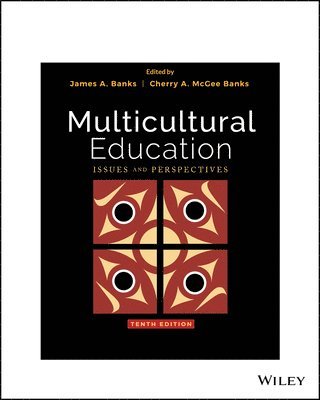
      Multicultural Education

      Issues and Perspectives

      AvJames A. Banks,Cherry A. McGee Banks

      Häftad, Engelska, 2020

      1 637 kr

      Beställningsvara. Skickas inom 5-8 vardagar. Fri frakt över 249 kr.

      Beskrivning

      As diversity continues to increase in the United States, ethnic, cultural, social-class, and linguistic gaps are widening between teachers and their students. The rapidly changing educational landscape presents unique challenges and opportunities for addressing diversity both creatively and constructively in schools. Multicultural Education helps current and future educators fully understand sophisticated concepts of culture; become more effective practitioners in diverse classrooms; and view race, class, gender, social class, and exceptionality as intersectional concepts.Now in its tenth edition, this bestselling textbook assists educators to effectively respond to the ways race, social class, and gender interact to influence student behavior and learning. Contributions from leading authorities in multicultural education discuss the effects of class and religion on education; differences in educational opportunities for male, female, and LGBTQ students; and issues surrounding non-native English speakers, students of color, and students with disabilities. Contemporary in relevance, this timely volume promotes multicultural education as a process of school reform. Practical advice helps teachers increase student academic achievement, work effectively with parents, improve classroom assessment, and benefit from diversity.

      Produktinformation

      • Utgivningsdatum:2020-07-09
      • Mått:203 x 252 x 18 mm
      • Vikt:748 g
      • Format:Häftad
      • Språk:Engelska
      • Antal sidor:384
      • Upplaga:10
      • Förlag:John Wiley & Sons Inc
      • ISBN:9781119510215

      Utforska kategorier

      • Pedagogisk teori och filosofi inom Psykologi och pedagogik
      • Utbildningsstrategier och utbildningspolitik inom Psykologi och pedagogik

      Mer om författaren

      Cherry A. McGee Banks is professor of education emeritus at the University of Washington, Bothell. She is the author of Improving Multicultural Education: Lessons from the Intergroup Education Movement and co-editor of the Handbook of Research of Multicultural Education. Professor Banks has served on several national committees and boards and is a member the Seattle Art Museum Board of Trustees.James A. Banks is the Kerry and Linda Killinger Endowed Chair in Diversity Studies Emeritus at the University of Washington, Seattle. His research focuses on multicultural education and diversity and citizenship education in a global context. He is the author of An Introduction to Multicultural Education (Sixth Edition, Pearson) and editor of Citizenship Education and Global Migration: Implications for Theory, Research, and Teaching, published by the American Educational Research Association (AERA).

      Innehållsförteckning

      • Preface xviiPart 1 Issues and Concepts 11 Multicultural Education: Characteristics and Goals 3by James A. Banks1.1 The Nature of Multicultural Education 31.2 The Historical Development of Multicultural Education 41.2.1 How Multicultural Education Developed 61.3 The Nature of Culture in the United States 61.3.1 The Meaning of Culture 61.3.2 Identification and Description of the U.S. Core Culture 71.3.3 Equality 71.3.4 Individualism and Individual Opportunity 81.3.5 Individualism and Groupism 81.3.6 Expansionism and Manifest Destiny 81.3.7 Microcultures in the United States 91.3.8 Groups and Group Identification 111.3.9 The Teaching Implications of Group Identification 121.3.10 The Interaction of Race, Class, and Gender 131.4 The Social Construction of Categories 141.4.1 Gender 141.4.2 Sexual Orientation 141.4.3 Race 141.4.4 Social Class 151.4.5 Exceptionality 151.5 The Dimensions of Multicultural Education 161.5.1 Content Integration 171.5.2 The Knowledge Construction Process 171.5.3 Prejudice Reduction 181.5.4 An Equity Pedagogy 181.5.5 An Empowering School Culture and Social Structure 191.6 The School as a Social System 20Summary 21Questions and Activities 21References 222 Culture, Teaching, and Learning 25by Christina Convertino, Bradley A. Levinson, and Norma González2.1 Getting to Know Culture 262.1.1 Some Early Origins of the Construct of Culture 272.1.2 Connecting Culture with Education 282.1.3 Culture Change and Changes to Culture 292.2 Culture and Educational Achievement 322.2.1 Cultural Deficit Models 322.2.2 Cultural Difference Model and Mismatch Hypothesis 332.2.3 Educational Achievement: Voluntary versus Involuntary Immigrant Students 342.3 Putting Culture to Work: Culture and Learning in the 21st Century 352.3.1 Rethinking Learning and Cultural Processes in Education 362.3.2 Learning in Context: What Teachers Need to Know 36Summary 38Questions and Activities 38References 38Part 2 Social Class and Religion 413 Social Class and Education 43by Lois Weis, Seong Won Han, and Hyunmyung Jo3.1 Education and the Production of Social and Economic Inequalities 453.2 Ability Grouping and Tracking 473.3 Official Knowledge and Its Distribution 483.4 Access and Outcomes in the Postsecondary Sector 493.5 Research on Class Privilege 52Summary 54Questions and Activities 54References 544 Christian Nation or Pluralistic Culture: Religion in American Life 60by Charles H. Lippy4.1 Europeans Plant Christianity in North America 614.2 Early Signs of Diversity 614.3 Common Themes 624.4 The Spread of Evangelical Protestantism 634.5 Religious Freedom and the Separation of Church and State 644.6 Diversity, Religious Freedom, and the Courts 674.7 Pluralism Becomes the Norm 704.8 New Faces of Pluralism 724.9 Summary and Educational Implications 764.10 Resources 76Questions and Activities 78References 78Part 3 Gender 815 Gender Bias: Past, Present, and Future 83by David Sadker, Karen Zittleman, and Melissa Koch5.1 The Hidden Civil Rights Struggle 845.2 Report Card: The Cost of Sexism in Schools 865.3 Gender Bias in the Classroom: The Curriculum 895.3.1 Invisibility: What You Don’t See Makes a Lasting Impression 905.3.2 Stereotyping: Glib Shortcuts 905.3.3 Imbalance and Selectivity: A Tale Half-Told 905.3.4 Unreality: Rose-Colored Glasses 905.3.5 Fragmentation: An Interesting Sideshow 915.3.6 Linguistic Bias: Words Matter 915.3.7 Cosmetic Bias: Pretty Wrapping 915.4 Gender Bias in the Classrooms: Student–Teacher Interaction 915.5 Trends and Challenges 935.5.1 The Boy Crisis 935.5.2 The Rebirth of Single-Sex Education 955.5.3 Supporting Lesbian, Gay, Bisexual, Transgender, Queer/Questioning (LGBTQ) Students 975.6 Strategies for Creating Gender-Fair Classrooms 98Questions and Activities 99References 996 Classrooms for Diversity: Rethinking Curriculum and Pedagogy 101by Mary Kay Thompson Tetreault6.1 Feminist Phase Theory 1026.2 Male-Defined Curriculum 1026.3 Contribution Curriculum 1046.4 Bifocal Curriculum 1046.5 Women’s Curriculum 1066.6 Gender-Balanced Curriculum 1096.7 Changes in Traditional Ways of Teaching 110Sample Lessons 113Language Arts 113Mathematics and Science 113Social Studies 115Summary 116Questions and Activities 116References 1167 Queer Lessons: Sexual and Gender Minorities in Multicultural Education 118by Cris Mayo7.1 Sexuality and Gender Identity 1197.2 LGBTQ Legal Progress, Backlash, and the School Curriculum 1207.3 Overlapping Histories of Multiculturalism and LGBTQ Movements 1227.4 Histories of Gay-Inclusive Multiculturalism and Other Curricular Inclusiveness 1247.5 Challenges to Homophobia and Heterosexism 1247.6 Challenging Assumptions about LGBTQ People 1257.7 Why Homophobia and Transphobia? 1287.8 Dilemmas of Queer Inclusion 1297.9 Seven Things to Do to Improve Education for Students of All Sexual Orientations and Genders 131Questions and Activities 132References 132Part 4 Race, Language Diversity, and Civic Education 1358 Approaches to Multicultural Curriculum Reform 137by James A. Banks8.1 The Mainstream-Centric Curriculum 1378.2 Public Sites and Popular History 1398.3 Efforts to Establish a Multicultural Curriculum 1418.4 Levels of Integration of Multicultural Content 1428.4.1 The Contributions Approach 1428.4.2 The Additive Approach 1448.4.3 The Transformation Approach 1468.4.4 The Social Action Approach 1488.4.5 Mixing and Blending Approaches 1508.5 Guidelines for Teaching Multicultural Content 153Summary 154Questions and Activities 155References 1559 Backstage Racism: Implications for Teaching 158by Leslie H. Picca and Ruth Thompson-Miller9.1 Context 1599.2 Methodology 1599.3 Journals by White Students 1609.3.1 The Frontstage 1619.3.2 The Backstage 1629.4 Journals by Students of Color 1649.5 Comparing the Journals Written by Whites and Students of Color 1689.6 Conclusion and Next Actionable Steps 169Journal Exercise 170How Do I Do This? 170Questions and Activities 172References 17210 Language Diversity and Schooling 174by Rachel Snyder and Manka Varghese10.1 The History of Linguistic Diversity in the United States 17510.2 Current Linguistic Diversity in the United States 17710.3 Historical and Legal Overview of Language Policy in the United States 17910.3.1 Implementation of Federal Policy 17910.3.2 Language Policy in Recent History 18110.4 Views on Language Learning and Teaching 18310.4.1 Language 18310.4.2 Theories of Second-Language Learning 18410.5 Programmatic Responses to Linguistic Diversity 18510.5.1 Instructional Programs 18510.5.2 The Bilingual Debate and the Research Context 18610.5.3 Program Types that Contribute to Successful Educational Practice 18710.6 Instructional Methods and Approaches 18810.6.1 English as a Second Language Instructional Strategies 18810.6.2 Instructional Methods for Bilingual Education 18910.7 Additional Considerations 19010.7.1 The Lived Reality of Today’s Linguistically Diverse Students 19010.8 Conclusion 191Questions and Activities 192Resources 192Professional Associations 193Websites 193References 19311 Civic Education for Non-Citizen and Citizen Students 198by James A. Banks11.1 Multicultural Citizenship Education and Cosmopolitan Human Rights Education 19911.2 A Framework for Civic Education for Non-Citizens 20011.3 Human Rights, Cosmopolitanism, and the Education of Non-Citizen Students 20111.4 Education for Human Rights and Cosmopolitan Citizenship 20211.5 The Universal Declaration of Human Rights in Education: Challenges and Opportunities 20311.6 The Stages of Cultural Identity and Human Rights Cosmopolitan Education 20511.7 Multicultural Citizenship Education for Citizen Students 20811.8 Mainstream and Transformative Civic Education 210Summary 211Acknowledgments 212Questions and Activities 212References 212Part 5 Exceptionality 21512 Educational Equality for Students with Disabilities 217by Sara C. Bicard and William L. Heward12.1 Identification of Students with Disabilities 21812.2 Is Disability a Social Construct? 22012.3 How Many Students with Disabilities are There? 22012.4 How are Students with Disabilities Classified? 22112.5 How is Eligibility for Special Education Determined? 22212.6 Does Classification Affect Instruction? 22212.7 Brief History of Educational Equality for Students with Disabilities 22212.8 The Individuals with Disabilities Act: A Legislative Mandate for Educational Equality for Students with Disabilities 22412.8.1 Major Principles of the Individuals with Disabilities Education Act 22412.8.2 Section 504 of the Rehabilitation Act of 1973 22912.8.3 The Americans with Disabilities Act 22912.8.4 The Elementary and Secondary Education Act 23012.9 Educational Equality for Students with Disabilities: Progress Made but Challenges Remain 23012.9.1 Effective Instruction 23112.9.2 General and Special Education Partnership 23212.9.3 Early Intervention 23312.9.4 Transition from School to Adult Life 23312.9.5 Special Education in a Diverse Society 234Summary 235Questions and Activities 236References 23613 Culturally Responsive Special Education in Inclusive Schools 240by Luanna H. Meyer, Hyun-Sook Park, and Saili Kulkarni13.1 Special Education as Exclusion and Segregation 24113.2 Strategies to Prevent Misdiagnosis and Disproportionality 24313.3 The Monoculture of Mainstream Education 24413.4 Parent Involvement and Working with Families 24613.5 Causes of Limited Parent Involvement 24713.6 Strategies for Schools to Increase Parent Involvement 24913.6.1 Preparation of Professionals for Partnerships with Parents 25013.6.2 Preparation of Parents for Partnerships with Educators 25113.7 Culturally Competent Teachers and Inclusive Pedagogies 25113.8 Preintervention Culturally Responsive Teaching 25213.9 Culturally Responsive Interventions 25413.10 Culturally Situated Schooling and Inclusive Pedagogies 25513.11 Quality Inclusive Schools 25513.12 Delivery of Special Education in the Context of General Education 25613.13 Managing Inclusive Classrooms 25713.14 Diversity and Caring Communities: Outcomes for the Social Good 258Questions and Activities 259References 260Part 6 School Reform and Classroom Assessment 26514 School Reform and Student Learning: A Multicultural Perspective 267by Sonia Nieto and Patty Bode14.1 Defining School Reform with a Multicultural Perspective 26814.2 Conditions for Systemic School Reform Based on a Multicultural Perspective 26914.3 School Reform Should Be Antiracist and Antibiased 27014.4 School Reform Should Reflect an Understanding and Acceptance of All Students as Having Talents and Strengths That Can Enhance Their Education 27314.5 School Reform Should Be Considered within the Parameters of Critical Pedagogy 27514.6 What Kind of World Do You Want to Live In? Practicing and studying the Declaration of Human Rights 27614.7 The People Most Intimately Connected with Teaching and Learning (Teachers, Families, and Students) Need to Be Meaningfully Involved in School Reform 27814.8 School Reform Needs to Be Based on High Expectations and Rigorous Standards for All Learners 27814.9 Conclusion 279Questions and Activities 280References 28015 Communities, Families, and Educators Working Together for School Improvement 284by Cherry A. McGee Banks15.1 Reasons Why Parent and Family Involvement in Schools is Important 28715.2 Historical Overview 28915.3 The Changing Face of the Family 29015.4 Parents with Special Needs 29315.5 Single Parents 29415.6 Low-Income Parents 29415.7 Teacher Concerns with Parent and Family Involvement 29515.8 Steps to Increase Parent and Family Involvement 29615.9 Establish Two-Way Communication Between the School and the Home 29715.10 Enlist Support from Other Staff Members and Students 29815.11 Enlist Support from the Community 29915.12 Develop Learning Resources for Parents to Use at Home 30015.13 Broaden the Conception of Parent and Community Involvement 30115.13.1 Parents Working with Their Own Children 30115.13.2 Professional Support Person for Instruction 30215.13.3 General Volunteers 30215.13.4 Decision-Makers 302Summary 303Questions and Activities 303Websites 303References 30416 Classroom Assessment and Diversity 306by Catherine S. Taylor and Susan B. Nolen16.1 Bias and Sensitivity Issues in Assessment 30816.2 Lessons Learned from a Bias and Sensitivity Review Panel 31016.2.1 “Othering” 31016.2.2 Consistency with Culture 31016.2.3 Respect for Indigenous Peoples 31116.2.4 Developing Interpretations 31116.2.5 Culturally Inappropriate Content 31116.3 Investigating Potential Bias through Statistical Analyses 31216.3.1 The Case of Bias Due to Multiple-Choice Format 31316.4 The Impact of Language Complexity on ELL Students’ Performance 31416.5 Potential Bias in Computer-Based Testing 31516.6 The Effects of Engagement on Assessment Performance 31716.7 The Social Context of Assessment 32116.8 Teacher Assessment Practices 322Summary 323Questions and Activities 323References 324Appendix: Multicultural Resources 329Glossary 333Contributors 339Index 343
      Hoppa över listan

      Du kanske också är intresserad av

      James A. Banks, Cherry A. McGee Banks - Handbook of Research on Multicultural Education, Inbunden

      Handbook of Research on Multicultural Education

      James A. Banks, Cherry A. McGee Banks

      Inbunden, 2003

      1 893 kr

      James A. Banks - Cultural Diversity and Education, Häftad

      Cultural Diversity and Education

      James A. Banks

      Häftad, 2015

      4,0 utav 5 stjärnor. Totalt antal röster:(1)

      1 026 kr

      Banks, James A. Banks - Diversity and Citizenship Education, Häftad

      Diversity and Citizenship Education

      Banks, James A. Banks

      Häftad, 2007

      424 kr

      James A. Banks - Diversity, Transformative Knowledge, and Civic Education, Inbunden

      Diversity, Transformative Knowledge, and Civic Education

      James A. Banks

      Inbunden, 2020

      2 376 kr

      James A. Banks - Race, Culture, and Education, E-bok

      Race, Culture, and Education

      James A. Banks

      E-bok
      2006

      1 059 kr

      James A. Banks - Race, Culture, and Education, Inbunden

      Race, Culture, and Education

      James A. Banks

      Inbunden, 2006

      2 596 kr

      James A. Banks - Race, Culture, and Education, Häftad

      Race, Culture, and Education

      James A. Banks

      Häftad, 2006

      902 kr

      James A. Banks - Routledge International Companion to Multicultural Education, E-bok

      Routledge International Companion to Multicultural Education

      James A. Banks

      E-bok
      2009

      1 418 kr

      Måns Petter Zelmerlöw - När allt faller, Inbunden
      • -12%

      När allt faller

      Måns Petter Zelmerlöw

      Inbunden, 2026

      229 kr259 kr

      James A. Banks - Diversity, Transformative Knowledge, and Civic Education, E-bok

      Diversity, Transformative Knowledge, and Civic Education

      James A. Banks

      E-bok
      2020

      774 kr