• Fri frakt över 249 kr
  • •
  • Snabba leveranser
  • •
  • Billiga böcker
Kundservice

Du är på sajten för privatpersoner.

Företag, bibliotek eller offentlig verksamhet?

Du handlar på classic.bokus.com, där alla dina funktioner finns intakta.
Till classic.bokus.com
Bokus logotyp. Gå till startsidan.
  • Erbjudanden
  • Nyheter
  • Student
  • Topplistor
  • Barn & ungdom
  • Bokus Play
  • E-böcker
  • Pocketböcker
  • Spel & pussel

10% rabatt på allt med kod: NYSTART10 →

Sidfot

Mina sidor

    Hjälp

    • Kundservice
    • Vanliga frågor och svar
    • Frakt och leverans
    • Retur vid ångerrätt
    • Reklamera vara
    • Betalning
    • Köpvillkor
    • Allmänna villkor
    • Information om webbplatsens tillgänglighet

    Om Bokus

    • Om oss
    • Pressrum
    • För studenter
    • För företag
    • För bibliotek och offentlig verksamhet
    • För leverantörer
    • Hållbarhet

    Populärt

    • Aktuella erbjudanden
    • Presentkort
    • Studentlitteratur
    • Nya böcker
    • Topplistor
    • Signerade böcker
    • Engelska böcker

    Inspiration

    • Boktips
    • BookTok
    • Populära bokserier
    • Barnbokskaraktärer
    • Populära författare
    Logotyp för Bokus
    Följ oss på Facebook (extern länk)Följ oss på Instagram (extern länk)Följ oss på YouTube (extern länk)Följ oss på TikTok (extern länk)
    bokus @ CookiesAnpassa cookiesIntegritetspolicyKöpvillkor
    Till Citymail hemsida (extern länk)Till Budbee hemsida (extern länk)Till Postnord hemsida (extern länk)Till Schenker hemsida (extern länk)Till Early Bird hemsida (extern länk)Till Walleys hemsida (extern länk)
    1. Språk och ordböcker
    2. Språkvetenskap och lingvistik

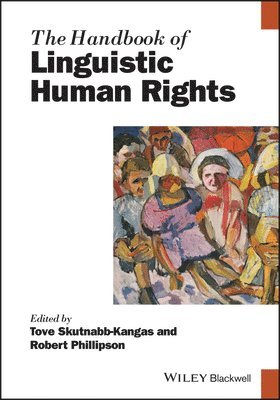
    Handbook of Linguistic Human Rights

    AvTove Skutnabb-Kangas,Robert Phillipson

    Häftad, Engelska, 2024

    Del i serien Wiley Handbooks in Linguistics

    570 kr

    Beställningsvara. Skickas inom 5-8 vardagar. Fri frakt över 249 kr.

    Beskrivning

    A groundbreaking new work that sheds light on case studies of linguistic human rights around the world, raising much-needed awareness of the struggles of many peoples and communities The first book of its kind, the Handbook of Linguistic Human Rights presents a diverse range of theoretically grounded studies of linguistic human rights, exemplifying what linguistic justice is and how it might be achieved. Through explorations of ways in which linguistic human rights are understood in both national and international contexts, this innovative volume demonstrates how linguistic human rights are supported or violated on all continents, with a particular focus on the marginalized languages of minorities and Indigenous peoples, in industrialized countries and the Global South. Organized into five parts, this volume first presents approaches to linguistic human rights in international and national law, political theory, sociology, economics, history, education, and critical theory. Subsequent sections address how international standards are promoted or impeded and cross-cutting issues, including translation and interpreting, endangered languages and the internet, the impact of global English, language testing, disaster situations, historical amnesia, and more. This essential reference work: Explores approaches to linguistic human rights in countries of great demographic diversity and conflictCovers cases of linguistic human rights in the Americas, China, Europe, North Africa, India, Nepal and New Zealand, including international minorities, such as the Kurds and the Roma, and the Deaf worldwide.Illustrates how education worldwide has often blocked off minority languages by not offering mother-tongue medium educationPresents and assesses conventions, declarations, and recommendations that recognize the rights of Indigenous peoples and minorities.Includes a selection of short texts that present additional existential evidence of linguistic human rights.Edited by two renowned leaders in the field, the Handbook of Linguistic Human Rights is an ideal resource for undergraduate and graduate students of language and law, sociolinguistics, applied linguistics, language policy, language education, indigenous studies, language rights, human rights, and globalization.

    Produktinformation

    • Utgivningsdatum:2024-09-05
    • Mått:178 x 272 x 19 mm
    • Vikt:1 021 g
    • Format:Häftad
    • Språk:Engelska
    • Serie:Wiley Handbooks in Linguistics
    • Antal sidor:736
    • Förlag:John Wiley and Sons Ltd
    • ISBN:9781119753834

    Utforska kategorier

    • Språkvetenskap och lingvistik inom Språk och ordböcker

    Mer om författaren

    Tove Skutnabb-Kangas is Adjunct Professor Emerita at Åbo Akademi University, Finland. Her research focuses on linguistic human rights, linguistic genocide, mother-tongue-based multilingual education, the subtractive spread of English, revitalization of Indigenous languages, and the relationship between biodiversity and linguistic and cultural diversity. She is the (co-)author or editor of some 50 books and over 400 scientific articles. She was awarded the UNESCO Linguapax Prize in 2003.Robert Phillipson is Professor Emeritus at Copenhagen Business School, Denmark. His research focuses on the role of English worldwide, language policy, linguistic justice, language pedagogy, and multilingualism. He co-edited the four-volume Language Rights with Tove Skutnabb-Kangas. His most influential books are Linguistic Imperialism, Linguistic Imperialism Continued, and English-only Europe? Challenging Language Policy. He was awarded the UNESCO Linguapax Prize in 2010.

    Recensioner i media

    "Compelling testament to the urgency of ensuring linguistic human rights worldwide and to Skutnabb-Kangas' and Phillipson's vision and tenacity in illuminating the field for half a century."—Nancy H. Hornberger, Professor Emerita, University of Pennsylvania"Our ability to communicate through language is central to our constitution, evolution, and identity as humans. It is therefore not surprising that this core characteristic of who we are has always been contested as social groups vie for advantage and superiority. The Handbook of Linguistic Human Rights brilliantly brings these realities into the 21st century, combining academic analysis, personal accounts, and evidence-based directions for change. The authors have created a repository of information and inspiration that will fuel language activism for many years to come."—Jim Cummins, Professor, The University of Toronto"This impressive and engaging edited Handbook is not only global in coverage and truly comprehensive in scope, it also introduces and formulates the concept linguistic human rights through state-of-the-art theoretical, legal and conceptual discussions. National and thematic examples of violations or good implementation are rounded out by evidence statements on some of humanity's most discerning linguistic identity violations."—Tove H. Malloy, Professor of European Studies, Europa-Universität Flensburg"An extraordinarily multifaceted handbook, covering theory and implementation, opportunities and obstacles, global and local perspectives, voices of academics and practitioners. It demonstrates why paying due attention to the – still too often neglected – linguistic dimension of human rights is so crucial for a world in which no one will be left behind."—Goro Christoph Kimura, Professor, Sophia University, Tokyo"The handbook is exceptionally valuable for understanding and appreciating the concept of linguistic human rights and their significance for social and linguistic justice. It is well organised, illuminating and highly interesting in its entirety. It can therefore be warmly recommended not only to lawyers and students of law, but to all those interested in the protection of linguistic rights of all people and some form of linguistic justice."—Marijana Javornik Èubriæ, Professor, Zagreb University"[In sum], this handbook...presents a wealth of perspectives and case studies of LHRs.... What unites them is the idea that, in addition to serving as the most important means of communication, languages and linguistic diversity are a human heritage deserving of legal protection."—Journal of Multilingual and Multicultural Development, July, 1 - 3

    Innehållsförteckning

    • Acknowledgements ixAbbreviations xiNotes on Contributors xv1 Introduction: Establishing Linguistic Human Rights 1Tove Skutnabb-Kangas and Robert PhillipsonPart I Approaches to Linguistic Human Rights 232 Linguistic Human Rights in International Law 25Robert Dunbar3 Sociolinguistic and Political Theory Perspectives on Language Rights 39Stephen May4 Linguistic and Epistemic Erasure in Africa: Coloniality, Linguistic Human Rights and Decoloniality 55Kathleen Heugh5 Struggling to Access Health Information in the Midst of a Pandemic: Linguistic Human Rights in Indonesia 71Hywel Coleman and David Fero6 Economic and Policy Issues in the Promotion of Linguistic Human Rights 95François Grin7 Preventing the Implementation of Linguistic Human Rights in Education 109Tove Skutnabb-Kangas8 Debating Linguistic Human Rights in Militarised Myanmar: Political Agitation and Policy Deliberation 127Joseph Lo Bianco9 Language Policy Implications of 'Global' English for Linguistic Human Rights 143Robert Phillipson10 From Neoliberal to Decolonial Language Rights and Reparative Linguistic Justice 159Ahmed KabelPart II International Standards for Linguistic Human Rights 17511 Some Shortcomings of Linguistic Rights 177Gudmundur Alfredsson12 Linguistic Human Rights Challenges in the Work of the UN Special Rapporteur on Minority Issues 183Fernand de Varennes13 Time, Politics, and Linguistic Human Rights: Bringing Words to our Songs 195Elsa Stamatopoulou14 Linguistic Human Rights Challenges in the Work of the UN Permanent Forum on Indigenous Issues 211Ole Henrik Magga15 Linguistic Human Rights in Relation to the Administration of Justice: A European Perspective 227Kristin Henrard16 Using the UN Human Rights Treaty System to Defend LHRs 235Andrea Bear Nicholas, Lorena Fontaine, Amos Key, Jr and Karihwakéron Tim Thompson17 The Bangkok Statement on Language and Inclusion: A Rose by Any Other Name? 251Kirk R. Person18 Linguistic Human Rights in the Work of the World Federation of the Deaf 267Victoria Manning, Joseph J. Murray and Alexandre BloxsPart III Case Studies: Linguistic Human Rights Violated 28119 Resistance to the Violations of Linguistic Human Rights in Nunavut, Canada 283Aluki Kotierk20 Linguicide and Historicide 295Andrea Bear Nicholas21 Linguistic Human Rights for Indigenous Peoples in the USA 303Jon Reyhner22 Linguistic Human Rights of Minorities in China 319Minglang Zhou23 Linguistic Human Rights in Tibet: Advocacy and Denial 327Gerald Roche24 Linguistic, Cultural, and Ethnic Genocide of the Uyghurs in Xinjiang, China 341Abduweli Ayup, Shungqar Tékin and Erkin Sidick25 Linguistic Human Rights in Kurdistan 357Jaffer Sheyholislami26 The Linguistic Human Rights Plight of Hungarians in Ukraine 373István Csernicskó and Miklós Kontra27 A Tale of Two Springs and an Impending Winter: Linguistic Human Rights and the Politics of Dignity in North Africa 383Ahmed Kabel28 English Linguistic Imperialism and Mother Tongue Medium Education in Ethiopia 393Yirga G. Woldeyes29 Judicial Interpretations of the Law to Safeguard Linguistic Minorities in India 405E. Annamalai30 Linguistic Human Rights and Higher Education: Reflections from India 413Shivani Nag31 Language Matters for Development, Peace, and Reconciliation: The Case for Change in Haiti 427Dominique Dupuy32 Romani Emancipation and Linguistic Human Rights 431Dieter W. HalwachsPart IV Case Studies: Implementing Linguistic Human Rights 44333 Finnish and Swedish as National Languages of Finland: A Linguistic Human Rights Success Story – Why and How? 445Markku Suksi34 When Implementation of Linguistic Human Rights Does Not Match Legislation – The Case of Sweden 453Jarmo Lainio35 Court Challenges and Linguistic Human Rights: The Canadian Case 469Pierre Foucher36 Linguistic Human Rights of Indigenous Sámi in the Finnish Education System 477Ulla Aikio-Puoskari / Gáppe Piera Jovnna Ulla37 A Time of Promise in Latin America: Linguistic Human Rights from within Language Communities 493Gabriela Pérez Báez and Yásnaya Elena Aguilar Gil38 Pueblo Revitalisation in Education in Southwest USA 507 Christine Sims39 Language Endangerment and Linguistic Human Rights of a Cross-Border Minority: Karelian in Russia and Finland 517Anneli Sarhimaa40 Linguistic Human Rights in Russia 533Janne Saarikivi41 Challenges in the Acknowledgement and Implementation of Linguistic Human Rights in Nepal 551Lava Deo Awasthi, Mark Turin, and Yogendra Prasad Yadava42 Linguistic Human Rights in Education in India: Odisha's Partial Success Story 561Ajit Mohanty43 Language Rights as Human Rights in Aotearoa New Zealand 577Richard Benton44 The History of Linguistic Human Rights at Gallaudet University 587Tawny Holmes Hlibok and Laurene E. SimmsPart V Cross-cutting Issues in Linguistic Human Rights 59545 The Role of Interpreting and Translation in Promoting Linguistic Human Rights 597Gabriel González Núñez46 Language Testing/Assessment and Linguistic Human Rights 605Elana Shohamy47 Promoting Linguistic Human Rights Through Language Documentation 613M. Paul Lewis48 Linguistic Human Rights, Living Tongues Institute for Endangered Languages, and the Rise of the Multilingual Internet 623Gregory D.S. Anderson and Anna L. Daigneault49 Disaster Linguicism as Deprivation of the Victims' Linguistic Human Rights 639Shinya Uekusa and Steve Matthewman50 Linguistic Human Rights and the Imperative to Remember in the Philippines 649Ruanni Tupas51 Existential Evidence: A Compilation 657Tove Skutnabb-Kangas and Robert Phillipson52 Afterword: Pursuing Linguistic Human Rights 679Robert Phillipson and Tove Skutnabb-KangasIndex 689