Robert Phillipson – författare
Visar alla böcker från författaren Robert Phillipson. Handla med fri frakt och snabb leverans.
23 produkter
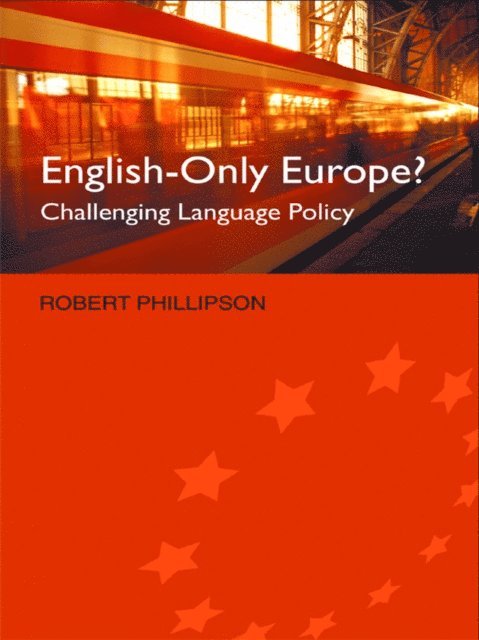
English-Only Europe?
Challenging Language Policy
Inbunden, 2003
2516 kr
Lägg i varukorg
English-Only Europe? explores the role of languages in the process of European integration.Languages are central to the development of an integrated Europe. The way in which the European Union deals with multilingualism has serious implications for both individual member countries and international …
English-Only Europe?
Challenging Language Policy
Häftad, 2003
649 kr
Lägg i varukorg
English-Only Europe? explores the role of languages in the process of European integration.Languages are central to the development of an integrated Europe. The way in which the European Union deals with multilingualism has serious implications for both individual member countries and international …
Language Rights
Av Tove Skutnabb-Kangas, Robert Phillipson
2016
21509 kr
Lägg i varukorg
Research on Language Rights has produced an enormous—and unwieldy—corpus of literature. Such work often has limitations because scholars from different disciplinary traditions have seldom coordinated their concerns or integrated the conceptual traditions of particular fields. To enable researchers …
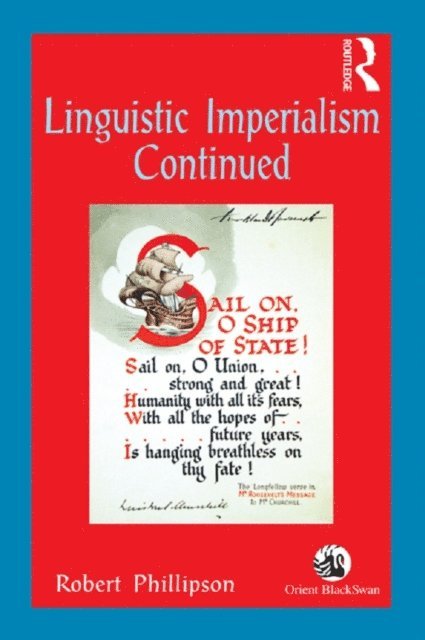
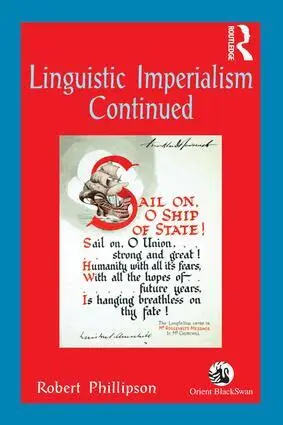
Linguistic Imperialism Continued
Häftad, 2010
928 kr
Lägg i varukorg
This volume brings together key writings since the 1992 publication of Linguistic Imperialism – Robert Phillipson’s controversial benchmark volume, which triggered a major re-thinking of the English teaching profession by connecting the field to wider political and economic forces. Analyzing how …
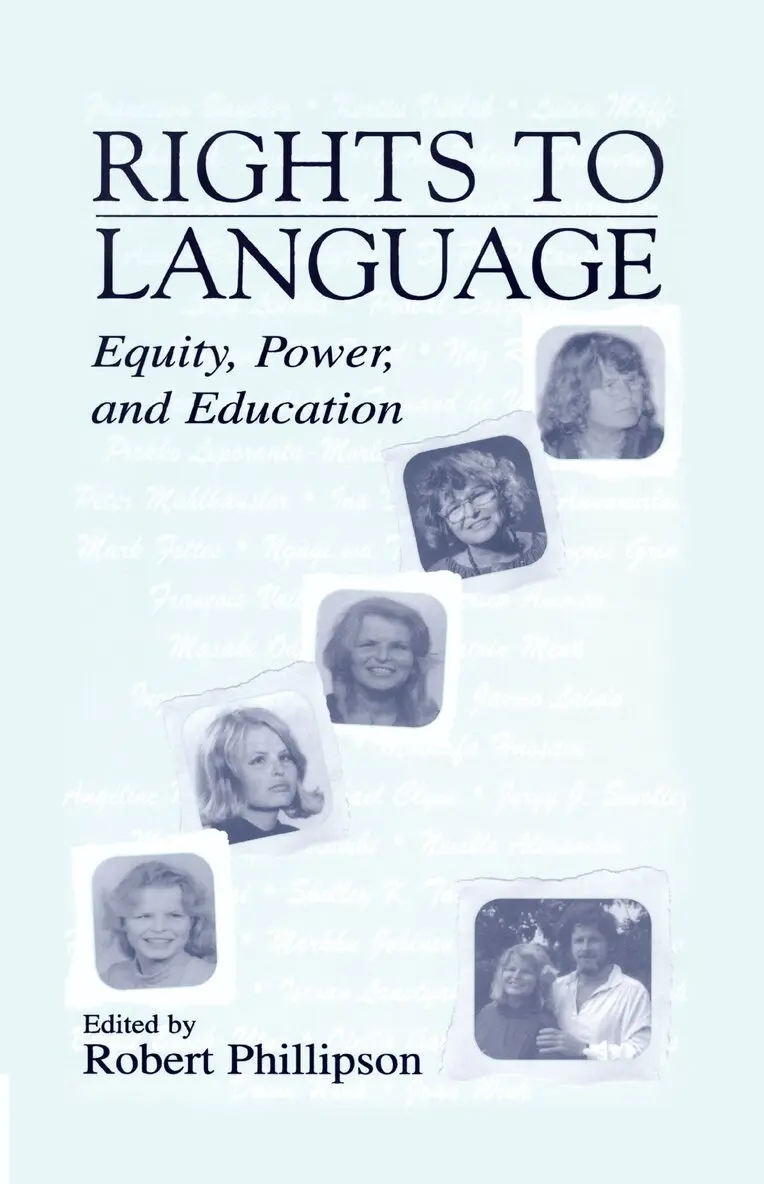
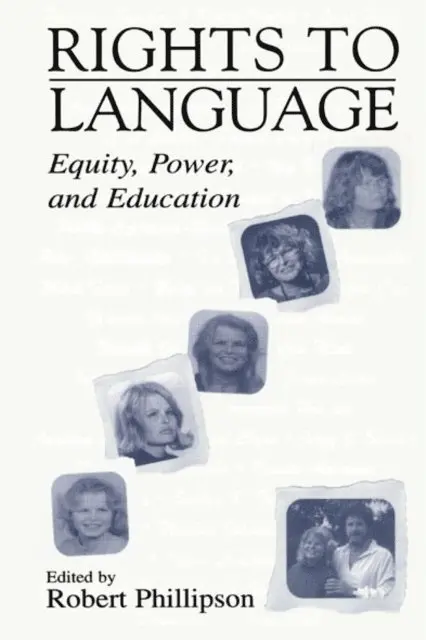
Rights to Language
Equity, Power, and Education
Inbunden, 2000
2445 kr
Lägg i varukorg
Rights to Language: Equity, Power, and Education brings together cutting-edge scholarship in language, education, and society from all parts of the world. Celebrating the 60th birthday of Tove Skutnabb-Kangas, it is inspired by her work in minority, indigenous, and immigrant education; …
Rights to Language
Equity, Power, and Education
Häftad, 2000
801 kr
Lägg i varukorg
Rights to Language: Equity, Power, and Education brings together cutting-edge scholarship in language, education, and society from all parts of the world. Celebrating the 60th birthday of Tove Skutnabb-Kangas, it is inspired by her work in minority, indigenous, and immigrant education; …
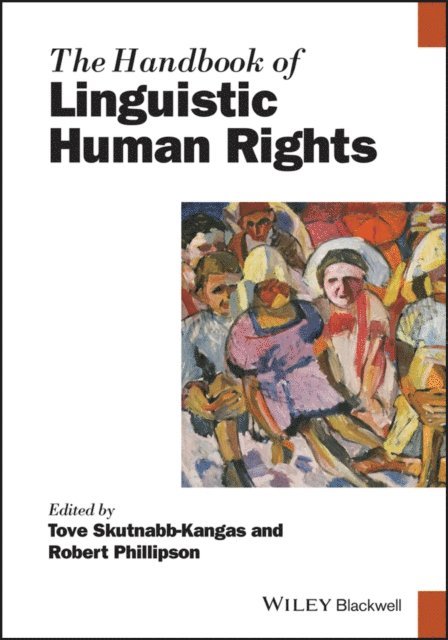
Handbook of Linguistic Human Rights
Av Tove Skutnabb-Kangas, Robert Phillipson
Häftad, 2024
584 kr
Lägg i varukorg
A groundbreaking new work that sheds light on case studies of linguistic human rights around the world, raising much-needed awareness of the struggles of many peoples and communities The first book of its kind, the Handbook of Linguistic Human Rights presents a diverse range of theoretically …
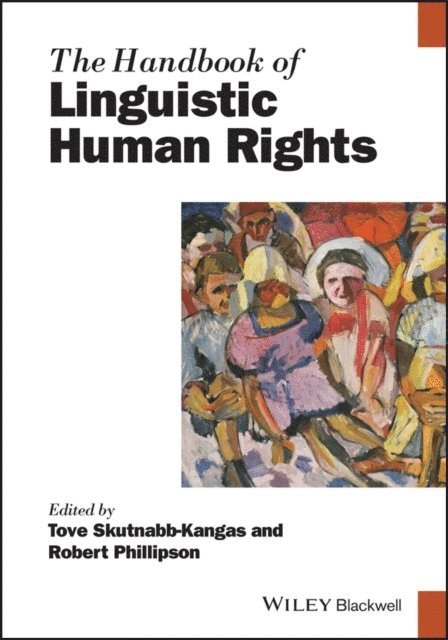
Handbook of Linguistic Human Rights
Av Tove Skutnabb-Kangas, Tove Skutnabb-Kangas m. fl.
Inbunden, 2022
2144 kr
Lägg i varukorg
A groundbreaking new work that sheds light on case studies of linguistic human rights around the world, raising much-needed awareness of the struggles of many peoples and communities The first book of its kind, the Handbook of Linguistic Human Rights presents a diverse range of theoretically …
Handbook of Linguistic Human Rights
Av Robert Phillipson, Tove Skutnabb-Kangas
E-bok, 2022
2446 kr
Lägg i varukorg
A groundbreaking new work that sheds light on case studies of linguistic human rights around the world, raising much-needed awareness of the struggles of many peoples and communities The first book of its kind, the Handbook of Linguistic Human Rights presents a diverse range of theoretically …
Handbook of Linguistic Human Rights
Av Robert Phillipson, Tove Skutnabb-Kangas
E-bok, 2022
671 kr
Lägg i varukorg
A groundbreaking new work that sheds light on case studies of linguistic human rights around the world, raising much-needed awareness of the struggles of many peoples and communities The first book of its kind, the Handbook of Linguistic Human Rights presents a diverse range of theoretically …
English-Only Europe?
Challenging Language Policy
E-bok, 2004
768 kr
Lägg i varukorg
English-Only Europe? explores the role of languages in the process of European integration. Languages are central to the development of an integrated Europe. The way in which the European Union deals with multilingualism has serious implications for both individual member countries and …
English-Only Europe?
Challenging Language Policy
E-bok, 2004
762 kr
Lägg i varukorg
English-Only Europe? explores the role of languages in the process of European integration. Languages are central to the development of an integrated Europe. The way in which the European Union deals with multilingualism has serious implications for both individual member countries and …
Linguistic Imperialism Continued
E-bok, 2013
1094 kr
Lägg i varukorg
This volume brings together key writings since the 1992 publication of Linguistic Imperialism – Robert Phillipson’s controversial benchmark volume, which triggered a major re-thinking of the English teaching profession by connecting the field to wider political and economic forces. Analyzing how …
Linguistic Imperialism Continued
E-bok, 2013
1101 kr
Lägg i varukorg
This volume brings together key writings since the 1992 publication of Linguistic Imperialism – Robert Phillipson’s controversial benchmark volume, which triggered a major re-thinking of the English teaching profession by connecting the field to wider political and economic forces. Analyzing how …
Rights to Language
Equity, Power, and Education
E-bok, 2000
913 kr
Lägg i varukorg
Rights to Language: Equity, Power, and Education brings together cutting-edge scholarship in language, education, and society from all parts of the world. Celebrating the 60th birthday of Tove Skutnabb-Kangas, it is inspired by her work in minority, indigenous, and immigrant education; …
Rights to Language
Equity, Power, and Education
E-bok, 2000
943 kr
Lägg i varukorg
Rights to Language: Equity, Power, and Education brings together cutting-edge scholarship in language, education, and society from all parts of the world. Celebrating the 60th birthday of Tove Skutnabb-Kangas, it is inspired by her work in minority, indigenous, and immigrant education; …
Linguistic Imperialism Continued
Inbunden, 2015
2445 kr
Lägg i varukorg
This volume brings together key writings since the 1992 publication of Linguistic Imperialism – Robert Phillipson’s controversial benchmark volume, which triggered a major re-thinking of the English teaching profession by connecting the field to wider political and economic forces. Analyzing how …
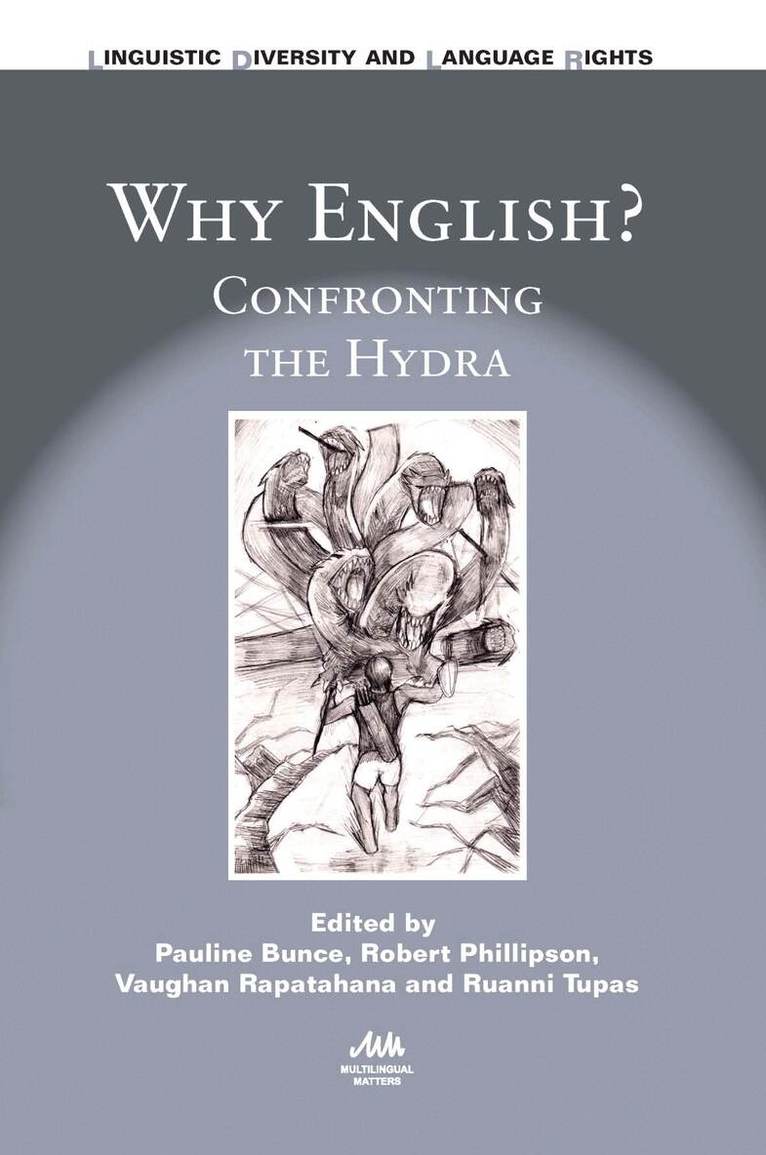
Why English?
Confronting the Hydra
Av Pauline Bunce, Robert Phillipson m. fl.
Inbunden, 2016
637 kr
Lägg i varukorg
This book explores the ways and means by which English threatens the vitality and diversity of other languages and cultures in the modern world. Using the metaphor of the Hydra monster from ancient Greek mythology, it explores the use and misuse of English in a wide range of contexts, revealing how …
Social Justice through Multilingual Education
Av Tove Skutnabb-Kangas, Robert Phillipson m. fl.
Häftad, 2009
485 kr
Lägg i varukorg
The principles for enabling children to become fully proficient multilinguals through schooling are well known. Even so, most indigenous/tribal, minority and marginalised children are not provided with appropriate mother-tongue-based multilingual education (MLE) that would enable them to succeed in …
Linguistic Human Rights
Overcoming Linguistic Discrimination
Av Tove Skutnabb-Kangas, Robert Phillipson
Inbunden, 1995
2386 kr
Lägg i varukorg
No detailed description available for "Linguistic Human Rights".
Linguistic Human Rights
Overcoming Linguistic Discrimination
Av Tove Skutnabb-Kangas, Robert Phillipson
Häftad, 1995
816 kr
Lägg i varukorg
Only a few hundred of the world's 6,000-7,000 languages have any kind of official status, and it is only speakers of official languages (speakers of dominant majority languages) who enjoy all linguistic human rights. As many of the collected papers in this book document, most linguistic minorities …
Linguistic Human Rights
Overcoming Linguistic Discrimination
Av Robert Phillipson, Tove Skutnabb-Kangas
E-bok, 2010
2182 kr
Lägg i varukorg
No detailed description available for "e;Linguistic Human Rights"e;.
Social Justice through Multilingual Education
Av Tove Skutnabb-Kangas, Robert Phillipson m. fl.
Inbunden, 2009
1439 kr
Tillfälligt slut
The principles for enabling children to become fully proficient multilinguals through schooling are well known. Even so, most indigenous/tribal, minority and marginalised children are not provided with appropriate mother-tongue-based multilingual education (MLE) that would enable them to succeed in …