
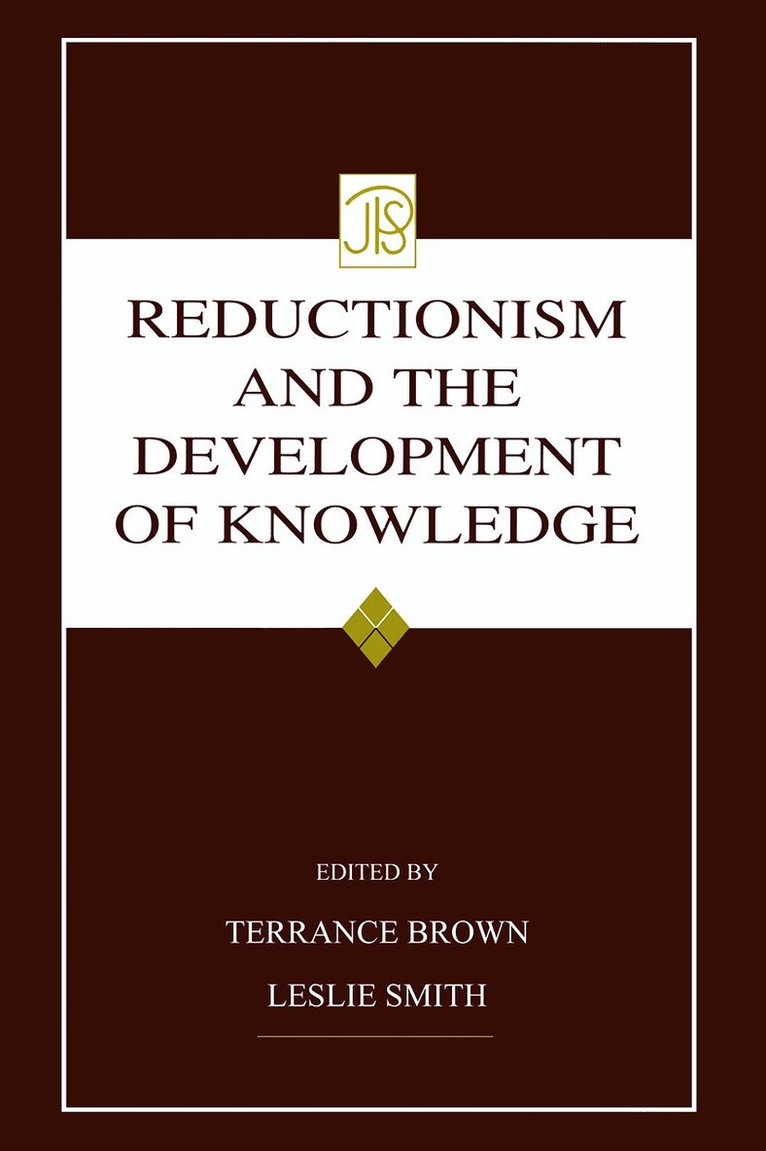
Reductionism and the Development of Knowledge
E-bok
PDF, Engelska, 20031 010 kr
Läs direkt i Bokus Reader – eller ladda ned till din enhet (PDF kräver ofta zoom och scroll på små skärmar).
Beskrivning
Among the many conceits of modern thought is the idea that philosophy, tainted as it is by subjective evaluation, is a shaky guide for human affairs. People, it is argued, are better off if they base their conduct either on know-how with its pragmatic criterion of truth (i.e., possibility) or on science with its universal criterion of rational necessity.
Since Helmholtz, there has been increasing concern in the life sciences about the role of reductionism in the construction of knowledge. Is psychophysics really possible? Are biological phenomena just the deducible results of chemical phenomena? And if life can be reduced to molecular mechanisms only, where do these miraculous molecules come from, and how do they work? On a psychological level, people wonder whether psychological phenomena result simply from genetically hardwired structures in the brain or whether, even if not genetically determined, they can be identified with the biochemical processes of that organ. In sociology, identical questions arise.
If physical or chemical reduction is not practicable, should we think in terms of other forms of reduction, say, the reduction of psychological to sociological phenomena or in terms of what Piaget has called the "reduction of the lower to the higher" (e.g., teleology)? All in all, then, reductionism in both naive and sophisticated forms permeates all of human thought and may, at least in certain cases, be necessary to it. If so, what exactly are those cases?
The papers collected in this volume are all derived from the 29th Annual Symposium of the Jean Piaget Society. The intent of the volume is to examine the issue of reductionism on the theoretical level in several sciences, including biology, psychology, and sociology. A complementary intent is to examine it from the point of view of the practical effects of reductionistic doctrine on daily life.
Produktinformation
Utforska kategorier
Hoppa över listan
Du kanske också är intresserad av
Morphisms and Categories
Jean Piaget, Gil Henriques, Edgar Ascher, Terrance Brown
Inbunden, 1992
2 401 kr