E-bok, Engelska, 2013
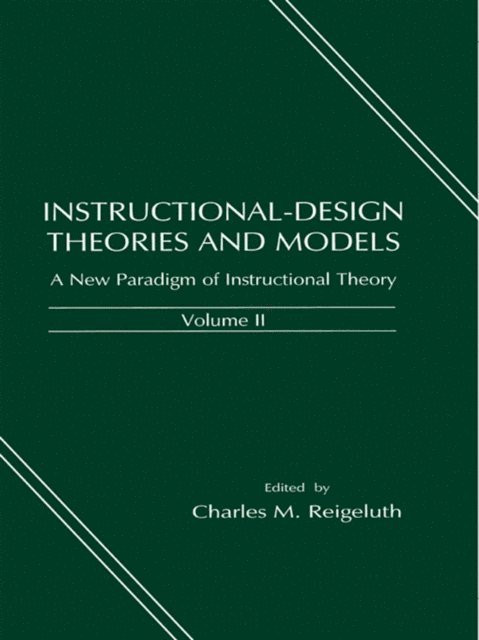
Instructional-design Theories and Models
993 kr
Läs direkt i Bokus Reader – eller ladda ned till din enhet (PDF kräver ofta zoom och scroll på små skärmar).
Beskrivning
Instructional theory describes a variety of methods of instruction (different ways of facilitating human learning and development) and when to use--and not use--each of those methods. It is about how to help people learn better.
This volume provides a concise summary of a broad sampling of new methods of instruction currently under development, helps show the interrelationships among these diverse theories, and highlights current issues and trends in instructional design. It is a sequel to Instructional-Design Theories and Models: An Overview of Their Current Status, which provided a "snapshot in time" of the status of instructional theory in the early 1980s. Dramatic changes in the nature of instructional theory have occurred since then, partly in response to advances in knowledge about the human brain and learning theory, partly due to shifts in educational philosophies and beliefs, and partly in response to advances in information technologies. These changes have made new methods of instruction not only possible, but also necessary in order to take advantage of new instructional capabilities offered by the new technologies. These changes are so dramatic that many argue they constitute a new paradigm of instruction, which requires a new paradigm of instructional theory.
In short, there is a clear need for this Volume II of Instructional Design Theories and Models. To attain the broad sampling of methods and theories it presents, and to make this book more useful for practitioners as well as graduate students interested in education and training, this volume contains twice as many chapters, but each half as long as the ones in Volume I, and the descriptions are generally less technical. Several unique features are provided by the editor to help readers understand and compare the theories in this book:
*Chapter 1, which discusses the characteristics of instructional theory and the nature of the new paradigm of instruction, helps the reader identify commonalities across the theories.
*Chapter forewords, which summarize the major elements of the instructional-design theories, are useful for reviewing and comparing theories, as well as for previewing a theory to decide if it is of interest, and for developing a general schema that will make it easier to understand.
*Editor''s notes provide additional help in understanding and comparing the theories and the new paradigm of instruction to which they belong.
*Units 2 and 4 have introductory chapters to help readers analyze and understand the theories in those units.
This is an essential book for anyone interested in exploring new approaches to fostering human learning and development and thinking creatively about ways to best meet the needs of learners in all kinds of learning contexts.
Readers are invited to use Dr. Charles Reigeluth''s Web site to comment and to view others'' comments about the instructional design theories in this book, as well as other theories. Point your browser to: www.indiana.edu/~idtheory
Produktinformation
- Utgivningsdatum: 2013-05-13
- Språk: Engelska
- Filformat: PDF
- Kopieringsskydd: LCP
- ISBN: 9781135706678
- Förlag: Taylor & Francis
Utforska kategorier
Betyg & recensioner
0 recensioner
Inga recensioner tillgängliga.