- Nyhet
Rethinking Gender, Work and Care in a New Europe
Theorising Markets and Societies in the Post-Postsocialist Era
573 kr
Beställningsvara. Skickas inom 10-15 vardagar. Fri frakt över 249 kr.
Du är på sajten för privatpersoner.
573 kr
Beställningsvara. Skickas inom 10-15 vardagar. Fri frakt över 249 kr.
Triin Roosalu is Associate Professor and Researcher at the Institute of International and Social Studies, Tallinn University, Estonia. Dirk Hofäcker is Professor of Quantitative Social Research Methods at the Department of Educational Sciences, University of Duisburg-Essen, Germany. He specializes in internationally comparative social research.
"A quarter-century after the 'transition' from socialism to capitalism in Eastern Europe, the dynamics of gender relations at work and in the home remain deeply marked by the region's unique history, as well as the effects of integration into the global capitalist system. This rich panorama of case studies brings together original work by an impressive group of scholars, deploying multiple methodologies. The chapters carefully excavate the variations in gender, work and family among and within Eastern European countries, while also highlighting broader trends in the region as a whole. This book is a major contribution to the literature on this vitally important topic." - Ruth Milkman, CUNY Graduate Center, USA "This volume stands out for addressing all the key issues of Eastern European women's employment situation and social standing in conceptually nuanced and empirically thoroughly documented ways. To find out how labor market institutions, family policies, family and work balances and occupational mobility interact for or against closing the gender gap, the authors compare the EU's new Central and Eastern European member states with each other as well as with the old member states. The volume makes a convincing case for taking seriously the similarities and differences in communist legacies, and in market pressures and social policy responses, and opens new avenues for cross-European comparative inquiry. For its encyclopedic coverage of relevant policy areas, country cases, and statistical and qualitative evidence, the book is an important contribution to scholarship in the field, and ought to be among the standard readings of university courses in studies of gender, labor markets, and social policy." - Bela Greskovits, Central European University, Hungary "This highly informative and original volume gives a systematic and up-to-date overview over life courses and employment trajectories of women in a wide range of European countries, with a special focus on East Central Europe. How have East Central European societies navigated the double challenge of a major crisis of labor markets and the dismantling of existing social and family policies after the breakdown of socialism, and what has this done to female labor power? How far do concepts and theories developed for the Western context travel to the East, and where do we need to re-think Western experiences on the basis of East European developments? Does it makes sense to speak of a post-socialist model of female employment trajectories or do we rather see a variety of experiences, spanning Europe as a whole? The volume answers these questions with thorough empirical analyses, rich comparisons, and innovative theoretical concepts. The result is a must read for students of labor markets, social policy and gender politics." - Dorothee Bohle, Central European University, Hungary "This book gives a much more nuanced view of women in post-communist labor markets than previous studies. By comparing post-communist countries from Central Europe and the former Soviet Union with West European countries, it shows, for example, that the differences between post-communist countries is often greater than differences between post-communist and West European countries. Case studies of individual post-communist countries also show that it is too simple to claim that women were winners or losers during the transformation process as different groups of women have fared differently." - Steven Saxonberg, Institute of International Relations, Czech Republic, and Dalarna University College, Sweden

Sonia Bertolini, Valentina Goglio, Dirk Hofäcker
Inbunden, 2024
1 108 kr
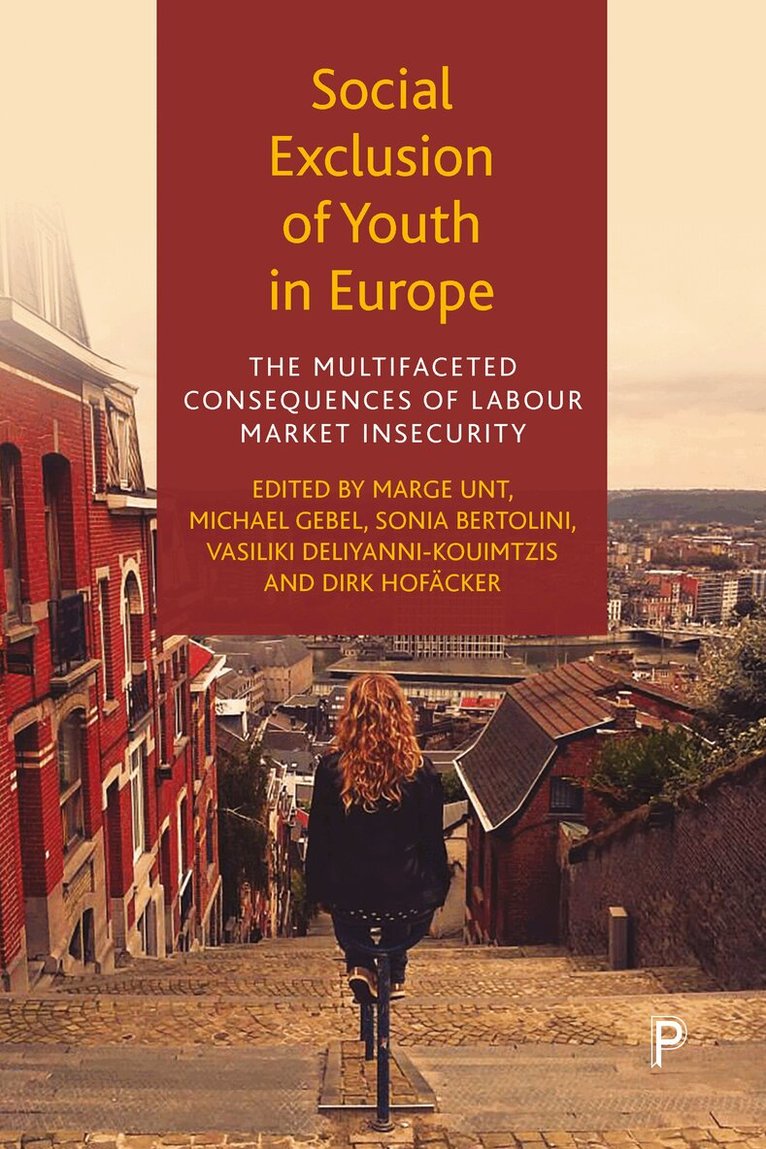
Marge Unt, Michael Gebel, Sonia Bertolini, Vassiliki Deliyanni-Kouimtzi, Dirk Hofäcker
Häftad, 2023
466 kr
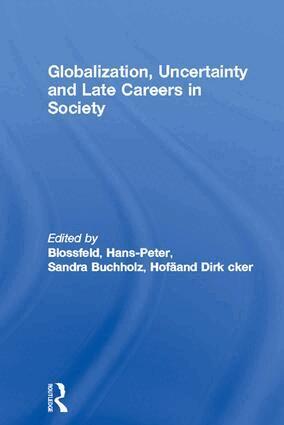
Hans-Peter Blossfeld, Sandra Buchholz, Dirk Hofäcker
Inbunden, 2006
2 473 kr
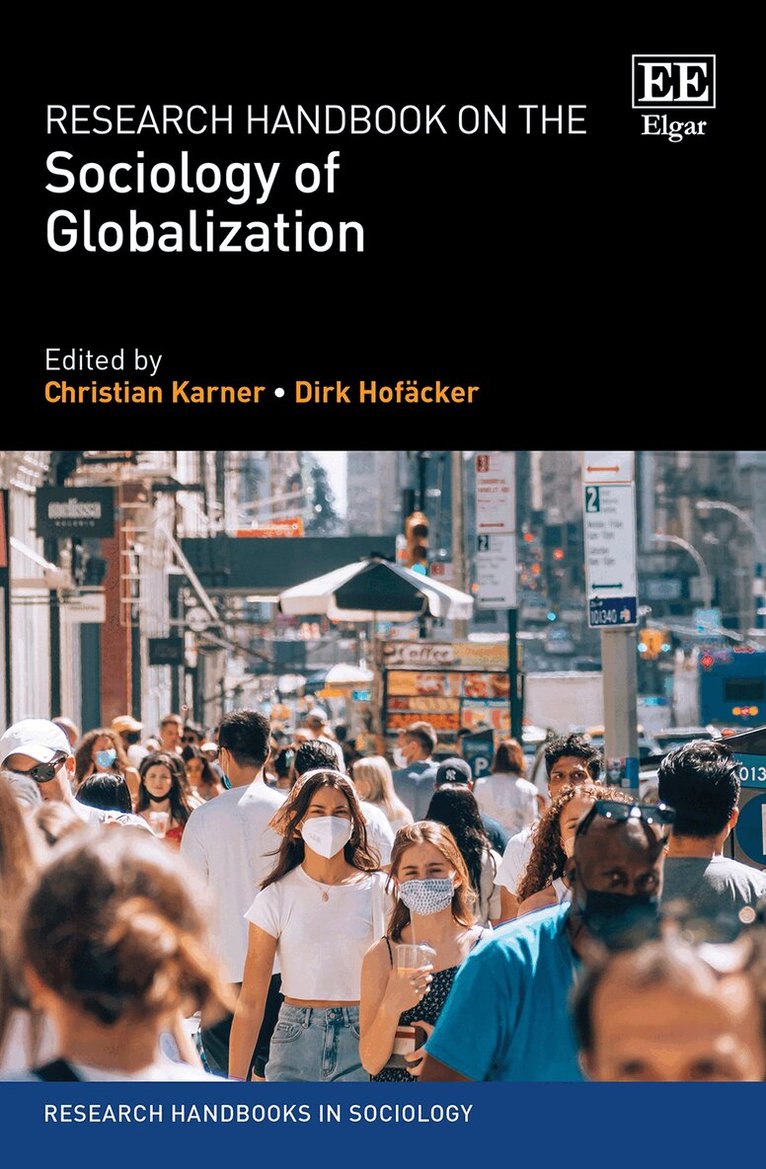
Christian Karner, Dirk Hofäcker
Inbunden, 2023
3 500 kr
Marge Unt, Marge Unt, Michael Gebel, Sonia Bertolini, Vassiliki Deliyanni-Kouimtzi, Dirk Hofäcker
Inbunden, 2021
1 412 kr
Du är på sajten för privatpersoner.
573 kr
Beställningsvara. Skickas inom 10-15 vardagar. Fri frakt över 249 kr.
Triin Roosalu is Associate Professor and Researcher at the Institute of International and Social Studies, Tallinn University, Estonia. Dirk Hofäcker is Professor of Quantitative Social Research Methods at the Department of Educational Sciences, University of Duisburg-Essen, Germany. He specializes in internationally comparative social research.
"A quarter-century after the 'transition' from socialism to capitalism in Eastern Europe, the dynamics of gender relations at work and in the home remain deeply marked by the region's unique history, as well as the effects of integration into the global capitalist system. This rich panorama of case studies brings together original work by an impressive group of scholars, deploying multiple methodologies. The chapters carefully excavate the variations in gender, work and family among and within Eastern European countries, while also highlighting broader trends in the region as a whole. This book is a major contribution to the literature on this vitally important topic." - Ruth Milkman, CUNY Graduate Center, USA "This volume stands out for addressing all the key issues of Eastern European women's employment situation and social standing in conceptually nuanced and empirically thoroughly documented ways. To find out how labor market institutions, family policies, family and work balances and occupational mobility interact for or against closing the gender gap, the authors compare the EU's new Central and Eastern European member states with each other as well as with the old member states. The volume makes a convincing case for taking seriously the similarities and differences in communist legacies, and in market pressures and social policy responses, and opens new avenues for cross-European comparative inquiry. For its encyclopedic coverage of relevant policy areas, country cases, and statistical and qualitative evidence, the book is an important contribution to scholarship in the field, and ought to be among the standard readings of university courses in studies of gender, labor markets, and social policy." - Bela Greskovits, Central European University, Hungary "This highly informative and original volume gives a systematic and up-to-date overview over life courses and employment trajectories of women in a wide range of European countries, with a special focus on East Central Europe. How have East Central European societies navigated the double challenge of a major crisis of labor markets and the dismantling of existing social and family policies after the breakdown of socialism, and what has this done to female labor power? How far do concepts and theories developed for the Western context travel to the East, and where do we need to re-think Western experiences on the basis of East European developments? Does it makes sense to speak of a post-socialist model of female employment trajectories or do we rather see a variety of experiences, spanning Europe as a whole? The volume answers these questions with thorough empirical analyses, rich comparisons, and innovative theoretical concepts. The result is a must read for students of labor markets, social policy and gender politics." - Dorothee Bohle, Central European University, Hungary "This book gives a much more nuanced view of women in post-communist labor markets than previous studies. By comparing post-communist countries from Central Europe and the former Soviet Union with West European countries, it shows, for example, that the differences between post-communist countries is often greater than differences between post-communist and West European countries. Case studies of individual post-communist countries also show that it is too simple to claim that women were winners or losers during the transformation process as different groups of women have fared differently." - Steven Saxonberg, Institute of International Relations, Czech Republic, and Dalarna University College, Sweden
Sonia Bertolini, Valentina Goglio, Dirk Hofäcker
Inbunden, 2024
1 108 kr
Marge Unt, Michael Gebel, Sonia Bertolini, Vassiliki Deliyanni-Kouimtzi, Dirk Hofäcker
Häftad, 2023
466 kr
Hans-Peter Blossfeld, Sandra Buchholz, Dirk Hofäcker
Inbunden, 2006
2 473 kr
Christian Karner, Dirk Hofäcker
Inbunden, 2023
3 500 kr
Marge Unt, Marge Unt, Michael Gebel, Sonia Bertolini, Vassiliki Deliyanni-Kouimtzi, Dirk Hofäcker
Inbunden, 2021
1 412 kr