- 10% rabatt på allt
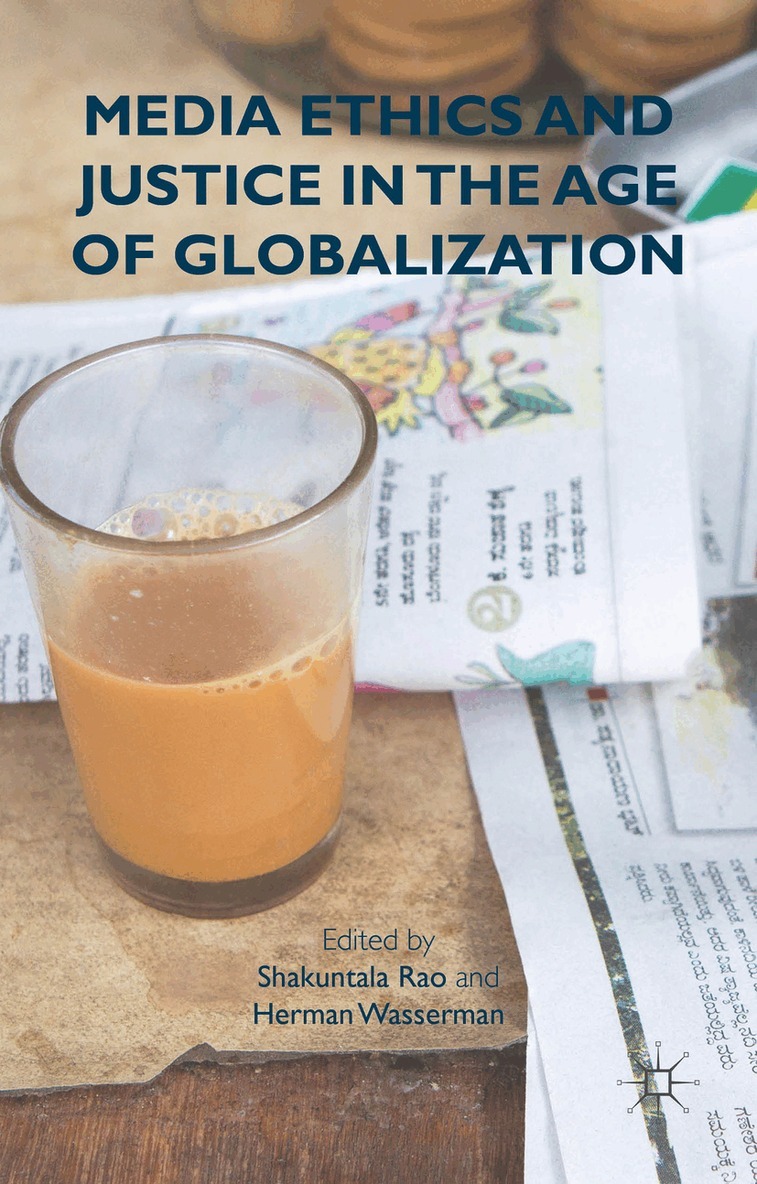
Media Ethics and Justice in the Age of Globalization
554 kr
Beställningsvara. Skickas inom 10-15 vardagar. Fri frakt över 249 kr.
Du är på sajten för privatpersoner.
554 kr
Beställningsvara. Skickas inom 10-15 vardagar. Fri frakt över 249 kr.
Mohammad Ayish, American University of Sharjah, United Arab EmiratesBharat Bhushan, Indian Council of Social Science Research, IndiaClifford Christians, University of Illinois, USANick Couldry, London School of Economics, UKVipul Mudgal, Centre for the Study of Developing Societies (CSDS), India Shahan Mufti, University of Richmond, USAShakuntala Rao, State University of New York, USAPrasun Sonwalkar, IndiaStephen J. A. Ward, Canadian Association of Journalists (CAJ), CanadaHerman Wasserman, University of Cape Town, South AfricaLee Wilkins, Wayne State University, USA
"Focusing particularly on the issue of justice as a universal ethical construct, this book contributes to understanding global media ethics. ... Summing Up: Recommended. Upper-division undergraduates through faculty." (J. L. Aucoin, Choice, Vol. 53 (5), January, 2016) 'This book offers a significant and theoretically well informed collection of essays exploring the reciprocal implications of globalization and developments in media. Drawing on cases studies from around the globe, the distinguished contributors offer evidence to inform the scholarly debate about morality in shaping media ecology. It is essential reading for everyone interested in the shifting complexities of media ethics and justice.' - Bob Franklin, Professor of Journalism Studies, Cardiff University, UK 'Rao and Wasserman's co-edited book argues for a journalism ethics linked to social justice, civil society, and citizenship, a normative argument that cannot be repeated often enough. While advocating strenuously for a global ethics, essayists with experience in academia and the practice of journalism in Pakistan, South Africa, United Arab Emirates, the United States and India have opened up the field for new research on national constraints, including challenges from government control and profit-making ownership.' - Bella Mody, Professor Emerita and deCastro Chair in Global Media (2004-2014), University of Colorado Boulder, USA
Du är på sajten för privatpersoner.
554 kr
Beställningsvara. Skickas inom 10-15 vardagar. Fri frakt över 249 kr.
Mohammad Ayish, American University of Sharjah, United Arab EmiratesBharat Bhushan, Indian Council of Social Science Research, IndiaClifford Christians, University of Illinois, USANick Couldry, London School of Economics, UKVipul Mudgal, Centre for the Study of Developing Societies (CSDS), India Shahan Mufti, University of Richmond, USAShakuntala Rao, State University of New York, USAPrasun Sonwalkar, IndiaStephen J. A. Ward, Canadian Association of Journalists (CAJ), CanadaHerman Wasserman, University of Cape Town, South AfricaLee Wilkins, Wayne State University, USA
"Focusing particularly on the issue of justice as a universal ethical construct, this book contributes to understanding global media ethics. ... Summing Up: Recommended. Upper-division undergraduates through faculty." (J. L. Aucoin, Choice, Vol. 53 (5), January, 2016) 'This book offers a significant and theoretically well informed collection of essays exploring the reciprocal implications of globalization and developments in media. Drawing on cases studies from around the globe, the distinguished contributors offer evidence to inform the scholarly debate about morality in shaping media ecology. It is essential reading for everyone interested in the shifting complexities of media ethics and justice.' - Bob Franklin, Professor of Journalism Studies, Cardiff University, UK 'Rao and Wasserman's co-edited book argues for a journalism ethics linked to social justice, civil society, and citizenship, a normative argument that cannot be repeated often enough. While advocating strenuously for a global ethics, essayists with experience in academia and the practice of journalism in Pakistan, South Africa, United Arab Emirates, the United States and India have opened up the field for new research on national constraints, including challenges from government control and profit-making ownership.' - Bella Mody, Professor Emerita and deCastro Chair in Global Media (2004-2014), University of Colorado Boulder, USA
Du är på sajten för privatpersoner.
554 kr
Beställningsvara. Skickas inom 10-15 vardagar. Fri frakt över 249 kr.
Mohammad Ayish, American University of Sharjah, United Arab EmiratesBharat Bhushan, Indian Council of Social Science Research, IndiaClifford Christians, University of Illinois, USANick Couldry, London School of Economics, UKVipul Mudgal, Centre for the Study of Developing Societies (CSDS), India Shahan Mufti, University of Richmond, USAShakuntala Rao, State University of New York, USAPrasun Sonwalkar, IndiaStephen J. A. Ward, Canadian Association of Journalists (CAJ), CanadaHerman Wasserman, University of Cape Town, South AfricaLee Wilkins, Wayne State University, USA
"Focusing particularly on the issue of justice as a universal ethical construct, this book contributes to understanding global media ethics. ... Summing Up: Recommended. Upper-division undergraduates through faculty." (J. L. Aucoin, Choice, Vol. 53 (5), January, 2016) 'This book offers a significant and theoretically well informed collection of essays exploring the reciprocal implications of globalization and developments in media. Drawing on cases studies from around the globe, the distinguished contributors offer evidence to inform the scholarly debate about morality in shaping media ecology. It is essential reading for everyone interested in the shifting complexities of media ethics and justice.' - Bob Franklin, Professor of Journalism Studies, Cardiff University, UK 'Rao and Wasserman's co-edited book argues for a journalism ethics linked to social justice, civil society, and citizenship, a normative argument that cannot be repeated often enough. While advocating strenuously for a global ethics, essayists with experience in academia and the practice of journalism in Pakistan, South Africa, United Arab Emirates, the United States and India have opened up the field for new research on national constraints, including challenges from government control and profit-making ownership.' - Bella Mody, Professor Emerita and deCastro Chair in Global Media (2004-2014), University of Colorado Boulder, USA