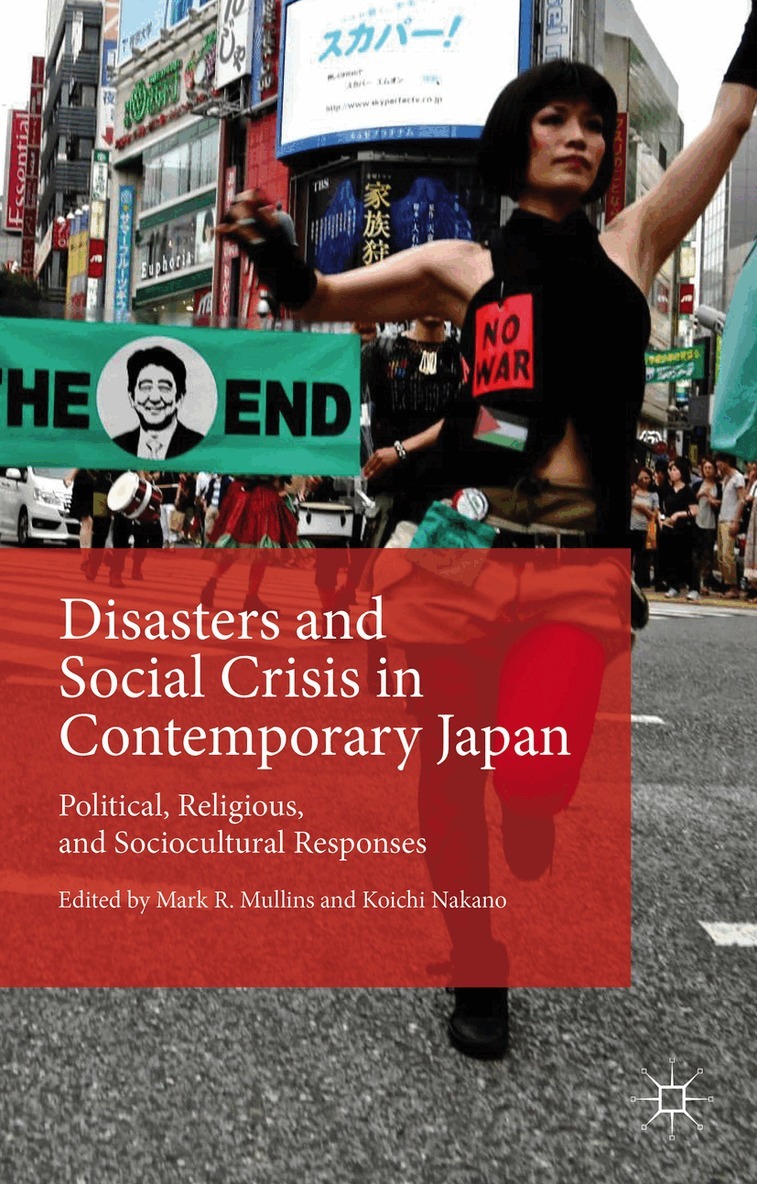
Disasters and Social Crisis in Contemporary Japan
Political, Religious, and Sociocultural Responses
AvMark R. Mullins,Koichi Nakano
1 326 kr
Beställningsvara. Skickas inom 10-15 vardagar. Fri frakt över 249 kr.
Du är på sajten för privatpersoner.
AvMark R. Mullins,Koichi Nakano
1 326 kr
Beställningsvara. Skickas inom 10-15 vardagar. Fri frakt över 249 kr.
Barbara Ambros, University of North Carolina at Chapel Hill, USA. Simon Avenell, Australian National University. Tim Graf, Heidelberg University, Germany, and Tohoku University, Japan. Phoebe Holdgrün, German Institute for Japanese Studies, Japan. Barbara Holthus, University of Vienna, Austria. Rikki Kersten, Murdoch University, Australia. Love Kindstrand, University of Chicago, USA. Jeff Kingston, Temple University, Japan. Keiko Nishimura, University of North Carolina at Chapel Hill, USA. Rumi Sakamoto, The University of Auckland, New Zealand. Ria Shibata, University of Otago, New Zealand. David H. Slater, Sophia University, Japan. Rebecca Suter, University of Sydney, Australia.
'How has Japanese society responded to the 11 March 2011 earthquake, tsunami, and nuclear disasters? What is the difference between the post-3.11 developments and those that followed the Hanshin-Awaji Earthquake and Aum Shinriky? disasters of 1995? What is the relationship between these events and the nationalistic initiatives advanced by the Liberal Democratic Party? This is a timely collection of essays that addresses these questions and examines the diverse Japanese responses to recent disasters.' - Shimazono Susumu, Sophia University, Japan 'Japan is no stranger to natural disasters. But the triple disasters of 11 March 2011 have deeply affected Japan as a whole, creating a ferment in which the centre often seems at odds with the periphery. The authors of this superb volume critically examine the political, religious, social and cultural responses, where grass roots activism challenges official complacency and assumptions about right to rule.' - Arthur Stockwin, Nissan Institute, University of Oxford, UK
Du är på sajten för privatpersoner.
AvMark R. Mullins,Koichi Nakano
1 326 kr
Beställningsvara. Skickas inom 10-15 vardagar. Fri frakt över 249 kr.
Barbara Ambros, University of North Carolina at Chapel Hill, USA. Simon Avenell, Australian National University. Tim Graf, Heidelberg University, Germany, and Tohoku University, Japan. Phoebe Holdgrün, German Institute for Japanese Studies, Japan. Barbara Holthus, University of Vienna, Austria. Rikki Kersten, Murdoch University, Australia. Love Kindstrand, University of Chicago, USA. Jeff Kingston, Temple University, Japan. Keiko Nishimura, University of North Carolina at Chapel Hill, USA. Rumi Sakamoto, The University of Auckland, New Zealand. Ria Shibata, University of Otago, New Zealand. David H. Slater, Sophia University, Japan. Rebecca Suter, University of Sydney, Australia.
'How has Japanese society responded to the 11 March 2011 earthquake, tsunami, and nuclear disasters? What is the difference between the post-3.11 developments and those that followed the Hanshin-Awaji Earthquake and Aum Shinriky? disasters of 1995? What is the relationship between these events and the nationalistic initiatives advanced by the Liberal Democratic Party? This is a timely collection of essays that addresses these questions and examines the diverse Japanese responses to recent disasters.' - Shimazono Susumu, Sophia University, Japan 'Japan is no stranger to natural disasters. But the triple disasters of 11 March 2011 have deeply affected Japan as a whole, creating a ferment in which the centre often seems at odds with the periphery. The authors of this superb volume critically examine the political, religious, social and cultural responses, where grass roots activism challenges official complacency and assumptions about right to rule.' - Arthur Stockwin, Nissan Institute, University of Oxford, UK