• Fri frakt över 249 kr
  • •
  • Snabba leveranser
  • •
  • Billiga böcker
Kundservice

Du är på sajten för privatpersoner.

Företag, bibliotek eller offentlig verksamhet?

Du handlar på classic.bokus.com, där alla dina funktioner finns intakta.
Till classic.bokus.com
Bokus logotyp. Gå till startsidan.
  • Erbjudanden
  • Nyheter
  • Student
  • Topplistor
  • Barn & ungdom
  • Bokus Play
  • E-böcker
  • Pocketböcker
  • Spel & pussel

10% rabatt på allt med kod: NYSTART10 →

Sidfot

Mina sidor

    Hjälp

    • Kundservice
    • Vanliga frågor och svar
    • Frakt och leverans
    • Retur vid ångerrätt
    • Reklamera vara
    • Betalning
    • Köpvillkor
    • Allmänna villkor
    • Information om webbplatsens tillgänglighet

    Om Bokus

    • Om oss
    • Pressrum
    • För studenter
    • För företag
    • För bibliotek och offentlig verksamhet
    • För leverantörer
    • Hållbarhet

    Populärt

    • Aktuella erbjudanden
    • Presentkort
    • Studentlitteratur
    • Nya böcker
    • Topplistor
    • Signerade böcker
    • Engelska böcker

    Inspiration

    • Boktips
    • BookTok
    • Populära bokserier
    • Barnbokskaraktärer
    • Populära författare
    Logotyp för Bokus
    Följ oss på Facebook (extern länk)Följ oss på Instagram (extern länk)Följ oss på YouTube (extern länk)Följ oss på TikTok (extern länk)
    bokus @ CookiesAnpassa cookiesIntegritetspolicyKöpvillkor
    Till Citymail hemsida (extern länk)Till Budbee hemsida (extern länk)Till Postnord hemsida (extern länk)Till Schenker hemsida (extern länk)Till Early Bird hemsida (extern länk)Till Walleys hemsida (extern länk)
    1. Historia och arkeologi
    2. Historia
    3. Historia: särskilda händelser och ämnen
    4. Socialhistoria och kulturhistoria

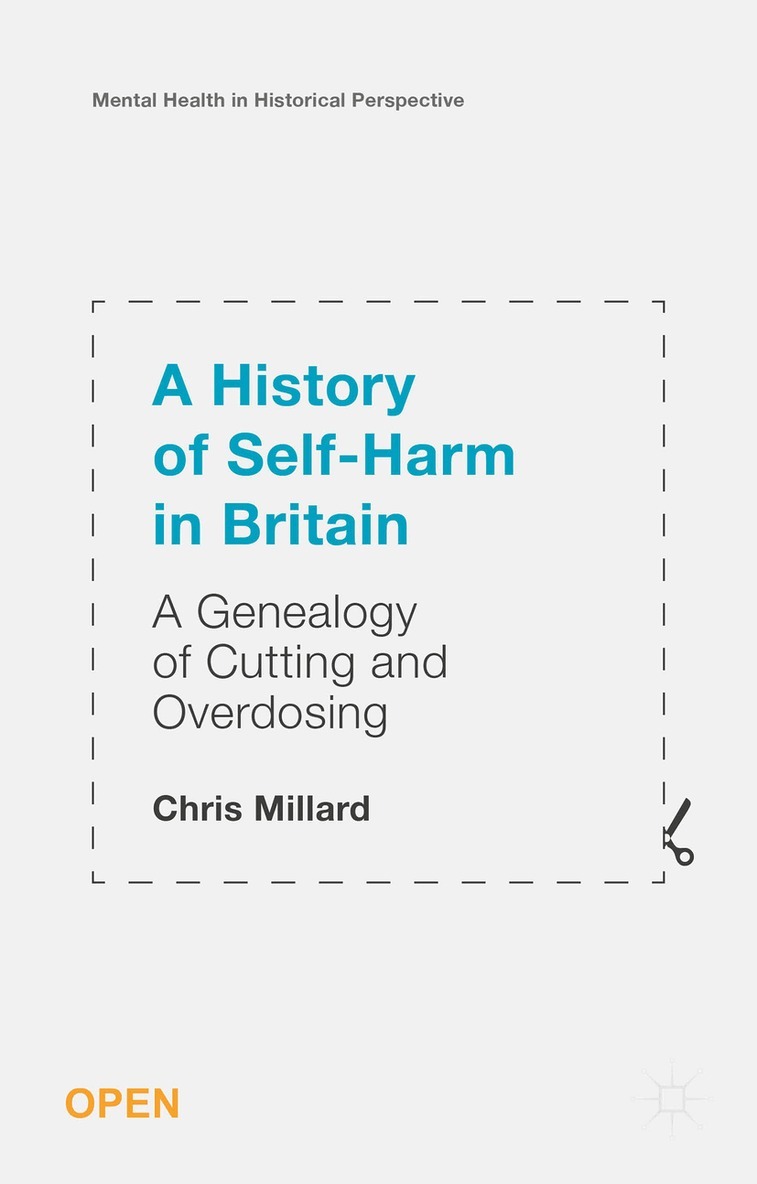
    History of Self-Harm in Britain

    A Genealogy of Cutting and Overdosing

    AvChris Millard

    Häftad, Engelska, 2015

    Del i serien Mental Health in Historical Perspective

    229 kr

    Beställningsvara. Skickas inom 10-15 vardagar. Fri frakt över 249 kr.

    Fler format och utgåvor

    Inbunden

    318 kr

    Beskrivning

    This book is open access under a CC BY license and charts the rise and fall of various self-harming behaviours in twentieth-century Britain. It puts self-cutting and overdosing into historical perspective, linking them to the huge changes that occur in mental and physical healthcare, social work and wider politics.

    Produktinformation

    • Utgivningsdatum:2015-08-12
    • Mått:140 x 216 x 17 mm
    • Vikt:362 g
    • Format:Häftad
    • Språk:Engelska
    • Serie:Mental Health in Historical Perspective
    • Antal sidor:268
    • Förlag:Palgrave Macmillan
    • ISBN:9781137547736

    Utforska kategorier

    • Socialhistoria och kulturhistoria inom Historia och arkeologi
    • Europas historia inom Historia och arkeologi
    • Sociala och etiska frågor inom Samhälle och politik

    Mer om författaren

    Chris Millard is Wellcome Trust Research Fellow at Queen Mary, University of London, UK, interested in Munchasuen syndromes (including Munchausen by Proxy and Munchausen by Internet), self-harm, attempted suicide and parity of esteem in mental health. He helps run the Carnival of Lost Emotions – engaging the public about the history of feelings.

    Recensioner i media

    "This is a brave and provocative book. By narrating the complex history of self-harm in the decades after the Second World War, Chris Millard achieves far more than simply illuminating what has become a prominent mental health issue for modern populations. He also encourages us to rethink how we conceive and write history and how we might better understand and question current political preferences for individualised, rather than social, explanations of mental distress. With a distinctive authorial voice, Millard's work provides a constructive model for the next generation of social historians of psychiatry." Mark Jackson, University of Exeter, UK 'Through a focus on Britain between the 1940s to the 1980s, Millard reveals how the self-harm subject was always more than a product of disembodied psychological and psychiatric theory and practice; it was inextricably a constructed part of changing social, political and ideological times. He thus defies the reigning ahistoricity and naturalization of the subject in its historiography, as well as challenges the current historically transcendent neurobiological constructions of self-harm. Acute and committed, this is critical history at its most productive.' Roger Cooter, Warwick University, UK

    Innehållsförteckning

    • This book is open access under a CC BY license. Introduction: Self-Harm From Social Setting To Neurobiology 1. Early Twentieth-Century Self-Harm: Cut Throats, General And Mental Medicine 2. Communicative Self-Damage: War, NHS And Social Work 3. Self-Harm Becomes Epidemic: Mental Health (1959) And Suicide (1961) Acts 4. Self-Harm As A Result Of Domestic Distress 5. Self-Harm As Self-Cutting: Inpatients And Internal Tension Conclusion: The Politics Of Self-Harm: Social Setting And Self-Regulation