• Fri frakt över 249 kr
  • •
  • Snabba leveranser
  • •
  • Billiga böcker
Kundservice

Du är på sajten för privatpersoner.

Företag, bibliotek eller offentlig verksamhet?

Du handlar på classic.bokus.com, där alla dina funktioner finns intakta.
Till classic.bokus.com
Bokus logotyp. Gå till startsidan.
  • Erbjudanden
  • Nyheter
  • Student
  • Topplistor
  • Barn & ungdom
  • Bokus Play
  • E-böcker
  • Pocketböcker
  • Spel & pussel

10% rabatt på allt med kod: NYSTART10 →

Sidfot

Mina sidor

    Hjälp

    • Kundservice
    • Vanliga frågor och svar
    • Frakt och leverans
    • Retur vid ångerrätt
    • Reklamera vara
    • Betalning
    • Köpvillkor
    • Allmänna villkor
    • Information om webbplatsens tillgänglighet

    Om Bokus

    • Om oss
    • Pressrum
    • För studenter
    • För företag
    • För bibliotek och offentlig verksamhet
    • För leverantörer
    • Hållbarhet

    Populärt

    • Aktuella erbjudanden
    • Presentkort
    • Studentlitteratur
    • Nya böcker
    • Topplistor
    • Signerade böcker
    • Engelska böcker

    Inspiration

    • Boktips
    • BookTok
    • Populära bokserier
    • Barnbokskaraktärer
    • Populära författare
    Logotyp för Bokus
    Följ oss på Facebook (extern länk)Följ oss på Instagram (extern länk)Följ oss på YouTube (extern länk)Följ oss på TikTok (extern länk)
    bokus @ CookiesAnpassa cookiesIntegritetspolicyKöpvillkor
    Till Citymail hemsida (extern länk)Till Budbee hemsida (extern länk)Till Postnord hemsida (extern länk)Till Schenker hemsida (extern länk)Till Early Bird hemsida (extern länk)Till Walleys hemsida (extern länk)
    1. Historia och arkeologi
    2. Historia
    3. Europas historia

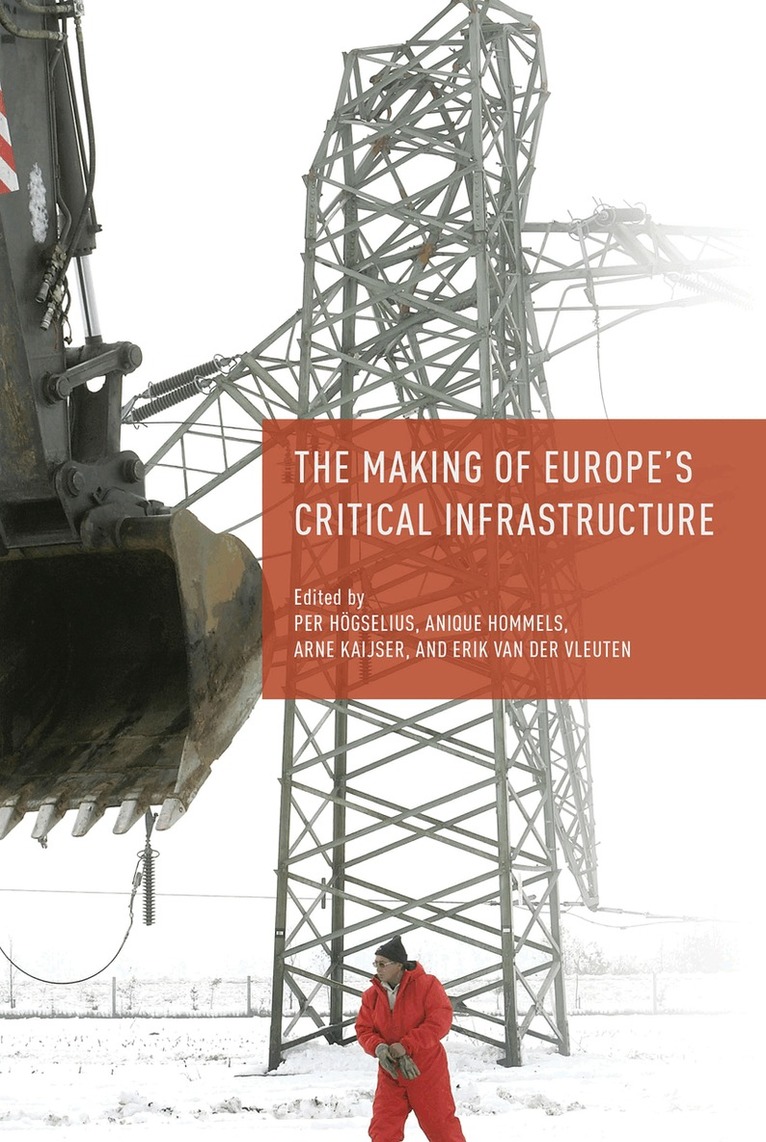
    Making of Europe's Critical Infrastructure

    Common Connections and Shared Vulnerabilities

    AvP. Högselius,A. Hommels

    Häftad, Engelska, 2013

    563 kr

    Beställningsvara. Skickas inom 10-15 vardagar. Fri frakt över 249 kr.

    Beskrivning

    Europe's critical infrastructure is a key concern to policymakers, NGOs, companies, and citizens today. A 2006 power line failure in northern Germany closed lights in Portugal in a matter of seconds. Several Russian-Ukrainian gas crises shocked politicians, entrepreneurs, and citizens thousands of kilometers away in Germany, France, and Italy. This book argues that present-day infrastructure vulnerabilities resulted from choices of infrastructure builders in the past. It inquires which, and whose, vulnerabilities they perceived, negotiated, prioritized, and inscribed in Europe's critical infrastructure. It does not take 'Europe' for granted, but actively investigates which countries and peoples were historically connected in joint interdependency, and why. In short, this collection unravels the simultaneous historical shaping of infrastructure, common vulnerabilities, and Europe.

    Produktinformation

    • Utgivningsdatum:2013-11-27
    • Mått:155 x 235 x 17 mm
    • Vikt:526 g
    • Format:Häftad
    • Språk:Engelska
    • Antal sidor:313
    • Förlag:Palgrave Macmillan
    • ISBN:9781137580986

    Utforska kategorier

    • Europas historia inom Historia och arkeologi
    • Industrialismen och industrihistoria inom Historia och arkeologi

    Mer om författaren

    Per Högselius is Associate Professor at the Division of History of Science, Technology and Environment at the Royal Institute of Technology (KTH), Stockholm, Sweden. His research has focused on international aspects and in particular East-West relations in the history of science, technology, and environment. Most recently he published Red Gas: Russia and the Origins of European Energy Dependence (2013).   Anique Hommels is Associate Professor at the Science, Technology & Society (MUSTS) research group, Maastricht University, the Netherlands. She has previously published Unbuilding Cities: Obduracy in Urban Sociotechnical Change (2005). Her current research focuses on vulnerability in technological cultures, urban disasters, and standardization in emergency communication.   Arne Kaijser is Professor of History of Technology at the Royal Institute of Technology (KTH), Stockholm, Sweden. His main research interests concern infrastructure, institutions, and environment in historical perspective. Together with Erik van der Vleuten he edited Networking Europe: Transnational Infrastructures and the shaping of Europe, 1850-2000 (2006).   Erik van der Vleuten is Professor of History of Technology at Eindhoven University of Technology, the Netherlands, and scientific director of the Foundation for the History of Technology(SHT). In 2013-2015 he chaired the Pan-European research network Tensions of Europe: Technology and the Making of Europe. Erik studies the mutual shaping of infrastructure, societal, and environmental changes.

    Recensioner i media

    "Each chapter presents a wealth of information that sheds fascinating light on a crucial yet understudied field. One learns a lot from delving into the empirically rich chapters that pave the way for future research. ... the book deals with a very important yet widely under-researched topic. It is highly relevant for EU scholars working in the fields of energy, telecommunications and air transport, as well as foreign and security policy." (Peter Slominski, Journal of Common Market Studies, Vol. 53 (5), 2015)

    Innehållsförteckning

    • General Introduction1. Europe's Critical Infrastructure and its Vulnerabilities: Promises, Problems, Paradoxes; Erik van der Vleuten, Per Högselius, Anique Hommels and Arne KaijserPART I: CONNECTING A CONTINENTIntroduction2. Natural Gas in Cold War Europe: The Making of a Critical Infrastructure; Per Högselius, Anna Åberg, and Arne Kaijser3. Inventing Electrical Europe: Interdependencies, Borders, Vulnerabilities; Vincent Lagendijk and Erik van der VleutenPART II: NEGOTIATING NEIGHBOURS Introduction4. An Uneasy Alliance: Negotiating Infrastructures at the Finnish-Soviet Border; Karl-Erik Michelsen5. Bulgarian Power Relations: The Making of a Balkan Power Hub; Ivan Tchalakov, Tihomir Mitev and Ivaylo Hristov6. Border-Crossing Electrons: Critical Energy Flows to and from Greece; Aristotle Tympas, Stathis Arapostathis, Katerina Vlantoni and Yiannis GaryfallosPART III: COPING WITH COMPLEXITYIntroduction7. EUROCONTROL: Negotiating Transnational Air Transportation in Europe; Lars Heide8. Connections, Criticality, and Complexity: Norwegian Electricity in its European Context; Lars Thue9. In Case of Breakdown: Dreams and Dilemmas of a Common European Standard for Emergency Communication; Anique Hommels and Eefje CleophasConclusion10. Europe's Infrastructure Vulnerabilities: Comparisons and Connections; Anique Hommels, Per Högselius, Arne Kaijser and Erik van derVleutenBibliographyIndex