• Fri frakt över 249 kr
  • •
  • Snabba leveranser
  • •
  • Billiga böcker
Kundservice

Du är på sajten för privatpersoner.

Företag, bibliotek eller offentlig verksamhet?

Du handlar på classic.bokus.com, där alla dina funktioner finns intakta.
Till classic.bokus.com
Bokus logotyp. Gå till startsidan.
  • Erbjudanden
  • Nyheter
  • Student
  • Topplistor
  • Barn & ungdom
  • Bokus Play
  • E-böcker
  • Pocketböcker
  • Spel & pussel

10% rabatt på allt med kod: NYSTART10 →

Sidfot

Mina sidor

    Hjälp

    • Kundservice
    • Vanliga frågor och svar
    • Frakt och leverans
    • Retur vid ångerrätt
    • Reklamera vara
    • Betalning
    • Köpvillkor
    • Allmänna villkor
    • Information om webbplatsens tillgänglighet

    Om Bokus

    • Om oss
    • Pressrum
    • För studenter
    • För företag
    • För bibliotek och offentlig verksamhet
    • För leverantörer
    • Hållbarhet

    Populärt

    • Aktuella erbjudanden
    • Presentkort
    • Studentlitteratur
    • Nya böcker
    • Topplistor
    • Signerade böcker
    • Engelska böcker

    Inspiration

    • Boktips
    • BookTok
    • Populära bokserier
    • Barnbokskaraktärer
    • Populära författare
    Logotyp för Bokus
    Följ oss på Facebook (extern länk)Följ oss på Instagram (extern länk)Följ oss på YouTube (extern länk)Följ oss på TikTok (extern länk)
    bokus @ CookiesAnpassa cookiesIntegritetspolicyKöpvillkor
    Till Citymail hemsida (extern länk)Till Budbee hemsida (extern länk)Till Postnord hemsida (extern länk)Till Schenker hemsida (extern länk)Till Early Bird hemsida (extern länk)Till Walleys hemsida (extern länk)
    1. Juridik
    2. Särskilda rättsområden
    3. Socialrätt och hälso- och sjukvårdsrätt

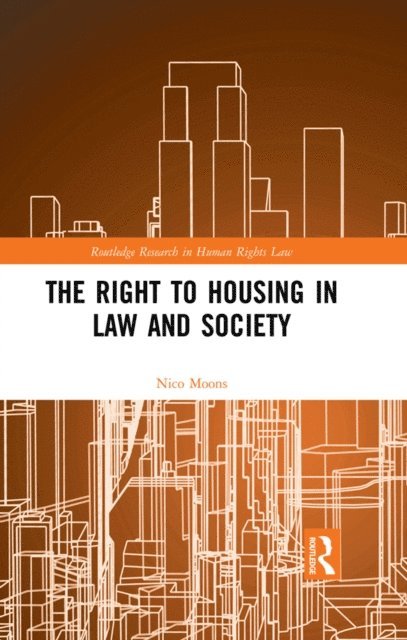
    Right to housing in law and society

    AvNico Moons

    Inbunden, Engelska, 2018

    Del i serien Routledge Research in Human Rights Law

    2 227 kr

    Beställningsvara. Skickas inom 10-15 vardagar. Fri frakt över 249 kr.

    Fler format och utgåvor

    Häftad

    613 kr

    E-bok

    725 kr

    E-bok

    725 kr

    Beskrivning

    From the very first negotiations of the International Covenant on Economic, Social and Cultural Rights half a century ago to the present day, socio-economic rights have often been regarded as less enforceable than civil and political rights. The right to adequate housing, even though protecting one of the most basic needs of human beings, has not escaped this classification. Despite its strong foundations in international, regional and domestic legislation, many people are still deprived of one or more of the different key elements that comprise adequate housing. How, then, can international human rights theory and case law be developed into effective vehicles at the domestic level? Rather than focusing merely on possibilities for individualized relief through the court system, The Right to Housing in Law and Society looks into more effective socio-economic rights realization by addressing both conceptual and practical stumbling blocks that hinder a more structural progress at the national level. The Flemish and Belgian housing legislation and policy are used to highlight the problems and illustrate the pathways here presented. While first and foremost legal in its approach, the book also offers a more sociological perspective on the functioning of the right to housing in practice. It shows the latest state of knowledge on the topic and will be of interest to researchers, academics, policymakers and students in the fields of international socio-economic rights law and human rights law more generally.

    Produktinformation

    • Utgivningsdatum:2018-05-16
    • Mått:152 x 229 x 20 mm
    • Vikt:640 g
    • Format:Inbunden
    • Språk:Engelska
    • Serie:Routledge Research in Human Rights Law
    • Antal sidor:258
    • Förlag:Taylor & Francis Ltd
    • ISBN:9781138093270

    Utforska kategorier

    • Socialrätt och hälso- och sjukvårdsrätt inom Juridik
    • Rättsvetenskap inom Juridik
    • Folkrätt inom Juridik

    Mer om författaren

    Nico Moons is Doctor of Law at the University of Antwerp, Belgium

    Innehållsförteckning

    • Introduction1. International Acknowledgment of the Importance of Housing 2. Approach and Aims of the Book 3. The Belgian and Flemish Right to Housing as Illustration PART I An Effective Right to Housing: Beyond Legal-Technical Issues 1 Human Dignity: A Guiding Principle for a Stronger Right to Housing? 1. Exploring the Content of Human Dignity and Its Use in a Human Rights Context A. History of the Concept B. Human Dignity in a Human Rights Context 1) First Function: A Foundation for Human Rights 2) Second Function: A Value/Right to Protect and Guarantee C. The Added Value and Pitfalls of Using Human Dignity 1) As an Equivalent of Decent or Adequate Housing 2) As an Open-Ended Norm for Courts and Other Institutions a. A Driving Force for Other Rights b. The Other Side of the Coin: A Race to the Bottom? c. Subjective vs. Objective Dignity 4. Impact on Economic, Social and Cultural Rights and the Right to Housing A. Obligations of Result or Conduct? According to Private or International Law? B. A Recipe for Confusion 5. Towards Result-Oriented Obligations? A. The Right to Housing as an Obligation of Result B. A Result-Oriented Approach 6. Conclusion 5 Progressive Realization and Retrogressive Measures 1. Introduction 2. The Concept of Progressive Realization under Scrutiny: From a Housing Rights Perspective A. Progressiveness as a Flexibility Device B. Flexibility Does Not Equal Freedom of Obligations 1) Drittwirkung 2) Immediate Obligations 3) Minimum Core C. Focus on Progressiveness 3. Retrogressive Measures and Financial Constraints A. Origins in International Human Rights Law B. Justification of Retrogressive Measures in International Human Rights Law 1) Presumption of Impermissibility 2) More Leeway for Budgetary Concerns? 3) Connection between Article 2(1) and 4 ICESCR 4) Budgetary Concerns: The Position of the European Committee of Social Rights C. The Application in Belgian Case Law 1) A Broader Margin of Appreciation: No Presumption of Non-Retrogression 2) Practical Problems: Establishing Retrogression 3) A Different Application of the Principle: The Proportionality Test D. Appropriateness of Retrogressive Measures 4. Conclusion 6 Towards Result-Oriented Obligations 1. International Monitoring Techniques 2. Enforceability of Progressive Realization A. A Review Criterion B. Reasonableness 1) Different Scopes of Reasonableness 2) Reasonableness as Appropriateness a. A Preliminary Proposal b. Possible Criticism and Imperfections 3. Combining Monitoring and Reasonableness A. Overview of the Proposal B. Requirements and Areas of Concern 1) The Monitoring Body 2) Ex-Ante and Ex-Post Analysis: Practical Difficulties 3) Enforceability of Progress 5. Conclusion Conclusions Index