• Fri frakt över 249 kr
  • •
  • Snabba leveranser
  • •
  • Billiga böcker
Kundservice

Du är på sajten för privatpersoner.

Företag, bibliotek eller offentlig verksamhet?

Du handlar på classic.bokus.com, där alla dina funktioner finns intakta.
Till classic.bokus.com
Bokus logotyp. Gå till startsidan.
  • Erbjudanden
  • Nyheter
  • Student
  • Topplistor
  • Barn & ungdom
  • Bokus Play
  • E-böcker
  • Pocketböcker
  • Spel & pussel

10% rabatt på allt med kod: NYSTART10 →

Sidfot

Mina sidor

    Hjälp

    • Kundservice
    • Vanliga frågor och svar
    • Frakt och leverans
    • Retur vid ångerrätt
    • Reklamera vara
    • Betalning
    • Köpvillkor
    • Allmänna villkor
    • Information om webbplatsens tillgänglighet

    Om Bokus

    • Om oss
    • Pressrum
    • För studenter
    • För företag
    • För bibliotek och offentlig verksamhet
    • För leverantörer
    • Hållbarhet

    Populärt

    • Aktuella erbjudanden
    • Presentkort
    • Studentlitteratur
    • Nya böcker
    • Topplistor
    • Signerade böcker
    • Engelska böcker

    Inspiration

    • Boktips
    • BookTok
    • Populära bokserier
    • Barnbokskaraktärer
    • Populära författare
    Logotyp för Bokus
    Följ oss på Facebook (extern länk)Följ oss på Instagram (extern länk)Följ oss på YouTube (extern länk)Följ oss på TikTok (extern länk)
    bokus @ CookiesAnpassa cookiesIntegritetspolicyKöpvillkor
    Till Citymail hemsida (extern länk)Till Budbee hemsida (extern länk)Till Postnord hemsida (extern länk)Till Schenker hemsida (extern länk)Till Early Bird hemsida (extern länk)Till Walleys hemsida (extern länk)
    1. Ekonomi och Ledarskap
    2. Företagsekonomi
    3. Organisationsteori

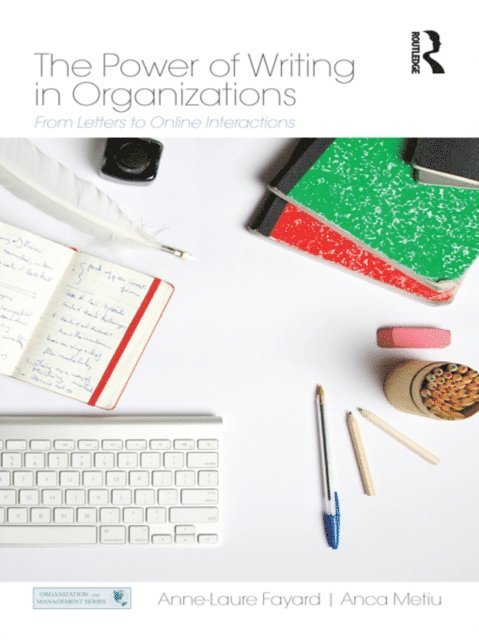
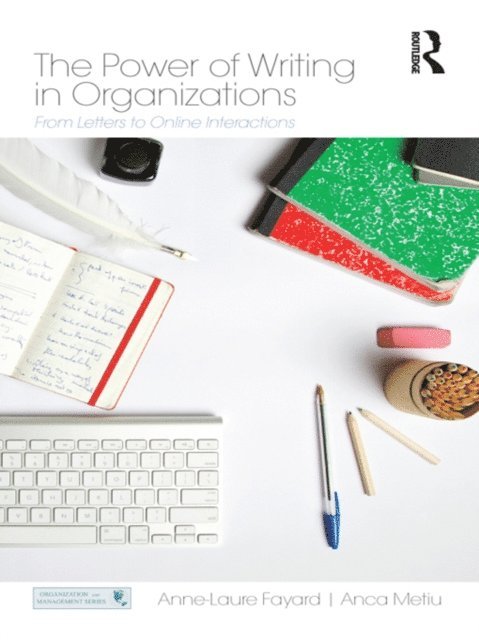
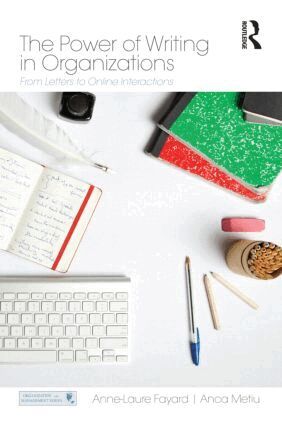
    Power of Writing in Organizations

    From Letters to Online Interactions

    AvAnne-Laure Fayard,Anca Metiu

    Häftad, Engelska, 2017

    Del i serien Organization and Management Series

    744 kr

    Beställningsvara. Skickas inom 10-15 vardagar. Fri frakt över 249 kr.

    Fler format och utgåvor

    Inbunden

    2 493 kr

    Beskrivning

    This book demonstrates the power of writing in informal and formal organizations in the past and the present. It shows how writing, despite long lasting criticisms that can be traced back to Plato, and in spite of its frequent definition as a mere recording medium is in fact a creative mode of communication that supports the expression of emotions, the developing knowledge, and the building of strong communities among faraway individuals. The first part of the book illustrates how this has been true historically. The focus on writing as a fundamental mode of communication – the other being speech or the oral mode – is still important in our technology-infused world, where writing seems to have been reduced to short cryptic text messages or tweets. Precisely because of their heavy reliance on technology, current practices are in need of a deeper understanding that focus on deep as opposed to surface features and unveil the four essential mechanisms – objectification, reflecting, specifying, and addressing – that give writing its creative powers.In the second part of the book, we use contemporary case studies and interviews to illustrate how shifting our focus from the media to the mode of communication and focusing on the mechanisms of writing allows us to go beyond current debates about the capabilities of various communication media and to understand better today’s communicative practices. This book is an attempt to unveil the powers of writing as well as to highlight the implications for organizations of the potential loss of these powers in today’s world where writing-based distributed collaborations, interpersonal relationships, and online communities are key sources of innovation and support for individuals and organizations.

    Produktinformation

    • Utgivningsdatum:2017-05-24
    • Mått:152 x 229 x 14 mm
    • Vikt:453 g
    • Format:Häftad
    • Språk:Engelska
    • Serie:Organization and Management Series
    • Antal sidor:256
    • Förlag:Taylor & Francis Ltd
    • ISBN:9781138109568

    Utforska kategorier

    • Organisationsteori inom Ekonomi och Ledarskap
    • Affärsförhandlingar inom Ekonomi och Ledarskap

    Mer om författaren

    Anne-Laure FayardAssistant Professor of ManagementPolytechnic Institute of New York UniversityProfessor Fayard earned a B.A. in philosophy from La Sorbonne-Paris I University, an M. Phil. in History and Philosophy of Science at La Sorbonne-Paris I University, an M.Phil. in Cognitive Science at the Center of Applied Epistemology (CREA) at the École Polytechnic (Paris, France), and a Ph.D. in cognitive science from École des Hautes Études en Sciences Sociales (Paris) . Prior to joining the faculty at the Polytechnic Institute of New York University in 2006, she taught at INSEAD International Business School both in Fontainebleau (France) and in Singapore. She has held visiting positions at the Center of Sociology of Innovation at Ecole des Mines in Paris and at Design London and the Innovation and Entrepreneurship Group at the Imperial College Business School in London. Her research interests include organizational communication (including technology-mediated communication) and sociomaterial practices. She has examined the role of space - physical and virtual - in triggering informal interactions and supporting collaboration as well as the enactment of language games and discursive practices in online communities. Some of her recent work investigates the sociomaterial practices developed by open innovation intermediaries, the practices involved in designing services and the emergence of occupational identity for service designers. Her research has been published in articles and book chapters in a variety of prestigious outlets, including Organization Studies, the Harvard Business Review, and the Journal for the Association of Information Systems, Information Systems Journal.She regularly reviews for numerous journals in the fields of management and information systems including the Organization Science, Organization Studies, Journal of Management Inquiry, Information Systems Research, Management of Information Systems Quarterly and Human Relations. She is a member of the Academy of Management, the European Group of Organization Studies and the Association of Computing Machinery. Anca MetiuProfessorESSEC Business SchoolProfessor Metiu earned a B.A. in Law and Economics from the University of Sibiu, an MBA from the University of Illinois at Urbana-Champaign, and a PhD in Management from the University of Pennsylvania. Prior to joining the faculty at ESSEC Business School in 2007 she taught at INSEAD. Her research focuses on collaboration dynamics in distributed work. She has examined the status dynamics among distributed work groups, and the work organization of developers in the free and open-source software development community. Some of her current projects examine the creation of group engagement in teams, the perceived proximity between people who work across geographic distance, and the processes of professional identity formation for women in the free/open source software communities. She has published articles and book chapters in a variety of prestigious outlets, including Administrative Science Quarterly, Organization Science, Organization Studies, and Oxford Review of Economic Policy. She is currently serving on the Editorial Board of influential journals in the management field including Organization Science and Organization Studies. She is a member of the Academy of Management, American Sociological Association, European Group of Organization Studies, and The European Academy of Management.Anca Metiu teaches in the Executive, Masters, M.B.A. and PhD programs, and coordinates the Management Track in the PhD program at ESSEC Business School.

    Recensioner i media

    “This is an important book, but it is also a delight to read. It is important because it calls attention to a neglected dimension of organization, its foundation in the media of communication. It is a pleasure to read because its analysis is concise and to the point, and it is enriched by relevant illustrative examples. It is the kind of book that should be part of every student’s introduction to organizational and management studies, but it is also a book that we should all read, to understand the world we are in, where reading is taking on a whole new meaning when books are becoming accessible, as never before.” - James Taylor, Emeritus Professor of Communication, Université de Montréal, Canada “This is a most timely book. In a world where writing increasingly appears as cryptic one-line text-messaging, it reminds us of the true powers of writing that come from a focus on the deep structure of communication – expressing emotions, developing knowledge, and building community – rather than surface features. The book is useful to anyone interested in understanding the impact of new communication technologies on organizational processes, and in harnessing the true powers of writing." - C. Marlene Fiol, Professor of Strategic Management, The Business School, University of Colorado Denver, USA"By focusing on the written mode rather than on specific communication media, Fayard and Metiu bring a refreshing and productive new perspective to the literature on computer-mediated-communication (CMC). They show that writing—whether letters three centuries ago or email today—has critical powers for expressing emotions, developing knowledge, and building communities. The historical cases that they analyze bring a particular richness to their argument. This is a must-read for all CMC scholars, but also for a wide audience interested in what new communication technologies mean for society." - JoAnne Yates, Sloan Distinguished Professor of Management, MIT Sloan School of Management"It is generally assumed that writing is an activity reserved for novelists, scholars and journalists. Yet writing plays a crucial role in organizing, not only as means of communication, but also as means of inscribing and stabilizing actions and events. Anca Metiu and Anne-Laure Fayard explore writing on paper and online, within and outside formal organizations, thus revealing its less recognized but vital functions." -Barbara Czarniawska, Professor of Management Studies, University of Gothenburg, Sweden

    Innehållsförteckning

    • Part 1: The Power of Writing: Evidence from Letters 1. Writing as a Fundamental Mode of Communication 2. The Mechanisms of Writing 3. Expressing Emotions through Writing 4. Knowledge Development through Writing 5. Writing and Community Building Part 2: The Power of Writing in Online Communication 6. From Letters to Online Writing 7. Expressing Emotions and Developing Trust Online 8. Creating Knowledge in Online Interactions 9. The Role of Writing in Developing a Sense of We-ness in Online Communities 10. Beyond the Media: The Power of Writing