• Fri frakt över 249 kr
  • •
  • Snabba leveranser
  • •
  • Billiga böcker
Kundservice

Du är på sajten för privatpersoner.

Företag, bibliotek eller offentlig verksamhet?

Du handlar på classic.bokus.com, där alla dina funktioner finns intakta.
Till classic.bokus.com
Bokus logotyp. Gå till startsidan.
  • Erbjudanden
  • Student
  • Topplistor
  • Barn & ungdom
  • Bokus Play
  • E-böcker
  • Ljudböcker
  • Pocketböcker
  • Spel & pussel

10% rabatt på allt med kod NYSTART10 →

Sidfot

Mina sidor

    Hjälp

    • Kundservice
    • Vanliga frågor och svar
    • Frakt och leverans
    • Retur vid ångerrätt
    • Reklamera vara
    • Betalning
    • Köpvillkor
    • Allmänna villkor
    • Information om webbplatsens tillgänglighet

    Om Bokus

    • Om oss
    • Pressrum
    • För studenter
    • För företag
    • För bibliotek och offentlig verksamhet
    • För leverantörer
    • Hållbarhet

    Populärt

    • Aktuella erbjudanden
    • Presentkort
    • Studentlitteratur
    • Nya böcker
    • Topplistor
    • Signerade böcker
    • Engelska böcker

    Inspiration

    • Boktips
    • BookTok
    • Populära bokserier
    • Barnbokskaraktärer
    • Populära författare
    Logotyp för Bokus
    Följ oss på Facebook (extern länk)Följ oss på Instagram (extern länk)Följ oss på YouTube (extern länk)Följ oss på TikTok (extern länk)
    bokus @ CookiesAnpassa cookiesIntegritetspolicyKöpvillkor
    Till Citymail hemsida (extern länk)Till Budbee hemsida (extern länk)Till Postnord hemsida (extern länk)Till Schenker hemsida (extern länk)Till Early Bird hemsida (extern länk)Till Walleys hemsida (extern länk)
    1. Samhälle och politik
    2. Samhälle och kultur
    3. Kultur och medier
    4. Medievetenskap

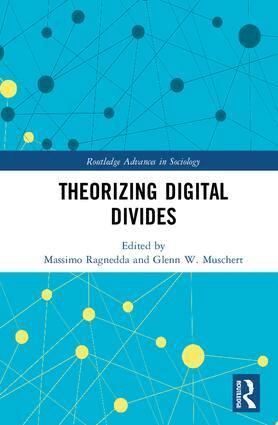
    Theorizing Digital Divides

    AvMassimo Ragnedda,Glenn W. Muschert

    Inbunden, Engelska, 2017

    Del i serien Routledge Advances in Sociology

    2 418 kr

    Beställningsvara. Skickas inom 10-15 vardagar. Fri frakt över 249 kr.

    Beskrivning

    Although discussion of the digital divide is a relatively new phenomenon, social inequality is a deeply entrenched part of our current social world and is now reproduced in the digital sphere. Such inequalities have been described in multiple traditions of social thought and theoretical approaches. To move forward to a greater understanding of the nuanced dynamics of digital inequality, we need the theoretical lenses to interpret the meaning of what has been observed as digital inequality.This volume examines and explains the phenomenon of digital divides and digital inequalities from a theoretical perspective. Indeed, with there being a limited amount of theoretical research on the digital divide so far, Theorizing Digital Divides seeks to collect and analyse different perspectives and theoretical approaches in analysing digital inequalities, and thus propose a nuanced approach to study the digital divide.Exploring theories from diverse perspectives within the social sciences whilst presenting clear examples of how each theory is applied in digital divide research, this book will appeal to scholars and undergraduate and postgraduate students interested in sociology of inequality, digital culture, Internet studies, mass communication, social theory, sociology, and media studies.

    Produktinformation

    • Utgivningsdatum:2017-10-02
    • Mått:156 x 234 x 19 mm
    • Vikt:560 g
    • Format:Inbunden
    • Språk:Engelska
    • Serie:Routledge Advances in Sociology
    • Antal sidor:212
    • Förlag:Taylor & Francis Ltd
    • ISBN:9781138210400

    Utforska kategorier

    • Medievetenskap inom Samhälle och politik
    • Sociologi inom Samhälle och politik
    • Informationsteknik: allmänt inom Data och IT

    Mer om författaren

    Massimo Ragnedda is a Senior Lecturer in Mass Communication at Northumbria University, Newcastle.Glenn W. Muschert is a Professor of Sociology and Social Justice Studies at Miami University, Ohio, USA.

    Recensioner i media

    Digital divides have been long thought of in terms of access and skills. These are still important, but the essays in this volume challenge and go beyond this way of thinking. They examine not just many overlooked examples of divides but also bring to bear fresh theoretical perspectives. This book will open up exciting new directions for the next generation of internet researchers. Professor Ralph Schroeder, Oxford Internet Institute, University of Oxford, UKThis is a welcome volume that develops our understanding of digital divides. It does so through a highly informed understanding of current theoretical knowledge of digital divides in a range of disciplinary perspectives. The authors combine to extend this knowledge in meaningful ways to address the nuances and complexities of digital divides. The theoretical developments will be extremely beneficial for scholars and students working in the area of digital divides.Bridgette Wessels, Professor of Sociology, Newcastle University, UKThis book provides a much-needed wide-ranging theoretical foundation for research on the digital divide. While scholars and activists have done yeoman’s work identifying, studying and narrowing digital divides, Ragnedda and Muschert have put together the theoretical infrastructure with which we may understand past efforts and move forward with new ones.Steve Jones, UIC Distinguished Professor of Communication, University of Illinois at Chicago, USAThe book is most valuable for the sociologist searching for ways to approach digital phenomena (students and early career researchers) rather than policymakers, opinion formers or our engineer wishing for guidance. All the chapters agree that our understanding has moved on during the century, that the simple question of access has been trumped by a second level of inequality of skills and education, and even a third level of uneq

    Innehållsförteckning

    • Introduction: Massimo Ragnedda and Glenn W. MuschertSection 1: Using classical social theories to understand digital divideChapter 1. Glenn W. Muschert and Ryan Gunderson, The Sociology of Simmel and Digital Divides: Information, Value, Exchange, and Sociation in the Networked Environment Chapter 2: Massimo Ragnedda and Maria Laura Ruiu, Social capital and the three levels of digital divide. massimo.ragnedda@northumbria.ac.uk; Chapter 3: Tomohisa Hirata, Do contemporary media technologies and the architects of them fill the role of the psychoanalyst for the users of them? Chapter 4: Barbara Barbosa Neves & Geoffrey Mead, The interpretive and ideal-type approach: Rethinking digital non-use(s) in a Weberian perspective Section 2: Associative and communicative perspectivesChapter 5: Gerard Goggin. ‘Disability and Digital Inequalities: Rethinking Digital Divides with Disability Theory’. Chapter 6: Lorenzo Dalvit. The materiality of mobile phones and visual impairment: accessible, accessibility and access devicesChapter 7: Susan Kretchmer Theorizing Digital Divides Through the Lens of Social Construction of Technology, Knowledge Gap, and Social Identity ConstructionChapter 8: John Haffner, Connection in Divided Space: Theorizing the Geographies of the Digital Divide Chapter 9: Eva Klinkisch, Anne Suphan. A "recognitional perspective" on the 21st century digital divide Section 3: Critical and alternative perspectives.Chapter 10: Last Moyo Rethinking the network society: A decolonial and border gnosis of the digital divide in AfricaChapter 11: Duygu Özsoy. Digital Divide in Turkey as a non- Western Country Chapter 12: Citt Williams, Tania Gupta, Marilyn Wallace, Theorising Online Representation and the Voice of the Digital Subaltern. Chapter 13. Morten Hjelholt and Jannick Schou. The Digital Divide and Citizen Classifications Chapter 14: Emma A. Jane, Gendered cyberhate: a new digital divide? Afterword. Jan Van Dijk