• Fri frakt över 249 kr
  • •
  • Snabba leveranser
  • •
  • Billiga böcker
Kundservice

Du är på sajten för privatpersoner.

Företag, bibliotek eller offentlig verksamhet?

Du handlar på classic.bokus.com, där alla dina funktioner finns intakta.
Till classic.bokus.com
Bokus logotyp. Gå till startsidan.
  • Erbjudanden
  • Nyheter
  • Student
  • Topplistor
  • Barn & ungdom
  • Bokus Play
  • E-böcker
  • Pocketböcker
  • Spel & pussel

10% rabatt på allt med kod: NYSTART10 →

Sidfot

Mina sidor

    Hjälp

    • Kundservice
    • Vanliga frågor och svar
    • Frakt och leverans
    • Retur vid ångerrätt
    • Reklamera vara
    • Betalning
    • Köpvillkor
    • Allmänna villkor
    • Information om webbplatsens tillgänglighet

    Om Bokus

    • Om oss
    • Pressrum
    • För studenter
    • För företag
    • För bibliotek och offentlig verksamhet
    • För leverantörer
    • Hållbarhet

    Populärt

    • Aktuella erbjudanden
    • Presentkort
    • Studentlitteratur
    • Nya böcker
    • Topplistor
    • Signerade böcker
    • Engelska böcker

    Inspiration

    • Boktips
    • BookTok
    • Populära bokserier
    • Barnbokskaraktärer
    • Populära författare
    Logotyp för Bokus
    Följ oss på Facebook (extern länk)Följ oss på Instagram (extern länk)Följ oss på YouTube (extern länk)Följ oss på TikTok (extern länk)
    bokus @ CookiesAnpassa cookiesIntegritetspolicyKöpvillkor
    Till Citymail hemsida (extern länk)Till Budbee hemsida (extern länk)Till Postnord hemsida (extern länk)Till Schenker hemsida (extern länk)Till Early Bird hemsida (extern länk)Till Walleys hemsida (extern länk)
    1. Samhälle och politik
    2. Samhälle och kultur
    3. Kultur och medier
    4. Referensverk och tvärvetenskap

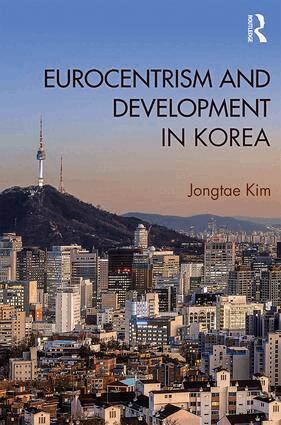
    Eurocentrism and Development in Korea

    AvJongtae Kim

    Inbunden, Engelska, 2018

    Del i serien Routledge Studies in Emerging Societies

    2 421 kr

    Beställningsvara. Skickas inom 10-15 vardagar. Fri frakt över 249 kr.

    Fler format och utgåvor

    Häftad

    667 kr

    E-bok

    812 kr

    E-bok

    814 kr

    Beskrivning

    Under the global hegemony of the West, societies have interpreted the world and defined their identities through the frameworks of Eurocentric discourses. Since the mid-twentieth century, Eurocentrism has tended to be associated with economic developmentalism. The discourse of seonjinguk (developed country) has been a dominant Eurocentric developmental discourse in Korea.However, in what historical contexts have the Koreans set seonjinguk as their national goal and yardstick to judge nations? What roles have been played by the concept of seonjinguk in Korea? What discursive frameworks did the Koreans use for their national identities and worldviews before the developmental era? Eurocentrism and Development in Korea is the first scholarly approach to those questions. Through a chronological analysis of Korea’s dominant discourses from the late nineteenth century to the present, Kim demonstrates the historical nature of developmentalism and seonjinguk discourse for Korea’s developmental era, and traces their genealogy to gaehwa (enlightenment) and munmyeong (civilization) discourses from a sociological historical perspective.Providing essential knowledge about Korea’s history of Eurocentrism, developmentalism and national change, this enlightening monograph will appeal to undergraduate and postgraduate students, as well as postdoctoral researchers, interested in fields such as Korean Studies, Development Studies and Global Sociology.

    Produktinformation

    • Utgivningsdatum:2018-03-29
    • Mått:156 x 234 x 20 mm
    • Vikt:498 g
    • Format:Inbunden
    • Språk:Engelska
    • Serie:Routledge Studies in Emerging Societies
    • Antal sidor:246
    • Förlag:Taylor & Francis Ltd
    • ISBN:9781138234079

    Utforska kategorier

    • Referensverk och tvärvetenskap inom Samhälle och politik
    • Internationell ekonomi inom Ekonomi och Ledarskap
    • Sociologi inom Samhälle och politik

    Mer om författaren

    Jongtae Kim is Humanities Korea (HK) Research Professor in the Asiatic Research Institute at Korea University, Seoul, Korea.

    Recensioner i media

    This is an important critique of west-centric progress worship in South Korea and a profound analysis of different modernization and development paths in East Asia, with comparisons of South Korea, Japan and China. A significant contribution to the East Asia literature and a good read. Jan Nederveen Pieterse, University of California, Santa BarbaraThis book keenly unravels very significant and under-represented aspects of Korean identity and world view in the modern era. One may barely grasp the Korean society and its development without reading this elaborate work.Gil-Sung Park, Executive Vice President for Academic Affairs, Professor of Sociology, Korea University

    Innehållsförteckning

    • CHAPTER 1Introduction: What Is the Discourse of Seonjinguk?PART I (Chs. 2-4)From "Munmyeong" (Civilization) to "Baljeon" (Development): The 1880s – The 1950sCHAPTER 2The Origins of Korea’s Eurocentrism: Gaehwa and Munmyeong Discourses from the 1880s to the 1930sCHAPTER 3The Politics of Modern Discourse of Civilization in Colonized Korea: The 1910s and the 1920sCHAPTER 4Competition between Civilization and Development Discourses: The 1950sPART II (Chs. 5-7)The Rise of Developmentalism and Its Current State: The 1960s – The PresentCHAPTER 5The Rise of Developmentalism and Seonjinguk Discourse: The 1960s and the 1970sCHAPTER 6Change in the Discourse of Seonjinguk: The 1980s and the 1990sCHAPTER 7The Discursive Structure of Korea’s Developmentalism and the Mobilization of Nation: Geundaehwa (Modernization), Segyehwa (Globalization), and Seonjinhwa (Becoming Advanced)PART III (Chs. 8-9)National and Regional Identities and Mutual Perceptions in the Development EraCHAPTER 8A Comparison of Development Discourses in Korea, China, and Japan: National Identities and Mutual PerceptionsCHAPTER 9A Comparison of Regional Identities between Northeast Asia and Europe: The Constructions of "Self" and "Others"CHAPTER 10Conclusion: Beyond the Discourse of Seonjinguk