• Fri frakt över 249 kr
  • •
  • Snabba leveranser
  • •
  • Billiga böcker
Kundservice

Du är på sajten för privatpersoner.

Företag, bibliotek eller offentlig verksamhet?

Du handlar på classic.bokus.com, där alla dina funktioner finns intakta.
Till classic.bokus.com
Bokus logotyp. Gå till startsidan.
  • Erbjudanden
  • Nyheter
  • Student
  • Topplistor
  • Barn & ungdom
  • Bokus Play
  • E-böcker
  • Pocketböcker
  • Spel & pussel

10% rabatt på allt med kod: NYSTART10 →

Sidfot

Mina sidor

    Hjälp

    • Kundservice
    • Vanliga frågor och svar
    • Frakt och leverans
    • Retur vid ångerrätt
    • Reklamera vara
    • Betalning
    • Köpvillkor
    • Allmänna villkor
    • Information om webbplatsens tillgänglighet

    Om Bokus

    • Om oss
    • Pressrum
    • För studenter
    • För företag
    • För bibliotek och offentlig verksamhet
    • För leverantörer
    • Hållbarhet

    Populärt

    • Aktuella erbjudanden
    • Presentkort
    • Studentlitteratur
    • Nya böcker
    • Topplistor
    • Signerade böcker
    • Engelska böcker

    Inspiration

    • Boktips
    • BookTok
    • Populära bokserier
    • Barnbokskaraktärer
    • Populära författare
    Logotyp för Bokus
    Följ oss på Facebook (extern länk)Följ oss på Instagram (extern länk)Följ oss på YouTube (extern länk)Följ oss på TikTok (extern länk)
    bokus @ CookiesAnpassa cookiesIntegritetspolicyKöpvillkor
    Till Citymail hemsida (extern länk)Till Budbee hemsida (extern länk)Till Postnord hemsida (extern länk)Till Schenker hemsida (extern länk)Till Early Bird hemsida (extern länk)Till Walleys hemsida (extern länk)
    1. Naturvetenskap och teknik
    2. Geovetenskap
    3. Regional planering

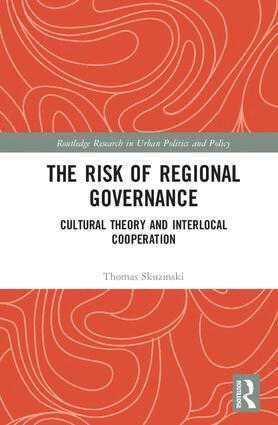
    Risk of Regional Governance

    Cultural Theory and Interlocal Cooperation

    AvThomas Skuzinski

    Inbunden, Engelska, 2017

    Del i serien Routledge Research in Urban Politics and Policy

    2 421 kr

    Beställningsvara. Skickas inom 10-15 vardagar. Fri frakt över 249 kr.

    Fler format och utgåvor

    Häftad

    765 kr

    E-bok

    906 kr

    E-bok

    906 kr

    Beskrivning

    Creating metropolitan regions that are more efficient, equitable, and sustainable depends on the willingness of local officials to work together across municipal boundaries to solve large-scale problems. How do these local officials think? Why do they only sometimes cooperate? What kind of governance do they choose in the face of persistent problems?The Risk of Regional Governance offers a new perspective on these questions. Drawing on theory from sociology and anthropology, it argues that many of the most important cooperative decisions local officials make—those about land use planning and regulation—are driven by heuristic, biased reasoning driven by cultural values. The Risk of Regional Governance builds a sociocultural collective action framework, and supports it with rich survey and interview data from hundreds of local elected officials serving in the suburbs of Detroit and Grand Rapids, Michigan. It is a story of the Rust Belt, of how local officials think about their community and the region, and—most importantly—of how we might craft policies that can overcome biases against regional governance.

    Produktinformation

    • Utgivningsdatum:2017-09-21
    • Mått:152 x 229 x 19 mm
    • Vikt:417 g
    • Format:Inbunden
    • Språk:Engelska
    • Serie:Routledge Research in Urban Politics and Policy
    • Antal sidor:184
    • Förlag:Taylor & Francis Ltd
    • ISBN:9781138235755

    Utforska kategorier

    • Regional planering inom Naturvetenskap och teknik
    • Regionalt styre och förvaltning inom Samhälle och politik

    Mer om författaren

    Thomas Skuzinski is Assistant Professor of Urban Affairs and Planning at the School of Public and International Affairs at Virginia Tech University. He holds doctoral and master degrees from the University of Michigan, and a law degree from Michigan State University. His work uses a sociological institutionalist lens to examine how the rules, norms, and cultures in which local government actors are embedded shape metropolitan governance.

    Recensioner i media

    'Thomas Skuzinski uses a study of local government land use planning in Michigan, specifically the metropolitan areas of Grand Rapids and Detroit, to make a compelling argument for a new approach to understanding regional governance. He applies his sociocultural collective action framework to analyze social and cultural factors to understand why political and civic leaders engage in, or avoid engagement in, local cooperative and collaborative governance processes. This book is a welcome addition to the literature on regional governance.' - David K. Hamilton, Director of the Center for Public Service, Texas Tech University'Skuzinski’s work opens a promising avenue to explore the challenges and opportunities for interlocal collaboration and more effective regional governance. Beyond more evidence that agreements and consolidations are not all about the costs, his sociocultural collective action model advocates a theoretical turn that may nurture more politically viable structural reforms for a variety of public services.' - Kurt Thurmaier, Presidential Engagement Professor and Chair, Northern Illinois University

    Innehållsförteckning

    • 1. Introduction. 1.1 Opting out 1.2 Governing metropolitan regions 1.3 The legitimacy of reform 1.4 Reform as a transaction 1.5 The limitations of economizing 1.6 Theoretical perspectives on metropolitan governance 1.7 The goals of the book 1.8 Evidence from metropolitan Michigan 1.9 The plan of the book 2. Governing the Region through Cooperation 2.1 The Manchester Community 2.2 The difficulty of structural reforms 2.3 The limitations of state and federal intervention 2.4 Distinguishing cooperation 2.5 Enabling cooperation 2.6 Awareness of the law 2.7 Conclusion 3. Beyond Economizing 3.1 Transaction cost economizing 3.2 Cooperation as a transaction 3.3 The individual in the local government organization 3.4 Some conceptual issues 3.5 Maintaining systems versus creating lifestyles 3.6 When reform seems irrational 3.7 Conclusion 4. Sociocultural collective action 4.1 Introduction 4.2 Revisiting rationality 4.3 Individuals and institutions 4.4 The appropriateness of regional reform 4.5 An illustration 5. Investigating Rules and Norms 5.1 Introduction 5.2 Economizing and reciprocity in preference formation 5.3 The norm of responsiveness in local government 5.4 The treatment of responsiveness in economizing studies 5.5 Evidence of political legitimizing 6. Cultural Legitimizing 6.1 From gay rights to gun control to governance 6.2 Grid-group cultural theory 6.3 Reconciling cultural theory with rational choice institutionalism 6.4 Connecting dispositions to governance 6.5 The cultural dispositions of local elected officials 6.6 Dispositions and partisan identity 6.7 Evidence of cultural legitimizing 6.8 Conclusion 7. Conclusion 7.1 Avenues for policy reform under legitimizing 7.2 Dealing with cultural pluralism through de-biasing 7.3 The prospects for regional governance through voluntary interlocal cooperation