• Fri frakt över 249 kr
  • •
  • Snabba leveranser
  • •
  • Billiga böcker
Kundservice

Du är på sajten för privatpersoner.

Företag, bibliotek eller offentlig verksamhet?

Du handlar på classic.bokus.com, där alla dina funktioner finns intakta.
Till classic.bokus.com
Bokus logotyp. Gå till startsidan.
  • Erbjudanden
  • Nyheter
  • Student
  • Topplistor
  • Barn & ungdom
  • Bokus Play
  • E-böcker
  • Pocketböcker
  • Spel & pussel

10% rabatt på allt med kod: NYSTART10 →

Sidfot

Mina sidor

    Hjälp

    • Kundservice
    • Vanliga frågor och svar
    • Frakt och leverans
    • Retur vid ångerrätt
    • Reklamera vara
    • Betalning
    • Köpvillkor
    • Allmänna villkor
    • Information om webbplatsens tillgänglighet

    Om Bokus

    • Om oss
    • Pressrum
    • För studenter
    • För företag
    • För bibliotek och offentlig verksamhet
    • För leverantörer
    • Hållbarhet

    Populärt

    • Aktuella erbjudanden
    • Presentkort
    • Studentlitteratur
    • Nya böcker
    • Topplistor
    • Signerade böcker
    • Engelska böcker

    Inspiration

    • Boktips
    • BookTok
    • Populära bokserier
    • Barnbokskaraktärer
    • Populära författare
    Logotyp för Bokus
    Följ oss på Facebook (extern länk)Följ oss på Instagram (extern länk)Följ oss på YouTube (extern länk)Följ oss på TikTok (extern länk)
    bokus @ CookiesAnpassa cookiesIntegritetspolicyKöpvillkor
    Till Citymail hemsida (extern länk)Till Budbee hemsida (extern länk)Till Postnord hemsida (extern länk)Till Schenker hemsida (extern länk)Till Early Bird hemsida (extern länk)Till Walleys hemsida (extern länk)
    1. Samhälle och politik
    2. Samhälle och kultur
    3. Kultur och medier
    4. Kulturvetenskap

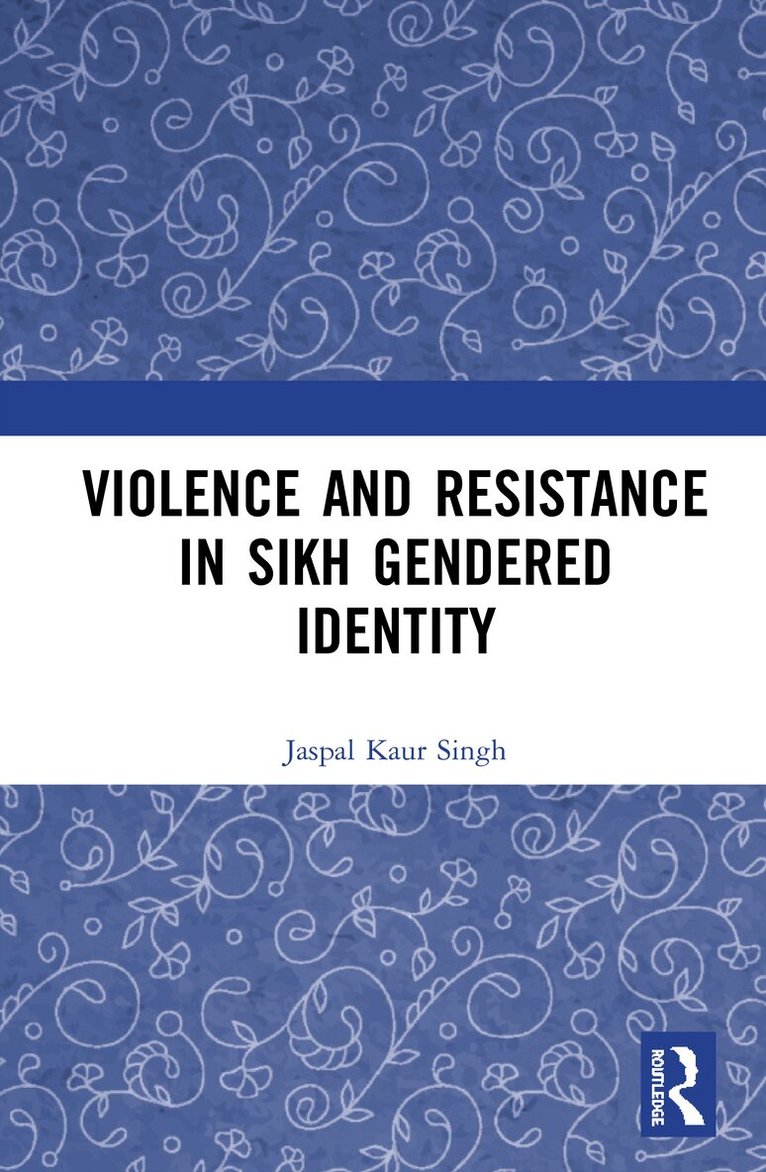
    Violence and Resistance in Sikh Gendered Identity

    AvJaspal Kaur Singh

    Inbunden, Engelska, 2020

    2 784 kr

    Beställningsvara. Skickas inom 10-15 vardagar. Fri frakt över 249 kr.

    Fler format och utgåvor

    Häftad

    766 kr

    E-bok

    906 kr

    E-bok

    906 kr

    Beskrivning

    This book examines the constructions and representations of male and female Sikhs in Indian and diasporic literature and culture through the consideration of the role of violence as constitutive of Sikh identity. How do Sikh men and women construct empowering identities within the Indian nation-state and in the diaspora? The book explores Indian literature and culture to understand the role of violence and the feminization of baptized and turbaned Sikh men, as well as identity formation of Sikh women who are either virtually erased from narratives, bodily eliminated through honor killings, or constructed and represented as invisible. It looks at the role of violence during critical junctures in Sikh history, including the Mughal rule, the British colonial period, the Partition of India, the 1984 anti-Sikh riots in India, and the terror of 9/11 in the United States. The author analyzes how violence reconstitutes gender roles and sexuality within various cultural and national spaces in India and the diaspora. She also highlights questions related to women’s agency and their negotiation of traumatic memories for empowering identities.The book will interest scholars, researchers, and students of postcolonial English literature, contemporary Indian literature, Sikh studies, diaspora studies, global studies, gender and sexuality studies, religious studies, history, sociology, media and films studies, cultural studies, popular culture, and South Asian studies.

    Produktinformation

    • Utgivningsdatum:2020-05-20
    • Mått:156 x 234 x undefined mm
    • Vikt:440 g
    • Format:Inbunden
    • Språk:Engelska
    • Antal sidor:194
    • Förlag:Taylor & Francis Ltd
    • ISBN:9781138281493

    Utforska kategorier

    • Kulturvetenskap inom Samhälle och politik
    • Genusvetenskap inom Samhälle och politik
    • Andra religioner och trosföreställningar inom Filosofi och religion

    Mer om författaren

    Jaspal Kaur Singh is Professor of English Literature at Northern Michigan University, Marquette, Michigan, USA. She received her PhD in Comparative Literature from the University of Oregon. She was a Rockefeller Foundation Fellow at the Institute for the Study of Gender in Africa, James S. Coleman African Studies Center, UCLA and a Fulbright Nehru Senior Scholar in India. Her publications include a monograph, a coauthored book, and three coedited books: Representation and Resistance: South Asian and African Women Writers at Home and in the Diaspora (2008); Narrating the New Nation: South African Indian Writing (2018); Indian Writers: Transnationalisms and Diasporas (2010); Trauma, Resistance, Reconciliation in Post-1994 South African Writing (2010); and Negotiating Gender and Sexuality in Contemporary Turkey (2016).

    Recensioner i media

    ‘It is rare to encounter a necessary book. Yet here it is. This book goes to the heart of a provocative thesis: the role of violence in the formation of Sikh identity and its impact, through historical, social and political forces, on Sikhs. A study of profound moments of misunderstandings and lost opportunities, this powerful work is a tour de force exemplar of how to examine communities marked by colonization, fear, elision, invisibility, and mystery without falling into the trap of reductionism. Nuances of class, gender, race, sex, and sexuality are brought to the fore, with many once-silenced Sikh women’s voices coming forth, and so, too, the complex dynamics of the internal diversity of Sikhs and the wider worlds in which they live. The result is a portrait of postcolonial challenges reaching beyond the focus community to worldwide challenges of our epoch. A must-read not only for those interested in Sikh and postcolonial studies but also anyone interested in understanding engendered violence in multidimensional ways. Read this book. Re-read it. Learn from it, and share its fecund ideas.’ Lewis R. Gordon, Honorary President of the Global Center for Advanced Studies‘This book provides an eloquent self-awareness and a rare glimpse into the complexities of Sikh identity. It is a remarkable addition to the oeuvre of a respected and leading postcolonial scholar. Singh highlights the predicament of Sikh women within the Indian and global Sikh community concomitant with the violence that Sikhs, particularly the turbaned and bearded males, encounter as represented in historical and contemporary literature and culture. The book analyzes representations of male Sikhs, often feminized and othered as hypermasculine, who struggle to construct a positive identity for themselves and their community in India and the diaspora, while female Sikhs, rendered invisible or voiceless, strive to negotiate empowering identities for themselves in liminal cultural and narrative spaces. Singh’s intersectional critique is courageous and innovative as she excavates personal and historical occurrences of trauma to revise, resist and renegotiate memories for empowering personal and communal identities for Sikhs. The book’s emotional and impassioned power once again demonstrates Singh’s extraordinary scholarly gifts.’Rajendra Chetty, Professor, University of the Western Cape, South Africa

    Innehållsförteckning

    • Introduction 1. Cultural Syncretism vs. Collective Psychic Fragmentation: The Construction of Sikh Gendered Identity 2. Mughal India and Colonialism: Revising History, Gender Identity and Violence in Bhai Veer Singh’s Sundri 3. Communal and Gender Violence in Shauna Singh Baldwin’s What the Body Remembers 4. Gendered Violence and Partition Memory in Postcolonial Novels and Films 5. Partition Narratives and Sikh Gendered Identity Construction: Memory of Violence in Khushwant Singh’s 1956 Novel Train to Pakistan 6. Gender and Memories of Trauma in Amrita Pritam’s 1950 Novella Pinjar and Poems 7. Violence, State Terror, and Gendered Sikh Identity: The Aftermath of Operation Blue Star in Gulzar’s 1996 Hindi film, Maachis (Matches) and Anurag Singh’s 2013 Punjabi Film, Punjab 1984 8. Traumatized Sikh Male and Female Subjects: Representations of Trauma and Memory in Amitoj Mann’s 2003 Punjabi Film Hawayein 9. (En)Gendering Nations in Manoj Punj’s 2004 Punjabi Film, Des Hoyaa Prades: When One’s Nation Becomes a Foreign Territory 10. Perpetrator Nation and the Cultural Memorialization of Sikh Trauma in Shonali Bose’s Novel, Amu (2004) 11. Once Again, the Turban: Terror and Gendered Sikh Identity in Liam Delzell’s Punjabi Cab, Satdeep Singh’s Taaj, and Sarab Singh Neelam’s Ocean of Pearls 12. Gendering the Sikh Diaspora and Transnational Feminism: The Construction of Sexuality in the Poems of Sukhjeet Kaur Khalsa (2016), Sharapal Ruprai (2014) and Rupi Kaur (2015 and 2017). Bibliography