• Fri frakt över 249 kr
  • •
  • Snabba leveranser
  • •
  • Billiga böcker
Kundservice

Du är på sajten för privatpersoner.

Företag, bibliotek eller offentlig verksamhet?

Du handlar på classic.bokus.com, där alla dina funktioner finns intakta.
Till classic.bokus.com
Bokus logotyp. Gå till startsidan.
  • Erbjudanden
  • Student
  • Topplistor
  • Barn & ungdom
  • Bokus Play
  • E-böcker
  • Ljudböcker
  • Pocketböcker
  • Spel och pussel

Pocketfynda! Hundratals böcker för 49 kr/st →

Sidfot

Mina sidor

    Hjälp

    • Kundservice
    • Vanliga frågor och svar
    • Frakt och leverans
    • Retur vid ångerrätt
    • Reklamera vara
    • Betalning
    • Köpvillkor
    • Allmänna villkor
    • Information om webbplatsens tillgänglighet

    Om Bokus

    • Om oss
    • Pressrum
    • För studenter
    • För företag
    • För bibliotek och offentlig verksamhet
    • För leverantörer
    • Hållbarhet

    Populärt

    • Aktuella erbjudanden
    • Presentkort
    • Studentlitteratur
    • Nya böcker
    • Topplistor
    • Signerade böcker
    • Engelska böcker

    Inspiration

    • Boktips
    • BookTok
    • Barnbokskaraktärer
    • Populära författare
    Logotyp för Bokus
    Följ oss på Facebook (extern länk)Följ oss på Instagram (extern länk)Följ oss på YouTube (extern länk)Följ oss på TikTok (extern länk)
    bokus @ CookiesAnpassa cookiesIntegritetspolicyKöpvillkor
    Till Citymail hemsida (extern länk)Till Budbee hemsida (extern länk)Till Postnord hemsida (extern länk)Till Schenker hemsida (extern länk)Till Early Bird hemsida (extern länk)Till Walleys hemsida (extern länk)
    1. Kultur
    2. Musikböcker

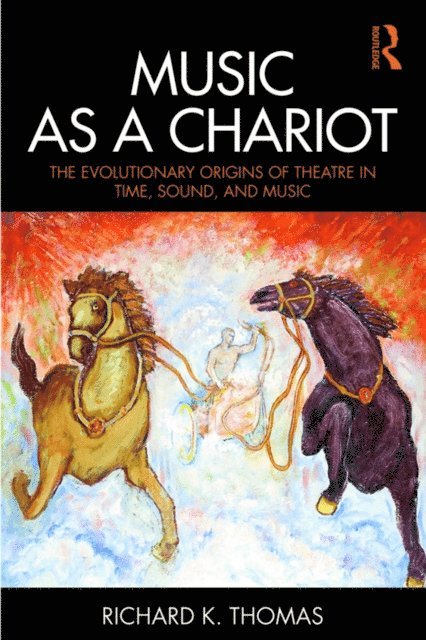
    Music as a Chariot

    The Evolutionary Origins of Theatre in Time, Sound, and Music

    AvRichard K. Thomas

    Inbunden, Engelska, 2018

    2 481 kr

    Beställningsvara. Skickas inom 10-15 vardagar. Fri frakt över 249 kr.

    Fler format och utgåvor

    Häftad

    626 kr

    E-bok

    743 kr

    E-bok

    743 kr

    Beskrivning

    Music as a Chariot offers a multidisciplinary perspective whose primary proposition is that theatre is a type of music. Understanding how music enables the theatre experience helps to shape our entire approach to the performing arts. Beginning with a discussion on the origin and nature of time, the author takes us on an evolutionary journey to discover how music, language and mimesis co-evolved, eventually coming together to produce the complex way we experience theatre. The book integrates the evolutionary neuroscience of the human brain into this journey, offering practical implications and applications for the auditory expression of this concept—namely the fundamental techniques artists use to create sound scores for theatre. With contributions from directors, playwrights, actors and designers, Music as a Chariot explores the use of music to carry ideas into the human soul—a concept that extends beyond the theatrical to include film, video gaming, dance, or anywhere art is manipulated in time.

    Produktinformation

    • Utgivningsdatum:2018-02-12
    • Mått:152 x 229 x 29 mm
    • Vikt:612 g
    • Format:Inbunden
    • Språk:Engelska
    • Antal sidor:338
    • Förlag:Taylor & Francis Ltd
    • ISBN:9781138295469

    Utforska kategorier

    • Musikböcker inom Kultur
    • Övriga konstformer inom Kultur
    • Teater inom Kultur

    Mer om författaren

    Richard K. Thomas is Professor of Visual and Performing Arts at Purdue University with over 100 credits as a composer, sound designer, author, playmaker and educator. He is a Fellow of USITT, and winner of the 2018 Distinguished Achievement Award in Sound Design and Technology.

    Innehållsförteckning

    • Table of ContentsChapter 1: Introduction: Why this Book?Introduction: An Ear Opening ExperienceOld School AestheticsWhen Sound Gets Divorced from MusicWho Should Read this BookOverview of the BookBibliographyTen QuestionsThings to ShareNotesPart I: The Nature of TimeChapter 2: Let There Be a Big BangIntroduction: If a Tree Falls in the Universe…The Nature of Light and SoundThe Evolution of Hearing and SpeakingThe Evolution of the Brain Leads to the Ability to Express EmotionsEyes and Ears, Space and TimeTen QuestionsThings to ShareNotesBibliographyChapter 3: The Great Mystery of Time Introduction: Babbling in BabelsbergThe Mammalian InvasionWe Are Such Stuff as Dreams Are Made of…The Relativity of TimeTen QuestionsThings to ShareNotesBibliographyPart II: Music = Time ManipulatedChapter 4: What Is Music?Introduction: What’s in a Name?Music Is Organized SoundNarrowing Our Definition of MusicMusic Is Visual as Well as AudibleThe Elements of DesignEnergy CharacteristicsTemporal CharacteristicsSpatial CharacteristicsComplex Elements that Combine Energy in Time and SpaceThe Importance of These Elements of MusicA Proposed Definition of MusicTen QuestionsThings to ShareNotesBibliographyChapter 5: Primate NumbersIntroduction: Who’s on First?Music, Language and Mimesis: The Really Early YearsBipedal PrimatesTen QuestionsThings to ShareNotesBibliographyPart III: Song = Music + IdeaChapter 6: Campfire Songs (Rhythm and Entrainment)Introduction: Welcome HomoOne Giant Leap for MankindEarly HomoHomo ErectusRunning, Tempo, Pulse, Tactus and EntrainmentTempo, Pacing, Tactus, Entrainment and Theatre CompositionWhen Music Meets MimesisConclusionTen QuestionsThings to ShareNotesBibliographyChapter 7: Music and LanguageIntroduction: "All Theatre Starts with a Script"Brain GainsFantastic VoyageConclusion: Song = Music + IdeaTen QuestionsThings to ShareNotesBibliographyChapter 8: Consonance and Dissonance (The Evolution of Line)Introduction: The Roots of Who We BecomeThe Evolution of LineConsonance and DissonanceWhat is Consonance and Dissonance?Subcortical Consonance and Dissonance PerceptionCortical Consonance and Dissonance PerceptionConsonance and Dissonance in TheatreLine/MelodyHarmonyConclusion: Consonance and Dissonance and TimeTen QuestionsThings to ShareNotesBibliographyPart IV: Theatre = Song + MimesisChapter 9: Ritual, Arousal, Reward, EcstasyIntroduction: From High Mass to EcstasyThe Development of Ritual, Shamanism, and (Altered States of Consciousness)The Neuroscience of Arousal and Reward in the Altered States of Consciousness of Shamanism and TheatreIntroduction: Dreams, Altered States of Consciousness and TheatreThe Basic Neuroscience of ArousalThe Effect of Music on Physiological SystemsThe Effect of Music on Psychological SystemsCognitive Models for Music in TheatreRobert Thayer’s Model of Psychological MoodsBerlyne’s Theory of Arousal in Aesthetics and PsychobiologyConclusion: Experiments in EcstasyTen QuestionsThings to ShareNotesBibliographyChapter 10: Music, Mimesis, MemoryIntroduction: Traveling Backwards in TimeThe New Stone AgeMemoryIntroductionSensory MemoryLong Auditory Store/Short Term Memory/Working MemoryLong-Term MemoryCreating and Retrieving Long-Term MemoriesImplicit MemoryExplicit Episodic MemoryInvoluntary Explicit Episodic MemoryAutobiographical MemoryConclusion: The Origins of Theatre and the Problems of the Oral TraditionTen QuestionsThings to ShareNotesBibliographyChapter 11: The Bronze Age and the Invention of WritingIntroduction: Theatre Becomes DramaThe Bronze AgeThe Emergence of Written LanguageThe Transition from Oral Tradition to Recorded HistoryConclusion: Lost in Translation?Ten QuestionsThings to ShareNotesBibliographyChapter 12: Conclusion: Evolution and Greek TheatreIntroduction: A Case StudyThe Origins of Greek Music: Music = Time ManipulatedThe Development of Greek Song: Song = Music + IdeaMusic as Math Made Audible: The Greeks Revisit Consonance and DissonanceThe First Autocratic Theatre: Theatre = Song + MimesisPlato and His WorldAristotle’s TheatreConclusion of the ConclusionEleven Questions, Part I Eleven Questions, Part II Things to ShareNotesBibliography