• Fri frakt över 249 kr
  • •
  • Snabba leveranser
  • •
  • Billiga böcker
Kundservice

Du är på sajten för privatpersoner.

Företag, bibliotek eller offentlig verksamhet?

Du handlar på classic.bokus.com, där alla dina funktioner finns intakta.
Till classic.bokus.com
Bokus logotyp. Gå till startsidan.
  • Erbjudanden
  • Nyheter
  • Student
  • Topplistor
  • Barn & ungdom
  • Bokus Play
  • E-böcker
  • Pocketböcker
  • Spel & pussel

Må bättre, för mindre! Upp till 50% rabatt på hälsoböcker

Sidfot

Mina sidor

    Hjälp

    • Kundservice
    • Vanliga frågor och svar
    • Frakt och leverans
    • Retur vid ångerrätt
    • Reklamera vara
    • Betalning
    • Köpvillkor
    • Allmänna villkor
    • Information om webbplatsens tillgänglighet

    Om Bokus

    • Om oss
    • Pressrum
    • För studenter
    • För företag
    • För bibliotek och offentlig verksamhet
    • För leverantörer
    • Hållbarhet

    Populärt

    • Aktuella erbjudanden
    • Presentkort
    • Studentlitteratur
    • Nya böcker
    • Topplistor
    • Signerade böcker
    • Engelska böcker

    Inspiration

    • Boktips
    • BookTok
    • Populära bokserier
    • Barnbokskaraktärer
    • Populära författare
    Logotyp för Bokus
    Följ oss på Facebook (extern länk)Följ oss på Instagram (extern länk)Följ oss på YouTube (extern länk)Följ oss på TikTok (extern länk)
    bokus @ CookiesAnpassa cookiesIntegritetspolicyKöpvillkor
    Till Citymail hemsida (extern länk)Till Budbee hemsida (extern länk)Till Postnord hemsida (extern länk)Till Schenker hemsida (extern länk)Till Early Bird hemsida (extern länk)Till Walleys hemsida (extern länk)
    1. Historia och arkeologi
    2. Historia
    3. Historia: särskilda händelser och ämnen
    4. Socialhistoria och kulturhistoria

    Meanings and Values of Water in Russian Culture

    AvJane Costlow,Arja Rosenholm

    Häftad, Engelska, 2018

    Del i serien Routledge Studies in Modern European History

    763 kr

    Beställningsvara. Skickas inom 10-15 vardagar. Fri frakt över 249 kr.

    Beskrivning

    Bringing together a team of scholars from the diverse fields of geography, literary studies, and history, this is the first volume to study water as a cultural phenomenon within the Russian/Soviet context. Water in this context is both a cognitive and cultural construct and a geographical and physical phenomenon, representing particular rivers (the Volga, the Chusovaia in the Urals, the Neva) and bodies of water (from Baikal to sacred springs and the flowing water of nineteenth-century estates), but also powerful systems of meaning from traditional cultures and those forged in the radical restructuring undertaken in the 1930s. Individual chapters explore the polyvalence and contestation of meanings, dimensions, and values given to water in various times and spaces in Russian history. The reservoir of symbolic association is tapped by poets and film-makers but also by policy-makers, the popular press, and advertisers seeking to incite reaction or drive sales. The volume's emphasis on the cultural dimensions of water will link material that is often widely disparate in time and space; it will also serve as the methodological framework for the analysis undertaken both within chapters and in the editors' introduction.


    Produktinformation

    • Utgivningsdatum:2018-06-28
    • Mått:156 x 234 x 29 mm
    • Vikt:530 g
    • Format:Häftad
    • Språk:Engelska
    • Serie:Routledge Studies in Modern European History
    • Antal sidor:284
    • Förlag:Taylor & Francis Ltd
    • ISBN:9781138329935

    Utforska kategorier

    • Socialhistoria och kulturhistoria inom Historia och arkeologi
    • Europas historia inom Historia och arkeologi
    • Allmän historia och världshistoria inom Historia och arkeologi

    Mer om författaren

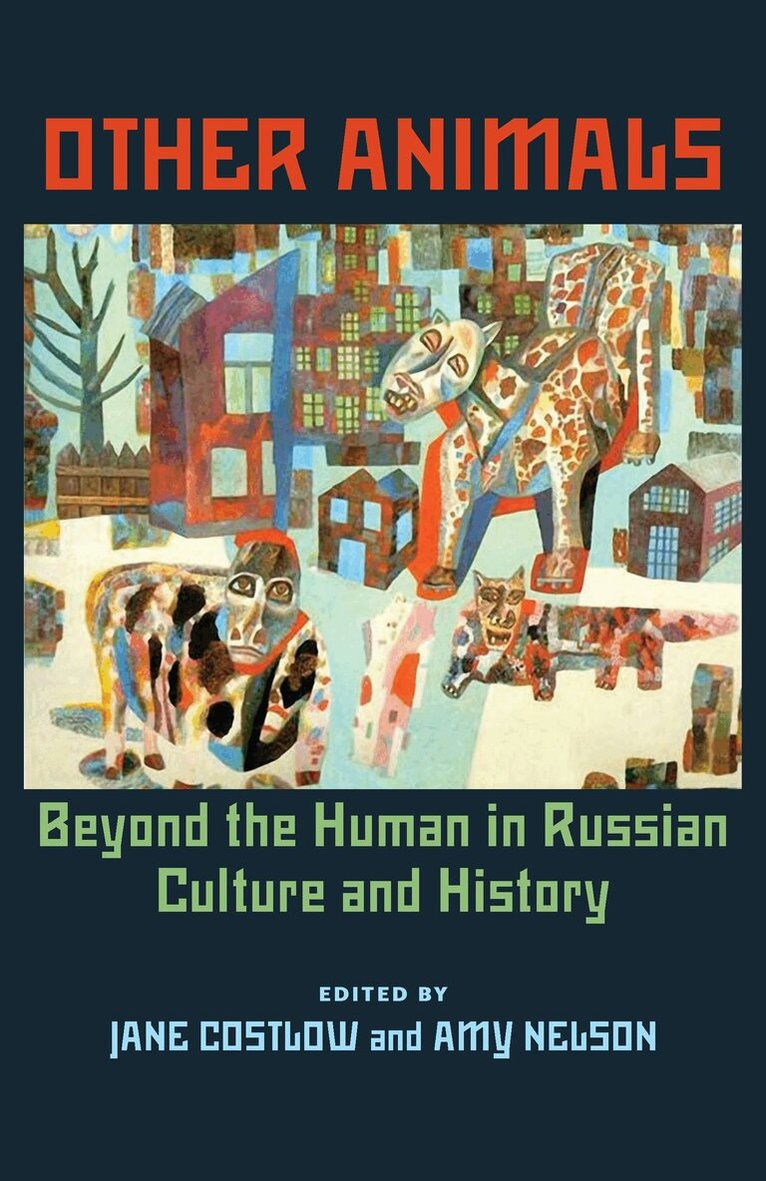
    Jane Costlow is the Clark A. Griffiths Professor of Environmental Studies at Bates College in Lewiston, Maine, USA. Her scholarly work has focused primarily on nineteenth-century Russian literature and visual culture, ranging from the novels of Ivan Turgenev to writing by Russian women writers and representations of the bear in late Imperial culture. Recent publications include Heart-Pine Russia: Walking and Writing the 19th century Forest (Cornell University Press, 2013) and, with Amy Nelson, Other Animals: Beyond the Human in Russian Culture and History (University of Pittsburgh Press, 2010). At Bates she teaches courses in Environmental Humanities and Russian Literature, interests reflected in recent papers and conference presentations on disaster narratives in film and oral history. Her translation of Lydia Zinovieva-Annibal’s The Tragic Menagerie received the AATSEEL prize for best translation in 1999.Arja Rosenholm is Professor of Russian Language and Culture at the University of Tampere, Finland. Her research interests include the history of Russian literature and culture, gender studies, Russian popular culture and mass media, ecocriticism, space, and culture. She is currently heading the Academy of Finland-funded project "Water as Cultural Space: Changing Values and Representations" (2012–2016). Rosenholm has edited several scholarly volumes in English, Russian, and Finnish, and published numerous peer-reviewed articles in international and national journals. Recent books include Women in Russian Cultural History (in Finnish), with Suvi Salmenniemi and Marja Sorvari. (Gaudeamus, 2014), and Topografii populiarnoi kul’tury together with Irina Savkina. (NLO, 2015).

    Innehållsförteckning

    • IntroductionSection One: Language and Myths of Water1 Ivan Podiukov, "Cultural Semantics of Aquatic Imagery in the Russian Language" 2 Nicholas Breyfogle, "Sacred Waters: The Spiritual World of Lake Baikal"3 Evgeny Platonov, "Wells of Superstition: The History of Holy Springs in Russia, 18th – 19th Centuries" 4 Dmitrii Zamyatin: "Thinking with Water in a Russian Context" Section Two: Socio-Cultural Identities of Water5 Oleg Riabov, "Mother Volga and the Construction of Russian Identity"6 Maria Litovskaia, "The Chief Worker of the Urals": Metanarrative of the Chusovaia River and its Creation"7 Sveta Yamin–Pasternak, Andrew Kliskey, Lilian Alessa and Peters Schweitzer, "A Cup of Tundra: Ethnography of Thirst in the Bering Strait"Section Three: Water Rebuilding Landscapes8 Elena Miliugina and Mikhail Stroganov, "Water on the Russian Gentry Estate"9 Polina Barskova, "Celebrating the Return of the Flood of Petersburg: 1824/1924"10 Cynthia Ruder, "Imagined and Real: The Moscow Canal as the Port of Five Seas" Section Four: Aesthetics and Poetics of Water11 Anastasia Kostetskaya, "A Woman in Nature/A Woman is Nature: The Eternal Feminine as a Conceptual Blend of Human and Water Ontologies in Russian Symbolist Poetics" 12 Jane Costlow, "Parched: Water and its Absence in the Films of Larisa Shepit’ko" 13 Arja Rosenholm, "The Energizing Flow of Water in Marietta Shaginian’s Novel Hydrocentral"14 Gitta Hammarberg, "Spatriotism: Water in Literary Polemics (Early 19th century Russia"