• Fri frakt över 249 kr
  • •
  • Snabba leveranser
  • •
  • Billiga böcker
Kundservice

Du är på sajten för privatpersoner.

Företag, bibliotek eller offentlig verksamhet?

Du handlar på classic.bokus.com, där alla dina funktioner finns intakta.
Till classic.bokus.com
Bokus logotyp. Gå till startsidan.
  • Erbjudanden
  • Nyheter
  • Student
  • Topplistor
  • Barn & ungdom
  • Bokus Play
  • E-böcker
  • Pocketböcker
  • Spel & pussel

10% studentrabatt med kod TERM26

Sidfot

Mina sidor

    Hjälp

    • Kundservice
    • Vanliga frågor och svar
    • Frakt och leverans
    • Retur vid ångerrätt
    • Reklamera vara
    • Betalning
    • Köpvillkor
    • Allmänna villkor
    • Information om webbplatsens tillgänglighet

    Om Bokus

    • Om oss
    • Pressrum
    • För studenter
    • För företag
    • För bibliotek och offentlig verksamhet
    • För leverantörer
    • Hållbarhet

    Populärt

    • Aktuella erbjudanden
    • Presentkort
    • Studentlitteratur
    • Nya böcker
    • Topplistor
    • Signerade böcker
    • Engelska böcker

    Inspiration

    • Boktips
    • BookTok
    • Populära bokserier
    • Barnbokskaraktärer
    • Populära författare
    Logotyp för Bokus
    Följ oss på Facebook (extern länk)Följ oss på Instagram (extern länk)Följ oss på YouTube (extern länk)Följ oss på TikTok (extern länk)
    bokus @ CookiesAnpassa cookiesIntegritetspolicyKöpvillkor
    Till Citymail hemsida (extern länk)Till Budbee hemsida (extern länk)Till Postnord hemsida (extern länk)Till Schenker hemsida (extern länk)Till Early Bird hemsida (extern länk)Till Walleys hemsida (extern länk)
    1. Historia och arkeologi
    2. Historia
    3. Historia: särskilda händelser och ämnen
    4. Socialhistoria och kulturhistoria

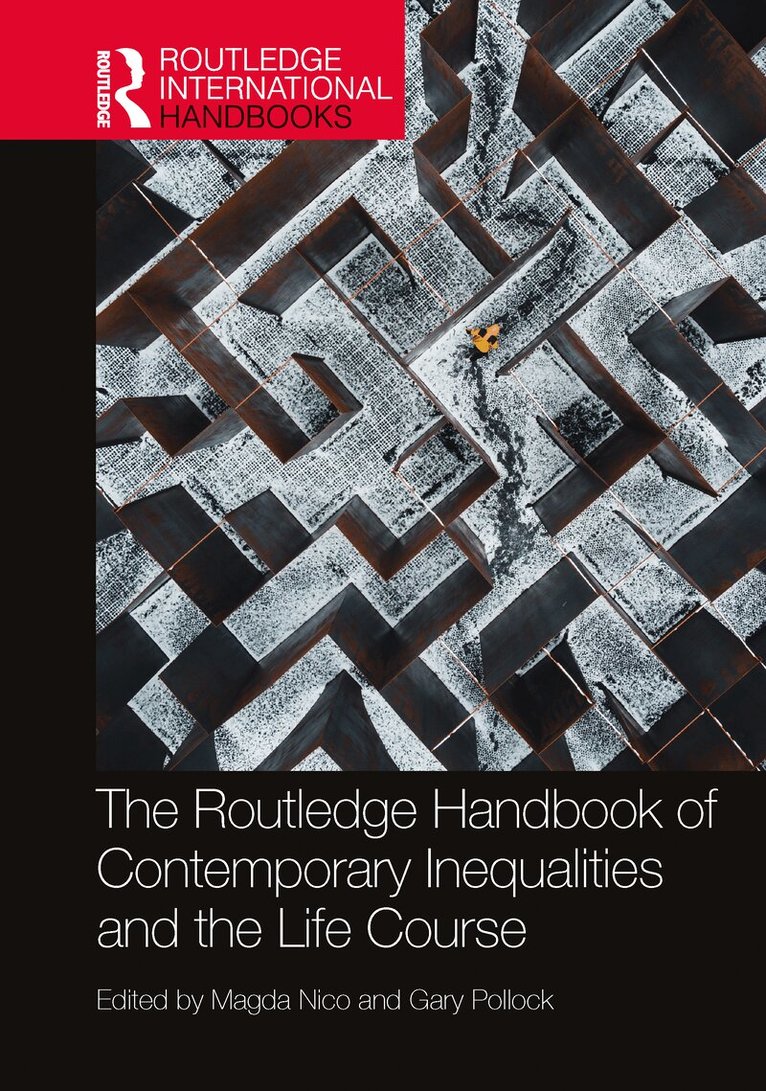
    Routledge Handbook of Contemporary Inequalities and the Life Course

    AvMagda Nico,Gary Pollock

    Inbunden, Engelska, 2021

    Del i serien Routledge International Handbooks

    3 785 kr

    Beställningsvara. Skickas inom 10-15 vardagar. Fri frakt över 249 kr.

    Beskrivning

    Drawing upon perspectives from across the globe and employing an interdisciplinary life course approach, this handbook explores the production and reproduction of different types of inequality across a variety of social contexts.Inequalities are not static, easily measurable, and essentially quantifiable circumstances of life. They are processes which impact on individuals throughout the life course, interacting with each other, accumulating, attenuating, reproducing, or distorting themselves along the way. The chapters in this handbook examine various types of inequality, such as economic, gender, racial, and ethnic inequalities, and analyse how these inequalities manifest themselves within different aspects of society, including health, education, and the family, at multiple levels and dimensions. The handbook also tackles the global COVID-19 pandemic and its striking impact on the production and intensification of inequalities.The interdisciplinary life course approach utilised in this handbook combines quantitative and qualitative methods to bridge the gap between theory and practice and offer strategies and principles for identifying and tackling issues of inequality. This book will be indispensable for students and researchers as well as activists and policy makers interested in understanding and eradicating the processes of production, reproduction, and perpetuation of inequalities.

    Produktinformation

    • Utgivningsdatum:2021-12-31
    • Mått:174 x 246 x undefined mm
    • Vikt:980 g
    • Format:Inbunden
    • Språk:Engelska
    • Serie:Routledge International Handbooks
    • Antal sidor:432
    • Förlag:Taylor & Francis Ltd
    • ISBN:9781138601505

    Utforska kategorier

    • Socialhistoria och kulturhistoria inom Historia och arkeologi
    • Sociologi inom Samhälle och politik
    • Sociala grupper och identitet inom Samhälle och politik

    Mer om författaren

    Magda Nico is a Researcher at the Centre for Research and Studies in Sociology (CIES-ISCTE) and Assistant Professor at the Department of Social Research Methods at ISCTE-University Institute of Lisbon. She is currently coordinating a project on the importance and dynamics of ‘linked lives’ within families. Her research interests include life course theory and methods, family histories, social mobility, and the processes of inequalities.Gary Pollock is Professor of Sociology at Manchester Metropolitan University. He currently coordinates the European Research Council-funded Cohort Community Research and Development Infrastructure Network for Access Throughout Europe (COORDINATE) project and has previously led the European Cohort Development (EDCP) and Measuring Youth Well-Being (MYWEB) projects. His research interests include the design and analysis of survey data on children and young people and their life trajectories, particularly using longitudinal techniques.

    Innehållsförteckning

    • Section 1– Inequality as processIntroduction - Doing Inequalities over the life courseMagda Nico and Gary Pollock Inequality across time: social change, biography and the life courseDale Dannefer, Chengming Han, and Jiao Yu Poverty and economic insecurity in the life courseLeen Vandecasteele, Dario Spini, Nicolas Sommet, and Felix Bühlmann Inequality as processElisabetta Ruspini Life course inequality and policy: a focus on child well-beingGary Pollock, Jessica Ozan, and Haridhan Goswami Section 2– Assessing inequalities: complementary methodsIntroduction - Imagining the understanding of inequalitiesMagda Nico and Gary Pollock Studying social inequality over the life course in modern societies. The methodological importance of life course studiesGwendolin J. Blossfeld and Hans-Peter Blossfeld The analysis of inequality in life trajectories: an integration of two approachesDanilo Bolano and André Berchtold Evolution of COVID-19 lethality and geographically contrasting socio-economic factors in Brazil: a multilevel perspectiveJoseph F. Hair, Jr, Luiz Paulo Fávero, and Rafael de Freitas Souza Health inequalities across the life course: theories, statistical pitfalls, and the possible impact of the COVID-19 pandemicFabian Kratz Section 3 – The social stratification of healthIntroduction - The inherent longitudinality of health inequalitiesMagda Nico and Gary Pollock Mental health inequalitiesJane D. McLeod and Max E. Coleman How an analysis of lifespan inequality can contribute to our understanding of life course inequalitiesAlyson van Raalte Two centuries of inequalities: disability and partnership in SwedenLotta Vikström, Kateryna Karhina, and Johan Junkka The Covid-19 pandemic: inequalities and the life courseRichard A. Settersten, Jr., Laura Bernardi, Juho Härkönen, Toni C. Antonucci, Pearl A. Dykstra, Jutta Heckhausen, Diana Kuh, Karl Ulrich Mayer, Phyllis Moen, Jeylan T. Mortimer, Clara H. Mulder, Timothy M. Smeeding, Tanja Van Der Lippe, Gunhild O. Hagestad, Martin Kohli, René Levy, Ingrid Schoon, and Elizabeth Thomson Section 4 – Economic and wealth inequalitiesIntroduction - The challenge of complexity in the analysis of economic inequalitiesMagda Nico and Gary Pollock Concepts of social stratification—static and dynamic perspectivesSteffen Hillmert Optimising the use of measures of social stratification in research with intersectional and longitudinal analytical prioritiesPaul Lambert and Camilla Barnett Stagnation and inequality in a historical view: a comment on Piketty's analysis of capitalism and the Portuguese caseFrancisco Louçã Things can’t only get better: inequality and democracy over a life-spanKevin Albertson and Richard WhittleSection 5 – Youth, education and transition to adulthoodIntroduction - Half way down the stairs – somewhere else insteadMagda Nico and Gary Pollock Expansion and improved permeability of post-secondary education in Germany: consequences for social inequalities in educational attainmentNicole Tieben and Daniela Rohrbach-Schmidt Educational expansion across cohorts and over the life course: an international comparison of (rapid) educational expansion and the consequences of the differentiation of tertiary educationPia Blossfeld, Gwendolin J. Blossfeld, and Hans-Peter Blossfeld Class in successive life courses in Britain since 1945Ken Roberts Mapping young Norwegians’ self-projects and future orientationsIngunn Marie Eriksen and Kari StefansenSection 6 – Family and linked livesIntroduction - Families at the heart of linked (lives and) inequalitiesMagda Nico and Gary Pollock Care inequality in later life in ageing societies: the unequal distribution of the intensity of informal support in EuropeMarco Albertini and Riccardo Prandini The apple, the tree and the forest: family histories as radars of social mobility and inequalitiesMagda Nico and Maria Gilvania Valdivino Silva Family formation and social inequalities. A life course perspectiveStefano Cantalini Farewell’s children: using the life course perspective to understand female late fertility Rosalina Pisco Costa Section 7 – Gender inequalitiesIntroduction - Gender inequalities: time-varying and trajectoriesMagda Nico and Gary Pollock The mutual constitution of gendered and sexualised inequalities in life coursesJosé Fernando Serrano-Amaya Gender trajectories and the production of inequalities from a life course perspectiveSofia Aboim and Pedro Vasconcelos Inequalities in work and the intersectional life coursePhyllis Moen and Mahala Miller LGBTIQ+ life course inequalities and queer temporalitiesMaria do Mar Varela and Yener BayramoğluSection 8 – Racial and ethnic inequalitiesIntroduction - The weight of structure on the skinMagda Nico and Gary Pollock The centrality of race to inequality across the world-systemManuela Boatca A life course approach to understanding ethnic health inequalities in later life: an example using the United Kingdom as national contextSarah Stopforth, Laia Bécares, James Nazroo, and Dharmi Kapadia The inequalities of empire: comparative perspectivesCátia Antunes and Miguel Bandeira Jerónimo How the COVID-19 pandemic is shifting the migrant-inequality narrativeFerdinand C. Mukumbang