Inbunden, Engelska, 2018
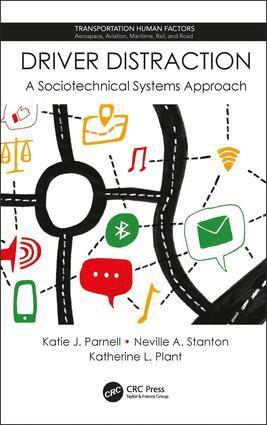
Driver Distraction
A Sociotechnical Systems Approach
Av Katie J. Parnell, Neville A. Stanton, Katherine L. Plant
Del i serien Transportation Human Factors
2780 kr
Beställningsvara. Skickas inom 10-15 vardagar. Fri frakt över 249 kr.
Beskrivning
Produktinformation
- Utgivningsdatum: 2018-11-26
- Mått: 156 x 234 x 19 mm
- Vikt: 521 g
- Format: Inbunden
- Språk: Engelska
- Serie: Transportation Human Factors
- Antal sidor: 250
- Förlag: Taylor & Francis Ltd
- ISBN: 9781138606814
Utforska kategorier
Mer om författaren
Dr. Katie J. Parnell studied for her Engineering Doctorate at the University of Southampton and holds a First class BsC Psychology degree from the University of Reading. Her research interests include applying, developing and reviewing accident causation from a sociotechnical systems viewpoint. Katie is also interested in the advancements in technological interfaces and how they can be utilised safely. She has published a number of journal articles on applying the sociotechnical systems approach to the study, and mitigation of, driver distraction.Professor Neville A. Stanton, PhD, is a Chartered Psychologist, Chartered Engineer and a Chartered Ergonomist, and holds the Chair in Human Factors in the Faculty of Engineering and the Environment at the University of Southampton. He has degrees in Psychology, Applied Psychology and Human Factors and has worked at the Universities of Aston, Brunel, Cornell and MIT. His research interests include modelling, predicting and analysing human performance in transport systems as well as designing the interfaces between humans and technology. Professor Stanton has worked on cockpit design in automobiles and aircraft over the past 25 years, working on a variety of automation projects. He has published 40 books and over 300 journal papers on Ergonomics and Human Factors, and is currently an editor of the peer-reviewed journal Ergonomics. In 1998 he was awarded the Institution of Electrical Engineers Divisional Premium Award for a co-authored paper on Engineering Psychology and System Safety. The Institution of Ergonomics and Human Factors awarded him The Otto Edholm Medal in 2001, The President¹s Medal in 2008 and The Sir Frederic Bartlett Medal in 2012 for his contribution to basic and applied ergonomics research. The Royal Aeronautical Society awarded him and his colleagues the Hodgson Prize and Bronze Medal in 2006 for research on design-induced flight-deck error published in The Aeronautical Journal. The University of Southampton has awarded him a Doctor of Science (DSc) in 2014 for his sustained contribution to the development and validation of Human Factors methods.Dr Katherine L. Plant, BSc, PhD, is New Frontiers Fellow in Human Factors Engineering in the Transportation Research Group (TRG) within the Faculty of Engineering and the Environment at the University of Southampton, UK. She is the technical lead for aviation and road safety research within the group. In 2014 Katie was awarded the Honorable Company of Air Pilots Prize for Aviation Safety for her research exploring aeronautical critical decision making. Her primary research interests center on understanding how the interaction of the environment we work in and the mental schema that we hold influence our actions and decision-making processes. Katie is passionate about teaching Human Factors and runs the module ‘Human Factors in Engineering’, which is offered to undergraduate and MSc Engineering students across the faculty. In addition to this, Katie supervises a number of PhD, MSc and undergraduate student projects.
Recensioner i media
"This book provides a fresh perspective on the persistent problem of driver distraction by breaking the fixation on individual drivers and the devices that distract them. Adopting a sociotechnical perspective to distraction reveals novel solutions that have so far eluded the field. An extremely useful resource for designers, engineers, researchers, accident investigators, regulators and policy makers."— Professor John D Lee, University of Wisconsin–Madison, USA"This book takes a new approach to the problem of driver distraction. The sociotechnical systems perspective helps us understand that driver distraction is not just due to human error - but is created unwittingly by international and national committees, governments and regulators, as well as manufactures of vehicles and nomadic devices. This is an important book for researchers and practitioners wishing to understand the latest thinking on driver distraction. It gives a refreshing theoretical perspective on a critical problem, together with practical solutions. A must read for anyone working in this domain."— Professor Gary Burnett, University of Nottingham, UK"Parnell, Stanton and Plant bring a fresh, sociotechnical, perspective to the study of driver distraction from technological devices, providing a new way of studying distraction with respect to the wider context within which it occurs, as well as the identification of other actors within the environment that influence it. This important book provides new theoretical, methodological and practical contributions to the field of driver distraction that will help to save lives. Highly recommended reading for all those working in this important field of endeavour"— Professor Michael Regan, University of New South Wales, Australia
Betyg & recensioner
0 recensioner
Inga recensioner tillgängliga.