• Fri frakt över 249 kr
  • •
  • Snabba leveranser
  • •
  • Billiga böcker
Kundservice

Du är på sajten för privatpersoner.

Företag, bibliotek eller offentlig verksamhet?

Du handlar på classic.bokus.com, där alla dina funktioner finns intakta.
Till classic.bokus.com
Bokus logotyp. Gå till startsidan.
  • Erbjudanden
  • Nyheter
  • Student
  • Topplistor
  • Barn & ungdom
  • Bokus Play
  • E-böcker
  • Pocketböcker
  • Spel & pussel

10% rabatt på allt med kod: NYSTART10 →

Sidfot

Mina sidor

    Hjälp

    • Kundservice
    • Vanliga frågor och svar
    • Frakt och leverans
    • Retur vid ångerrätt
    • Reklamera vara
    • Betalning
    • Köpvillkor
    • Allmänna villkor
    • Information om webbplatsens tillgänglighet

    Om Bokus

    • Om oss
    • Pressrum
    • För studenter
    • För företag
    • För bibliotek och offentlig verksamhet
    • För leverantörer
    • Hållbarhet

    Populärt

    • Aktuella erbjudanden
    • Presentkort
    • Studentlitteratur
    • Nya böcker
    • Topplistor
    • Signerade böcker
    • Engelska böcker

    Inspiration

    • Boktips
    • BookTok
    • Populära bokserier
    • Barnbokskaraktärer
    • Populära författare
    Logotyp för Bokus
    Följ oss på Facebook (extern länk)Följ oss på Instagram (extern länk)Följ oss på YouTube (extern länk)Följ oss på TikTok (extern länk)
    bokus @ CookiesAnpassa cookiesIntegritetspolicyKöpvillkor
    Till Citymail hemsida (extern länk)Till Budbee hemsida (extern länk)Till Postnord hemsida (extern länk)Till Schenker hemsida (extern länk)Till Early Bird hemsida (extern länk)Till Walleys hemsida (extern länk)
    1. Samhälle och politik
    2. Politik och statsskick
    3. Statsskick och politiska processer

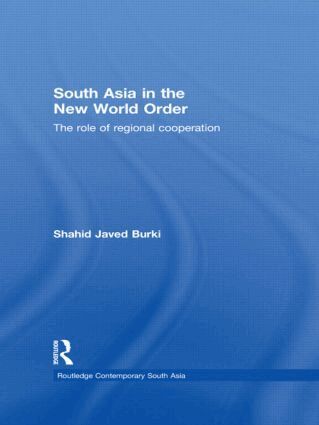
    South Asia in the New World Order

    The Role of Regional Cooperation

    AvShahid Javed Burki

    Häftad, Engelska, 2014

    Del i serien Routledge Contemporary South Asia Series

    695 kr

    Beställningsvara. Skickas inom 10-15 vardagar. Fri frakt över 249 kr.

    Fler format och utgåvor

    Inbunden

    2 421 kr

    E-bok

    822 kr

    E-bok

    822 kr

    Beskrivning

    Rapid changes have taken place in the structure of the global economy, and this book looks at how South Asia can take advantage of these changes. The author argues that the developing global economy will be more complex than originally thought, that instead of a bipolar model with two countries, the US and China, at the centre, it will be multipolar with eight centres of economic activity, including India.The book goes on to suggest that in the context of such a model, there should be regional cooperation between India and its immediate neighbouring countries for South Asia to advance as an economic region. It argues that South Asia will need to look at its history, and that changes in attitudes, particularly in India and Pakistan, are necessary. The possible benefits to the region, in terms of increases in the rates of economic growth if the regional approach is adopted, are discussed. The book presents a useful contribution to studies in South Asia, as well as Asian Economics.

    Produktinformation

    • Utgivningsdatum:2014-03-21
    • Mått:156 x 234 x 14 mm
    • Vikt:317 g
    • Format:Häftad
    • Språk:Engelska
    • Serie:Routledge Contemporary South Asia Series
    • Antal sidor:212
    • Förlag:Taylor & Francis Ltd
    • ISBN:9781138784789

    Utforska kategorier

    • Statsskick och politiska processer inom Samhälle och politik
    • Internationell ekonomi inom Ekonomi och Ledarskap
    • Etnicitet inom Samhälle och politik

    Mer om författaren

    Shahid Javed Burki is a professional economist. He was previously Finance Minister of Pakistan and Vice President of the World Bank.

    Innehållsförteckning

    • 1. Prologue  2. Challenges and Opportunities  3. Reshaping the Global Economy: The Dawn of the Asian Century?  4. History’s Many Burdens  5. South Asia May Have Turned the Corner  6. The South Asian Way: A Non-Conventional Approach to the Making of Economic Policies  7. A Multilayered World: Regional Integration as a Determinant of Sustained National Growth  8. South Asia: Future Growth Scenarios With or Without Integration