• Fri frakt över 249 kr
  • •
  • Snabba leveranser
  • •
  • Billiga böcker
Kundservice

Du är på sajten för privatpersoner.

Företag, bibliotek eller offentlig verksamhet?

Du handlar på classic.bokus.com, där alla dina funktioner finns intakta.
Till classic.bokus.com
Bokus logotyp. Gå till startsidan.
  • Erbjudanden
  • Nyheter
  • Student
  • Topplistor
  • Barn & ungdom
  • Bokus Play
  • E-böcker
  • Pocketböcker
  • Spel & pussel

10% studentrabatt med kod TERM26

Sidfot

Mina sidor

    Hjälp

    • Kundservice
    • Vanliga frågor och svar
    • Frakt och leverans
    • Retur vid ångerrätt
    • Reklamera vara
    • Betalning
    • Köpvillkor
    • Allmänna villkor
    • Information om webbplatsens tillgänglighet

    Om Bokus

    • Om oss
    • Pressrum
    • För studenter
    • För företag
    • För bibliotek och offentlig verksamhet
    • För leverantörer
    • Hållbarhet

    Populärt

    • Aktuella erbjudanden
    • Presentkort
    • Studentlitteratur
    • Nya böcker
    • Topplistor
    • Signerade böcker
    • Engelska böcker

    Inspiration

    • Boktips
    • BookTok
    • Populära bokserier
    • Barnbokskaraktärer
    • Populära författare
    Logotyp för Bokus
    Följ oss på Facebook (extern länk)Följ oss på Instagram (extern länk)Följ oss på YouTube (extern länk)Följ oss på TikTok (extern länk)
    bokus @ CookiesAnpassa cookiesIntegritetspolicyKöpvillkor
    Till Citymail hemsida (extern länk)Till Budbee hemsida (extern länk)Till Postnord hemsida (extern länk)Till Schenker hemsida (extern länk)Till Early Bird hemsida (extern länk)Till Walleys hemsida (extern länk)
    1. Kultur
    2. Scenkonst och film
    3. Film

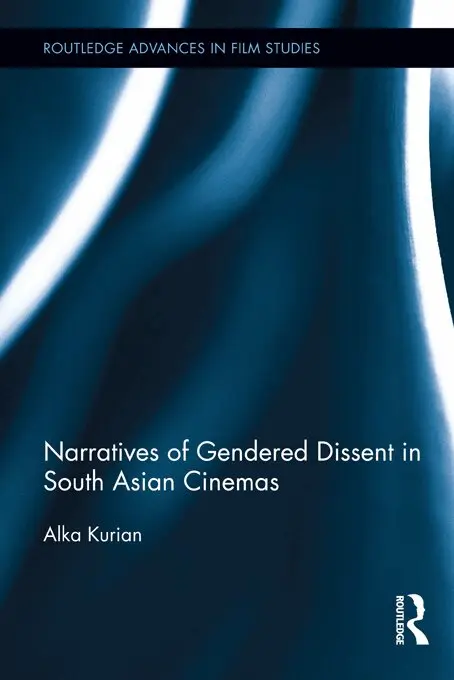
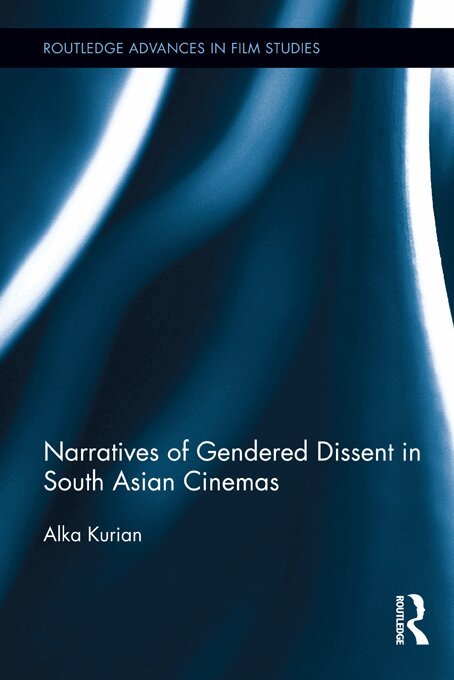
    Narratives of Gendered Dissent in South Asian Cinemas

    AvAlka Kurian

    Häftad, Engelska, 2014

    Del i serien Routledge Advances in Film Studies

    797 kr

    Beställningsvara. Skickas inom 10-15 vardagar. Fri frakt över 249 kr.

    Fler format och utgåvor

    Inbunden

    2 434 kr

    E-bok

    939 kr

    E-bok

    942 kr

    Beskrivning

    This book conducts a post-colonial, gendered investigation of women-centred South Asian films. In these films, the narrative becomes an act of political engagement and a site of feminist struggle: a map that weaves together multiple strands of subjectivity—gender, caste, race, class, religion, and colonialism. The book explores the cinematic construction of an oppositional narrative of feminist dissent with a view to elaborate a historical understanding and theorisation of the ‘materiality and politics’ of the everyday struggle of Indian women. The book analyzes the ways that ‘cultural workers’ have tended to use subversive narratives as a tool of resistance. Narratives that are political, ideological, classed, raced and gendered offer the focus of this exploration. Through strategies of disclosure and documentation of memory, personal experiences, and imaginary events shaped by the larger historical, political, and cultural contexts, these discursive texts engage in the processes of struggle against a plethora of oppression: caste, class, religion, patriarchal, sexual, and (neo)colonial. The study looks at the manner in which, through their creative and aesthetic interventions, South Asian film makers enable the articulation of an alternative gendered subjectivity as well as constitute the ground for personal and collective empowerment. Films discussed include Shyam Benegal’s Nishaant, Nandita Das’ Firaaq, Beate Arnestad’s My Daughter the Terrorist, and Sarah Gavron’s Brick Lane.

    Produktinformation

    • Utgivningsdatum:2014-03-19
    • Mått:152 x 229 x 15 mm
    • Vikt:294 g
    • Format:Häftad
    • Språk:Engelska
    • Serie:Routledge Advances in Film Studies
    • Antal sidor:210
    • Förlag:Taylor & Francis Ltd
    • ISBN:9781138788138

    Utforska kategorier

    • Film inom Kultur
    • Kulturvetenskap inom Samhälle och politik
    • Genusvetenskap inom Samhälle och politik

    Mer om författaren

    Alka Kurian is a Lecturer in Interdisciplinary Arts and Sciences at the University of Washington, Bothell.

    Recensioner i media

    'Unmistakably, Kurian argues with passion, does not flinch before thorny political issues, stakes out the literature, voices dis/agreements with other critics with clarity and a certainty that leaves no room for doubt...Yet the true strength of the work lies in the creative selection of representative films etching violent postcolonial struggles that draw together Bangladesh, India, Pakistan, and Sri Lanka. Even more impressive is how Kurian demonstrates inflections in local politics interlinked with and susceptible to global geopolitical pressure points...No single argument exclusively explains the complex politics behind these struggles, but Kurian does a valiant job in drawing together the layered forces at play in seemingly isolated Southasian political conflict and events.' Jyotika Virdi, Himal Southasian'What makes Kurian’s work particularly noteworthy is its emphasis on what she calls ‘feminist’ cinema – a cinema committed to recovering and expressing gendered struggle against various modes of oppression along the lines of class, caste, religion, sexuality, imperialism, colonialism, neo-colonialism and racism. Further, the book’s scope includes not only works from India but also Pakistan and Sri Lanka as well as the Indian and Bangladeshi diasporas in the United Kingdom...Written with clarity and vigour, each chapter in this book provides helpful contextual material as well as a varied critical apparatus for the readings of individual films. Moreover, by bringing together such a diverse array of films, the book provides a pedagogically useful overview of the topic. While taking primarily a feminist and cultural studies approach, the book nonetheless suggests new questions that historians of Indian cinema might want to further investigate from a film studies perspective.' Sangita Gopal, South Asian History and Culture

    Innehållsförteckning

    • Part 1: Class, Caste and Social Exclusion 1. Subalterneity and Resistance in Shyam Benegal’s Nishaant and Manthan 2. Radical Politics and Gender in Govind Nihalani’s Hazaar Chaurasi Ki Ma, Sudhir Mishra’s Hazaaron Khwaishein Aisi, and Sanjiv Karambelkar’s Lal Salaam Part 2: Nationalism, Religion, and Identity 3. The Politics of Hindutva in Nandita Das’ Firaaq, Rahul Dholakia’s Parzania, and Rakesh Sharma’s Final Solution 4. Gender, Home, and Displacement in Sabiha Sumar’s Khamosh Pani Part 3: Nationalism and Ethnic Struggle 5. Subjectivity, Choice, and Feminist Agency in Santosh Sivan’s The Terrorist and Beate Arnestad’s My Daughter the Terrorist Part 4: Heteronormativity, ‘Difference’, and the Construction of a Subversive Femininity 6. Gender, Identity, and the Diaspora in Gurinder Chadha’s Bhaji on the Beach and Sarah Gavron’s Brick Lane