• Fri frakt över 249 kr
  • •
  • Snabba leveranser
  • •
  • Billiga böcker
Kundservice

Du är på sajten för privatpersoner.

Företag, bibliotek eller offentlig verksamhet?

Du handlar på classic.bokus.com, där alla dina funktioner finns intakta.
Till classic.bokus.com
Bokus logotyp. Gå till startsidan.
  • Erbjudanden
  • Nyheter
  • Student
  • Topplistor
  • Barn & ungdom
  • Bokus Play
  • E-böcker
  • Pocketböcker
  • Spel & pussel

10% rabatt på allt med kod: NYSTART10 →

Sidfot

Mina sidor

    Hjälp

    • Kundservice
    • Vanliga frågor och svar
    • Frakt och leverans
    • Retur vid ångerrätt
    • Reklamera vara
    • Betalning
    • Köpvillkor
    • Allmänna villkor
    • Information om webbplatsens tillgänglighet

    Om Bokus

    • Om oss
    • Pressrum
    • För studenter
    • För företag
    • För bibliotek och offentlig verksamhet
    • För leverantörer
    • Hållbarhet

    Populärt

    • Aktuella erbjudanden
    • Presentkort
    • Studentlitteratur
    • Nya böcker
    • Topplistor
    • Signerade böcker
    • Engelska böcker

    Inspiration

    • Boktips
    • BookTok
    • Populära bokserier
    • Barnbokskaraktärer
    • Populära författare
    Logotyp för Bokus
    Följ oss på Facebook (extern länk)Följ oss på Instagram (extern länk)Följ oss på YouTube (extern länk)Följ oss på TikTok (extern länk)
    bokus @ CookiesAnpassa cookiesIntegritetspolicyKöpvillkor
    Till Citymail hemsida (extern länk)Till Budbee hemsida (extern länk)Till Postnord hemsida (extern länk)Till Schenker hemsida (extern länk)Till Early Bird hemsida (extern länk)Till Walleys hemsida (extern länk)
    1. Psykologi och pedagogik
    2. Psykologi
    3. Psykologiska teorier och skolor
    4. Freudiansk psykologi

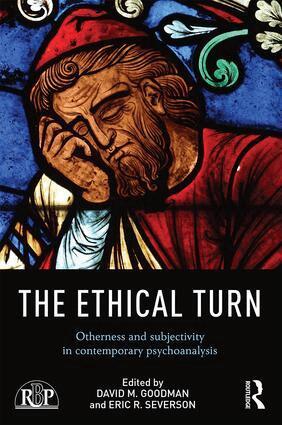
    Ethical Turn

    Otherness and Subjectivity in Contemporary Psychoanalysis

    AvDavid M. Goodman,Eric R. Severson

    Häftad, Engelska, 2016

    Del i serien Relational Perspectives Book Series

    779 kr

    Beställningsvara. Skickas inom 10-15 vardagar. Fri frakt över 249 kr.

    Beskrivning

    Levinas (1969) claims that "morality is not a branch of philosophy, but first philosophy" and if he is right about this, might ethics also serve as a first psychology? This possibility is explored by the authors in this volume who seek to bring the "ethical turn" into the world of psychoanalysis. This phenomenologically rich and socially conscious ethics has taken centre stage in a variety of academic disciplines, inspired by the work of philosophers and theologians concerned with the moral fabric of subjectivity, human relationship, and socio-political life. At the heart of this movement is a reconsideration of the other person, and the dangers created when the question of the "Other" is subsumed by grander themes.The authors showcased here represent the exceptional work being done by both scholars and practitioners working at the crossroads between psychology and philosophy in order to rethink the foundations of their disciplines. The Ethical Turn: Otherness and subjectivity in contemporary psychoanalysis guides readers into the heart of this fresh and exciting movement and includes contributions from many leading thinkers, who provide fascinating new avenues for enriching our responses to suffering and understandings of human identity. It will be of use to psychoanalysts, professionals in psychology, postgraduate students, professors and other academics in the field.

    Produktinformation

    • Utgivningsdatum:2016-06-29
    • Mått:156 x 234 x 20 mm
    • Vikt:450 g
    • Format:Häftad
    • Språk:Engelska
    • Serie:Relational Perspectives Book Series
    • Antal sidor:302
    • Förlag:Taylor & Francis Ltd
    • ISBN:9781138813281

    Utforska kategorier

    • Freudiansk psykologi inom Psykologi och pedagogik
    • Filosofiska discipliner inom Filosofi och religion

    Mer om författaren

    David M. Goodman is the Associate Dean at the Woods College of Advancing Studies at Boston College, the Director of Psychology and the Other and a Teaching Associate at Harvard Medical School/Cambridge Hospital. He has written over a dozen articles, a book titled The Demanded Self: Levinasian Ethics and Identity in Psychology (Duquesne University Press, 2012) and has co-edited several books on the intersection of psychology and philosophy. Dr. Goodman is also a licensed clinical psychologist and has a private practice in Cambridge, MA.Eric R. Severson is a philosopher specializing in the work of Emmanuel Levinas. He is author of the books Levinas's Philosophy of Time (Duquesne University Press, 2013) and Scandalous Obligation (Beacon Hill Press, 2011), and editor of several other works. He currently teaches for both Seattle University and Seattle Pacific University.

    Recensioner i media

    'This exciting volume is a rich interdisciplinary collection, exploring ethics and engaging its readers in a profound dialogue between philosophy and psychoanalysis regarding human vulnerability, suffering and boundedness. The Ethical Turn features a group of prominent scholars and clinicians who represent diverse entry points and create a cutting edge, moving, and at times surprising conversation.' - Galit Atlas, Ph.D. Author, The Enigma of Desire: Sex, Longing, and Belonging in Psychoanalysis'David Goodman and Eric Severson have produced a discussion of ethics and psychoanalysis that is both wide-ranging and deep. Such a book with its attunement to the importance and subtleties of ethical turns, with its commitment to relational thinking and to attention to the suffering other could not appear at a more crucial time in our field and in the world. Many illustrious speakers and new voices explore a wide variety of topics in regard to patients, analysts, techniques, politics, history and theory. This will be a book to read, a book to teach from and a beacon in our determination in psychoanalysis to work mindful of the ‘other’, in the world and in ourselves.' - Adrienne Harris, New York University'David Goodman and Eric Severson, in this edited volume, have succeeded in uniquely augmenting, explicating, and providing rationale for the "ethical turn" that is transforming psychoanalytic, philosophical and theological discourse. The volume’s gaze is focused on the "Other", an "Other" who is seen as partner in the discovery of meaning through co-created passions and rationalities. The shared courage of the authors causes the volume to press into previously unrecognized or newly rediscovered vistas, rendering this interdisciplinary work of great import for those who value the quest for ethical relating in a world so needful of such inquiries.' - Marie Hoffman, Ph.D., New York University, Brookhaven Institute for Psychoanalysis and Christian Theology

    Innehållsförteckning

    • Introduction: Ethics as First Psychology 1. Mutual Vulnerability: An Ethic of Clinical Practice 2. Kissing Disciplines: Relational Architecture 3. Is Ethics Masochism? Or Infinite Ethical Responsibility and Finite Human Capacity 4. Yale or Jail: Class Struggles in Neoliberal Times 5. Psychoanalysis in Neoliberal Times: A Renewed Dialogue With Madness 6. The Complications of Caring and the Ethical Turn in Psychoanalysis 7. "Screams and Shouts": Trauma, Uncertainty, and the Ethical Turn 8. Can one be a Jew without Sartre? Levinas, Jewish Education, and the Crisis of Humanism 9. A Wandering Jew with or without Sartre: Discussion of Claire Katz's Can One Still Be a Jew without Sartre? Levinas, Jewish Education, and the Crisis of Humanism. 10. The Witnessing Gaze Turned Inward: My Jewish History as the Forgotten Other 11. Gender and the Jew: The Other Within 12. Trauma, Jews, and Gender: How They are Transmitted, Imagined, and Reconceived 13. Beyond Betrayal: On Responsibility in Heidegger, Loewald, and Levinas 14. Changing the Subject by Addressing the Other: Mikhail Bakhtin and Psychoanalytic Therapy 15. I got grand things in me and America won’t let me give nothing: Constructing and Resisting a Standard American Identity 16. Creativity and Hospitality: Negotiating who or what is known in psychoanalytic psychotherapy 17. The Disabled: The Most Othered Others 18. What Fascinates: Re-reading Winnicott Reading Blanchot