• Fri frakt över 249 kr
  • •
  • Snabba leveranser
  • •
  • Billiga böcker
Kundservice

Du är på sajten för privatpersoner.

Företag, bibliotek eller offentlig verksamhet?

Du handlar på classic.bokus.com, där alla dina funktioner finns intakta.
Till classic.bokus.com
Bokus logotyp. Gå till startsidan.
  • Erbjudanden
  • Nyheter
  • Student
  • Topplistor
  • Barn & ungdom
  • Bokus Play
  • E-böcker
  • Pocketböcker
  • Spel & pussel

10% rabatt på allt med kod: NYSTART10 →

Sidfot

Mina sidor

    Hjälp

    • Kundservice
    • Vanliga frågor och svar
    • Frakt och leverans
    • Retur vid ångerrätt
    • Reklamera vara
    • Betalning
    • Köpvillkor
    • Allmänna villkor
    • Information om webbplatsens tillgänglighet

    Om Bokus

    • Om oss
    • Pressrum
    • För studenter
    • För företag
    • För bibliotek och offentlig verksamhet
    • För leverantörer
    • Hållbarhet

    Populärt

    • Aktuella erbjudanden
    • Presentkort
    • Studentlitteratur
    • Nya böcker
    • Topplistor
    • Signerade böcker
    • Engelska böcker

    Inspiration

    • Boktips
    • BookTok
    • Populära bokserier
    • Barnbokskaraktärer
    • Populära författare
    Logotyp för Bokus
    Följ oss på Facebook (extern länk)Följ oss på Instagram (extern länk)Följ oss på YouTube (extern länk)Följ oss på TikTok (extern länk)
    bokus @ CookiesAnpassa cookiesIntegritetspolicyKöpvillkor
    Till Citymail hemsida (extern länk)Till Budbee hemsida (extern länk)Till Postnord hemsida (extern länk)Till Schenker hemsida (extern länk)Till Early Bird hemsida (extern länk)Till Walleys hemsida (extern länk)
    1. Samhälle och politik
    2. Samhälle och kultur
    3. Kultur och medier
    4. Medievetenskap

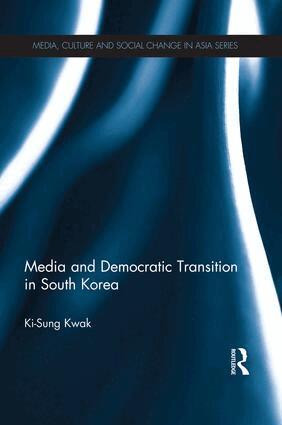
    Media and Democratic Transition in South Korea

    AvKi-Sung Kwak

    Häftad, Engelska, 2014

    Del i serien Media, Culture and Social Change in Asia

    821 kr

    Beställningsvara. Skickas inom 10-15 vardagar. Fri frakt över 249 kr.

    Fler format och utgåvor

    Inbunden

    2 421 kr

    E-bok

    975 kr

    E-bok

    973 kr

    Beskrivning

    Since South Korea achieved partial democracy in 1987, the country has moved away from authoritarian political control. However, after two decades of democratic transition, South Korea still does not have a strong liberal, individualist culture – something that has brought about a wide range of scholarly discussion on the nature of democracy practised in this dynamic country. While the political changes in South Korea have received rigorous attention from Western scholars, less attention has been given to the changing nature and role of media in this and other such transitions. This book focuses on the changing role of media in the more democratised political landscape of South Korea. It thereby contributes to debates about the emerging role of the media in democratic transition, especially in relation to approaches that go beyond traditional Western constructs of media freedom and the relationship between the state and the media. In addition, it discusses the complex interacting forces that affect the role of the media and their implications for state control and democratisation.

    Produktinformation

    • Utgivningsdatum:2014-08-15
    • Mått:156 x 234 x 11 mm
    • Vikt:360 g
    • Format:Häftad
    • Språk:Engelska
    • Serie:Media, Culture and Social Change in Asia
    • Antal sidor:192
    • Förlag:Taylor & Francis Ltd
    • ISBN:9781138816695

    Utforska kategorier

    • Medievetenskap inom Samhälle och politik

    Mer om författaren

    Dr Ki-Sung Kwak is a Senior Lecturer in the Department of Korean Studies at the University of Sydney, Australia. His publications include Mass Media in Australia (2001) and A Country Too Far: Representation of Australia in Korea Since the 1980s (1998).

    Innehållsförteckning

    • 1. Authoritarian Governments and Tame Media (-1987)  2. Early Democratic Transition: Conservative Governments and Cautious Media (1987-1997)  3. Reformist Governments and Contested Media (1998-2007)  4. Conservative Restoration and Redefining the Lines of Media Contestation (2008-)  5. Conclusion