• Fri frakt över 249 kr
  • •
  • Snabba leveranser
  • •
  • Billiga böcker
Kundservice

Du är på sajten för privatpersoner.

Företag, bibliotek eller offentlig verksamhet?

Du handlar på classic.bokus.com, där alla dina funktioner finns intakta.
Till classic.bokus.com
Bokus logotyp. Gå till startsidan.
  • Erbjudanden
  • Nyheter
  • Student
  • Topplistor
  • Barn & ungdom
  • Bokus Play
  • E-böcker
  • Pocketböcker
  • Spel & pussel

10% studentrabatt med kod TERM26

Sidfot

Mina sidor

    Hjälp

    • Kundservice
    • Vanliga frågor och svar
    • Frakt och leverans
    • Retur vid ångerrätt
    • Reklamera vara
    • Betalning
    • Köpvillkor
    • Allmänna villkor
    • Information om webbplatsens tillgänglighet

    Om Bokus

    • Om oss
    • Pressrum
    • För studenter
    • För företag
    • För bibliotek och offentlig verksamhet
    • För leverantörer
    • Hållbarhet

    Populärt

    • Aktuella erbjudanden
    • Presentkort
    • Studentlitteratur
    • Nya böcker
    • Topplistor
    • Signerade böcker
    • Engelska böcker

    Inspiration

    • Boktips
    • BookTok
    • Populära bokserier
    • Barnbokskaraktärer
    • Populära författare
    Logotyp för Bokus
    Följ oss på Facebook (extern länk)Följ oss på Instagram (extern länk)Följ oss på YouTube (extern länk)Följ oss på TikTok (extern länk)
    bokus @ CookiesAnpassa cookiesIntegritetspolicyKöpvillkor
    Till Citymail hemsida (extern länk)Till Budbee hemsida (extern länk)Till Postnord hemsida (extern länk)Till Schenker hemsida (extern länk)Till Early Bird hemsida (extern länk)Till Walleys hemsida (extern länk)
    1. Samhälle och politik
    2. Samhälle och kultur
    3. Kultur och medier
    4. Referensverk och tvärvetenskap

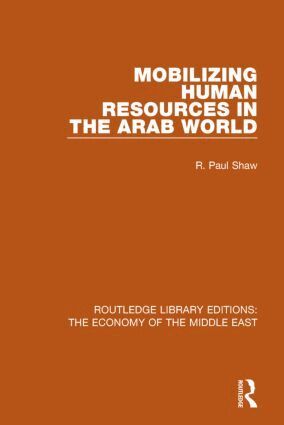
    Mobilizing Human Resources in the Arab World (RLE Economy of Middle East)

    AvR. Paul Shaw

    Häftad, Engelska, 2018

    Del i serien Routledge Library Editions: The Economy of the Middle East

    360 kr

    Beställningsvara. Skickas inom 10-15 vardagar. Fri frakt över 249 kr.

    Fler format och utgåvor

    Inbunden

    1 474 kr

    Beskrivning

    R. Paul Shaw has travelled widely in the Arab world, obtaining data and gathering impressions first-hand from national and local planners. In this book, he identifies population and manpower problems that are likely to become more serious and more difficult to solve if they are neglected at this early stage of Arab development. He focuses on five broad areas which are directly or indirectly related to mobilizing human resources, and his book will be of special interest to all those who are concerned with such issues as population, migration, employment, inequality, the emancipation of women, construction and agriculture. Dr Shaw proposes policy directives which are sensitive to the problems as they are seen by the Arab governments themselves, and sets out practical guidelines which can be used by Arab planners and policy-makers. An important feature of the book with respect to current literature on Arab development is that it moves away from a preoccupation with growth-related investments to a concentration on development-related population, manpower and employment issues. By bringing together such comprehensive empirical and bibliographic information, it will also be invaluable as a reference source for some twenty Arab countries.First published in 1983.

    Produktinformation

    • Utgivningsdatum:2018-01-18
    • Mått:156 x 234 x 18 mm
    • Vikt:500 g
    • Format:Häftad
    • Språk:Engelska
    • Serie:Routledge Library Editions: The Economy of the Middle East
    • Antal sidor:290
    • Förlag:Taylor & Francis Ltd
    • ISBN:9781138820234

    Utforska kategorier

    • Referensverk och tvärvetenskap inom Samhälle och politik
    • Sociologi inom Samhälle och politik
    • Mikroekonomi inom Ekonomi och Ledarskap

    Innehållsförteckning

    • 1. Policy Concerns, or Why This Study Matters 2. Harnessing Construction and Labor Migration 3. Energizing Traditional Agriculture 4. Appropriate Population Policy 5. Upgrading Women’s Employment 6. Manpower and Educational Shortages 7. Summary and Conclusion