• Fri frakt över 249 kr
  • •
  • Snabba leveranser
  • •
  • Billiga böcker
Kundservice

Du är på sajten för privatpersoner.

Företag, bibliotek eller offentlig verksamhet?

Du handlar på classic.bokus.com, där alla dina funktioner finns intakta.
Till classic.bokus.com
Bokus logotyp. Gå till startsidan.
  • Erbjudanden
  • Nyheter
  • Student
  • Topplistor
  • Barn & ungdom
  • Bokus Play
  • E-böcker
  • Pocketböcker
  • Spel & pussel

10% rabatt på allt med kod NYSTART10 →

Sidfot

Mina sidor

    Hjälp

    • Kundservice
    • Vanliga frågor och svar
    • Frakt och leverans
    • Retur vid ångerrätt
    • Reklamera vara
    • Betalning
    • Köpvillkor
    • Allmänna villkor
    • Information om webbplatsens tillgänglighet

    Om Bokus

    • Om oss
    • Pressrum
    • För studenter
    • För företag
    • För bibliotek och offentlig verksamhet
    • För leverantörer
    • Hållbarhet

    Populärt

    • Aktuella erbjudanden
    • Presentkort
    • Studentlitteratur
    • Nya böcker
    • Topplistor
    • Signerade böcker
    • Engelska böcker

    Inspiration

    • Boktips
    • BookTok
    • Populära bokserier
    • Barnbokskaraktärer
    • Populära författare
    Logotyp för Bokus
    Följ oss på Facebook (extern länk)Följ oss på Instagram (extern länk)Följ oss på YouTube (extern länk)Följ oss på TikTok (extern länk)
    bokus @ CookiesAnpassa cookiesIntegritetspolicyKöpvillkor
    Till Citymail hemsida (extern länk)Till Budbee hemsida (extern länk)Till Postnord hemsida (extern länk)Till Schenker hemsida (extern länk)Till Early Bird hemsida (extern länk)Till Walleys hemsida (extern länk)
    1. Medicin
    2. Andra medicinska specialiteter
    3. Behandling och behandlingsmetoder
    4. Ätstörningar

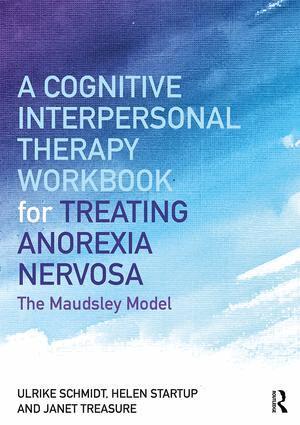
    Cognitive-Interpersonal Therapy Workbook for Treating Anorexia Nervosa

    The Maudsley Model

    AvUlrike Schmidt,Helen Startup

    Häftad, Engelska, 2018

    441 kr

    Beställningsvara. Skickas inom 10-15 vardagar. Fri frakt över 249 kr.

    Fler format och utgåvor

    Inbunden

    2 119 kr

    Beskrivning

    Based on the authors' pioneering work and up-to-date research at London's Maudsley hospital, A Cognitive Interpersonal Therapy Workbook for Treating Anorexia Nervosa provides adults with anorexia nervosa and the professionals working alongside them with a practical resource to work through together.The approach described is recommended by the National Institute of Clinical and Care Excellence (NICE) as a first-line, evidence-based treatment for adults with anorexia nervosa. A Cognitive Interpersonal Therapy Workbook for Treating Anorexia Nervosa provides adults with anorexia nervosa and the professionals working alongside them with a practical resource to work through together.The manual is divided into accessible modules, providing a co-ordinated, step-by-step guide to recovery. Modules include: Nutrition Developing treatment goals Exploring thinking styles Developing an identity beyond anorexia.A Cognitive Interpersonal Therapy Workbook for Treating Anorexia Nervosa is a highly beneficial aid to recovery for those with the condition, their families and mental health professionals.

    Produktinformation

    • Utgivningsdatum:2018-10-31
    • Mått:210 x 297 x 14 mm
    • Vikt:622 g
    • Format:Häftad
    • Språk:Engelska
    • Antal sidor:256
    • Förlag:Taylor & Francis Ltd
    • ISBN:9781138832893

    Utforska kategorier

    • Ätstörningar inom Medicin
    • Psykoterapi som behandlingsmetod inom Medicin

    Mer om författaren

    Ulrike Schmidt is Professor of Eating Disorders at King’s College London and a Consultant Psychiatrist in Eating Disorders at the South London and Maudsley NHS Foundation Trust.Helen Startup is a Consultant Clinical Psychologist and Senior Research Fellow at the Sussex Partnership NHS Foundation Trust.Janet Treasure is Professor of Psychiatry at King’s College London and a Consultant Psychiatrist in Eating Disorders at the South London and Maudsley NHS Foundation Trust.

    Recensioner i media

    The authors are amongst the most experienced clinician-researchers in the field of eating disorders. With the publication of A Cognitive Interpersonal Therapy Workbook for Treating Anorexia Nervosa: The Maudsley Model, they bring their treatment for anorexia nervosa to you. Whether you work through the workbook on your own or together with a therapist, you will be benefitting from the wisdom that can only come from decades of clinical experience.The treatment approach and workbook emerged from listening carefully to patients and carers in order to understand their perspective and their needs for a successful treatment. The book carefully walks you down a path of recovery, richly augmenting text with exercises and illustrations to engage you in the process of achieving wellness. By including true stories from people who have recovered, the authors invite you to enter the recovery space of those who have successfully overcome the burden of anorexia nervosa.They will help you transform your vicious flower of illness into a virtuous flower of recovery and help you to write your own story of who you can and will be once you leave anorexia nervosa behind. You will experience their empathy and understanding in every chapter of this book. A Cognitive Interpersonal Therapy Workbook for Treating Anorexia Nervosa: The Maudsley Model is an important evidence-based tool that is indispensable to your recovery journey.Professor Cynthia Bulik, PhD, FAED, Distinguished Professor of Eating Disorders, University of North Carolina at Chapel Hill, Professor, Karolinska Institutet, Stockholm, SwedenIt gives me great pleasure to provide this endorsement of the MANTRA workbook. Working with people who are simultaneously embracing and battling anorexia nervosa is one of the hardest types of therapy I have encountered in thirty years of practice as a clinical psychologist across a number of clinical settings and conditions. When I first came across the emerging MANTRA approach in 2003, it was like a breath of fresh and invigorating air. It provided a validating and respectful approach, utilized the principles of motivational interviewing in the way material was presented, contained clear connections between the evidence and inclusion of a range of modules, and was associated with creative and engaging exercises that allowed for inclusion of collaborative work with a therapist. Many years have now passed, and a body of solid evidence for the usefulness of MANTRA with anorexia nervosa has accumulated, such that it is now one of three recommended adult outpatient treatments in the 2017 NICE guidelines. This published workbook now gives people with lived experience of anorexia nervosa and therapists alike easy access to MANTRA by providing: Logically sequenced creative and self-reflective exercises that encourage the person with anorexia nervosa to develop an observer’s point of view and see the bigger picture, thus freeing them up to make different choices about how they respond to the anorexia nervosa; Clear advice and tips based on best-practice and informed by emerging research; Illustrative examples from people’s experiences with feeling confused by, and overwhelmed with, anorexia nervosa, and making inroads against this destructive disease.It is certainly my clinical experience with this workbook that people with anorexia nervosa find it engaging, challenging, and promoting self-efficacy and optimism for a future that involves a healthier and richer life that has expanded well beyond the confines of control over food and weight. It should certainly be on every clinician’s shelf if they working with this group of people. Professor Tracey Wade, Matthew Flinders Distinguished Professor of Psychology, Flinders University, Adelaide, Australia

    Innehållsförteckning

    • AcknowledgementsIntroductionChapter 1 The Background to MANTRAChapter 2 Getting StartedChapter 3 No (Wo)Man is an Island – Working with SupportChapter 4 Improving Your Nutritional HealthChapter 5 My Anorexia Nervosa: Why, What and How?Chapter 6 Developing Treatment GoalsChapter 7 The Emotional and Social Mind Chapter 8 Exploring Thinking StylesChapter 9 IdentityChapter 10 The Virtuous Flower of Recovery from AnorexiaAppendix 1 Worksheets for SupportersAppendix 2 Writing in Therapy- Information SheetAppendix 3 Writing Experiment SheetAppendix 4 Traffic Light Relapse Prevention Plan