• Fri frakt över 249 kr
  • •
  • Snabba leveranser
  • •
  • Billiga böcker
Kundservice

Du är på sajten för privatpersoner.

Företag, bibliotek eller offentlig verksamhet?

Du handlar på classic.bokus.com, där alla dina funktioner finns intakta.
Till classic.bokus.com
Bokus logotyp. Gå till startsidan.
  • Erbjudanden
  • Nyheter
  • Student
  • Topplistor
  • Barn & ungdom
  • Bokus Play
  • E-böcker
  • Pocketböcker
  • Spel & pussel

10% rabatt på allt med kod: NYSTART10 →

Sidfot

Mina sidor

    Hjälp

    • Kundservice
    • Vanliga frågor och svar
    • Frakt och leverans
    • Retur vid ångerrätt
    • Reklamera vara
    • Betalning
    • Köpvillkor
    • Allmänna villkor
    • Information om webbplatsens tillgänglighet

    Om Bokus

    • Om oss
    • Pressrum
    • För studenter
    • För företag
    • För bibliotek och offentlig verksamhet
    • För leverantörer
    • Hållbarhet

    Populärt

    • Aktuella erbjudanden
    • Presentkort
    • Studentlitteratur
    • Nya böcker
    • Topplistor
    • Signerade böcker
    • Engelska böcker

    Inspiration

    • Boktips
    • BookTok
    • Populära bokserier
    • Barnbokskaraktärer
    • Populära författare
    Logotyp för Bokus
    Följ oss på Facebook (extern länk)Följ oss på Instagram (extern länk)Följ oss på YouTube (extern länk)Följ oss på TikTok (extern länk)
    bokus @ CookiesAnpassa cookiesIntegritetspolicyKöpvillkor
    Till Citymail hemsida (extern länk)Till Budbee hemsida (extern länk)Till Postnord hemsida (extern länk)Till Schenker hemsida (extern länk)Till Early Bird hemsida (extern länk)Till Walleys hemsida (extern länk)
    1. Samhälle och politik
    2. Samhälle och kultur
    3. Kultur och medier
    4. Medievetenskap

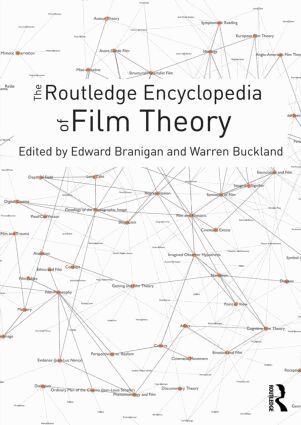
    Routledge Encyclopedia of Film Theory

    AvEdward Branigan,Warren Buckland

    Häftad, Engelska, 2015

    863 kr

    Beställningsvara. Skickas inom 10-15 vardagar. Fri frakt över 249 kr.

    Beskrivning

    The Routledge Encyclopedia of Film Theory is an international reference work representing the essential ideas and concepts at the centre of film theory from the beginning of the twentieth century, to the beginning of the twenty-first.When first encountering film theory, students are often confronted with a dense, interlocking set of texts full of arcane terminology, inexact formulations, sliding definitions, and abstract generalities. The Routledge Encyclopedia of Film Theory challenges these first impressions by aiming to make film theory accessible and open to new readers.Edward Branigan and Warren Buckland have commissioned over 50 scholars from around the globe to address the difficult formulations and propositions in each theory by reducing these difficult formulations to straightforward propositions.The result is a highly accessible volume that clearly defines, and analyzes step by step, many of the fundamental concepts in film theory, ranging from familiar concepts such as ‘Apparatus’, ‘Gaze’, ‘Genre’, and ‘Identification’, to less well-known and understood, but equally important concepts, such as Alain Badiou’s ‘Inaesthetics’, Gilles Deleuze’s ‘Time-Image’, and Jean-Luc Nancy’s ‘Evidence’.The Routledge Encyclopedia of Film Theory is an ideal reference book for undergraduates of film studies, as well as graduate students new to the discipline.

    Produktinformation

    • Utgivningsdatum:2015-01-09
    • Mått:174 x 246 x 32 mm
    • Vikt:982 g
    • Format:Häftad
    • Språk:Engelska
    • Antal sidor:566
    • Förlag:Taylor & Francis Ltd
    • ISBN:9781138849150

    Utforska kategorier

    • Medievetenskap inom Samhälle och politik
    • Film inom Kultur

    Mer om författaren

    Edward Branigan is Professor Emeritus in the Department of Film and Media Studies at the University of California, Santa Barbara. He is the author of Projecting a Camera: Language-Games in Film Theory, Narrative Comprehension and Film, and Point of View in the Cinema: A Theory of Narration and Subjectivity in Classical Film. With Charles Wolfe, he is the general editor of the American Film Institute Film Readers series.Warren Buckland is Reader in Film Studies at Oxford Brookes University. His areas of research include film theory (Film Theory: Rational Reconstructions, 2012 and The Cognitive Semiotics of Film, 2000) and film narratology (Puzzle Films: Complex Storytelling in Contemporary Cinema, 2009 and Hollywood Puzzle Films, 2014). He is editor of the quarterly journal the New Review of Film and Television Studies.

    Recensioner i media

    "The Routledge Encyclopedia of Film Theory is an astonishing achievement. Comprehensive – organized around no fewer than 83 distinct concepts – and authored by recognized specialists, it is sure to establish itself as a great teaching resource. Entries are concise and informative, written in clear language, which makes them especially helpful to students coming to film theory for the first time and seeking a user-friendly, but focused guide. The Editors are to be highly commended for the way they cross-list entries and map the connections between them."Thomas Elsaesser, Professor Emeritus, University of Amsterdam"Branigan and Buckland's Encyclopedia of Film Theory is an extraordinary accomplishment. The entries present with clarity and order concepts from the entire history of film theory, often revealing surprising connections and filiations among ideas and authors. In the crowded field of theory overviews, this will be the essential reference work for many years to come for both beginning and advanced researchers."D. N. Rodowick, Glen A. Lloyd Distinguished Service Professor in Cinema and Media Studies, The University of Chicago"The Routledge Encyclopedia of Film Theory is both a wonderful map and intriguing maze. The encyclopedia retraces the history of film theory through more than eighty entries. Each reconstructs a debate, but also offers an up-dated perspective. My advice to the reader: (1) investigate your question; (2) then proceed randomly, as if you were surfing the Internet; (3) make connections be as strange as possible; (4) challenge the path from light to dark suggested by Branigan in the Epilogue, and disrupt it by finding new ways to make film live. Above all, savour the reading: it brings to light important chapters in the history of thought, and rediscovers what we thought we knew and what we think now."Francesco Casetti, Professor, Film Studies Program, Yale University"This volume attempts to address shortcomings in previous guides to film theory, which often can seem unwelcoming to the uninitiated... [and] offers a reference that is accessible to novice users through the use of concise, straightforward prose, which grounds discussion of key concepts in a limited number of canonical texts...this should prove to be a valuable reference for students engaged in film studies...Summing Up: Recommended." W. D. Walsh, Georgia State University, in CHOICE

    Innehållsförteckning

    • Affect. Anglo-American Film Theory. Apparatus Theory (Baudry). Apparatus Theory (Plato). Art, Film as. Attention. Attraction. Auteur Theory. Blending and Film Theory. Brecht and Film. Camera. Cinematic Movement. Classic Realist Text. Classical Film Theory. Close-up. Cognitive Film Theory. Concept. Contemporary Film Theory. Counter Cinema. Depth of Field. Dialogism. Diegesis. Digital Cinema. Documentary Theory. Emotion, Film and. Enunciation. Ethics. European Film Theory. Evidence (Jean-Luc Nancy). Excess, Cinematic. Fantasy and Spectatorship. Feminist Film Theory, Core Concepts. Feminist Film Theory, History of. Film Fable (Rancière). Film-Philosophy. Formalist Theories of Film. Gaming and Film Theory. Gaze Theory. Genre Theory. Identification, Theory of. Ideology. Illusion. Imaginary Signifier. Imagined Observer Hypothesis. Inaesthetics (Badiou). Interface. Long Take. Memory and Film. Mimetic Innervation. Minor Cinema. Mise en Scène. Modernism versus Realism. Montage Theory I (Hollywood). Montage Theory II (Soviet Avant-Garde). Movement-Image. Narration. Ontology of the Photographic Image. Ordinary Man of the Cinema (Schefer). Perspectivism versus Realism. Phenomenology and Film. Pixel/Cut/Vector. Poetic Cinema. Point of View. Postmodern Cinema. Queer Theory. Reception Theory. Redemption. Representation. Rhetoric, Film and. Seeing/Perceiving. Semiotics of Film. Skepticism. Sound Theory. Specificity, Medium I. Specificity, Medium II. Structural/Materialist Film. Suture. Symbol and Analogon. Symptomatic Reading. Third World Cinema. Time-Image. Trauma. Voice.