• Fri frakt över 249 kr
  • •
  • Snabba leveranser
  • •
  • Billiga böcker
Kundservice

Du är på sajten för privatpersoner.

Företag, bibliotek eller offentlig verksamhet?

Du handlar på classic.bokus.com, där alla dina funktioner finns intakta.
Till classic.bokus.com
Bokus logotyp. Gå till startsidan.
  • Erbjudanden
  • Nyheter
  • Student
  • Topplistor
  • Barn & ungdom
  • Bokus Play
  • E-böcker
  • Pocketböcker
  • Spel & pussel

10% rabatt på allt med kod NYSTART10 →

Sidfot

Mina sidor

    Hjälp

    • Kundservice
    • Vanliga frågor och svar
    • Frakt och leverans
    • Retur vid ångerrätt
    • Reklamera vara
    • Betalning
    • Köpvillkor
    • Allmänna villkor
    • Information om webbplatsens tillgänglighet

    Om Bokus

    • Om oss
    • Pressrum
    • För studenter
    • För företag
    • För bibliotek och offentlig verksamhet
    • För leverantörer
    • Hållbarhet

    Populärt

    • Aktuella erbjudanden
    • Presentkort
    • Studentlitteratur
    • Nya böcker
    • Topplistor
    • Signerade böcker
    • Engelska böcker

    Inspiration

    • Boktips
    • BookTok
    • Populära bokserier
    • Barnbokskaraktärer
    • Populära författare
    Logotyp för Bokus
    Följ oss på Facebook (extern länk)Följ oss på Instagram (extern länk)Följ oss på YouTube (extern länk)Följ oss på TikTok (extern länk)
    bokus @ CookiesAnpassa cookiesIntegritetspolicyKöpvillkor
    Till Citymail hemsida (extern länk)Till Budbee hemsida (extern länk)Till Postnord hemsida (extern länk)Till Schenker hemsida (extern länk)Till Early Bird hemsida (extern länk)Till Walleys hemsida (extern länk)
    1. Samhälle och politik
    2. Samhälle och kultur
    3. Kultur och medier
    4. Referensverk och tvärvetenskap

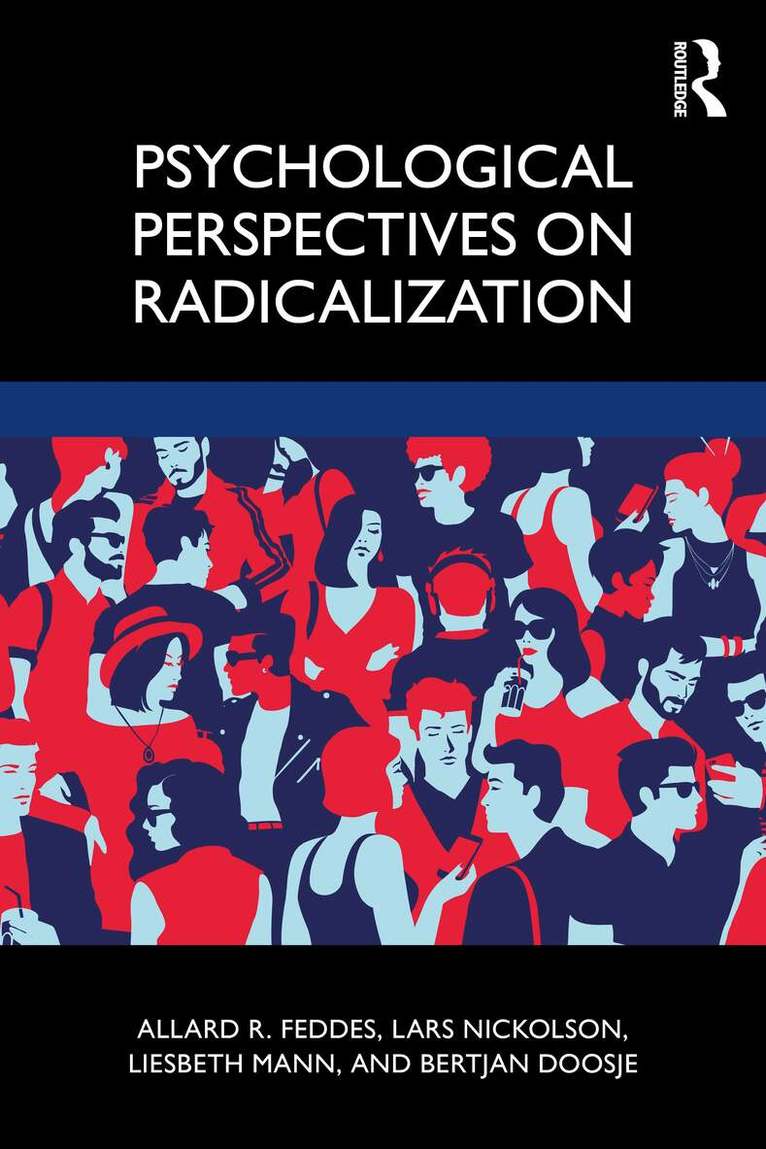
    Psychological Perspectives on Radicalization

    AvAllard Feddes,Lars Nickolson

    Häftad, Engelska, 2020

    580 kr

    Beställningsvara. Skickas inom 10-15 vardagar. Fri frakt över 249 kr.

    Fler format och utgåvor

    Inbunden

    2 355 kr

    Beskrivning

    This innovative book examines radicalization from new psychological perspectives by examining the different typologies of radicalizing individuals, what makes individuals resilient against radicalization, and events that can trigger individuals to radicalize or to deradicalize. What is radicalization? Which psychological processes or events in a person's life play a role in radicalization? What determines whether a personal is resilient against radicalization, and is deradicalization something that we can achieve? This book goes beyond previous publications on this topic by identifying concrete key events in the process of radicalization, providing a useful theoretical framework that summarizes the current state-of-the-art research on radicalization and deradicalization. A model is presented in which a distinction is made between different levels of radicalization and deradicalization, with key underlying psychological needs discussed: the need for identity, justice, significance, and sensation. The authors also describe what makes people resilient against messages from "the outside world" when they belong to an extremist group and discuss observable events which may "trigger" a person to radicalize (further) or to deradicalize.Including real-world examples and clear guidelines for interventions aimed at prevention of radicalization and stimulation of deradicalization, this is essential reading for policy makers, researchers, practitioners, and students interested in this crucial societal issue.

    Produktinformation

    • Utgivningsdatum:2020-06-12
    • Mått:156 x 234 x 14 mm
    • Vikt:240 g
    • Format:Häftad
    • Språk:Engelska
    • Antal sidor:160
    • Förlag:Taylor & Francis Ltd
    • ISBN:9781138897571

    Utforska kategorier

    • Referensverk och tvärvetenskap inom Samhälle och politik
    • Socialpsykologi och gruppsykologi inom Psykologi och pedagogik
    • Politisk aktivism inom Samhälle och politik

    Mer om författaren

    Dr. Allard R. Feddes received his PhD at the Friedrich-Schiller University of Jena, Germany, in 2007, on development of prejudice in childhood. He now is assistant professor in the Social Psychology Department at the University of Amsterdam. He is interested in how group membership influences our feelings, thoughts, and behavior and has studied the psychology of (de)radicalization since 2011. Lars Nickolson graduated cum laude as a Master in Philosophy in 2008. For more than a decade, he has been involved with counter-radicalization policy both as a researcher and an advisor, working within and outside of the Dutch government. He is currently a PhD candidate at the Department of Political Science at the University of Amsterdam.Dr. Liesbeth Mann obtained her PhD at the University of Amsterdam studying the emotion of humiliation in interpersonal and intergroup contexts. Currently, she works at the same university as a teacher and researcher in cultural and political psychology. She is also involved in a number of (governmental) projects focused on the process of (de)radicalization.Dr. Bertjan Doosje was Professor of Radicalization in the Department of Social Psychology at the University of Amsterdam from 2013 until 2019 and is currently Associate Professor there. He received his PhD on stereotyping in intergroup contexts in 1995 (cum laude). Since then, he has examined intergroup relations in general, and after 9/11/2001, he has developed a special focus on radicalization and terrorism.

    Recensioner i media

    "Psychological Perspectives on Radicalization is a must read for researchers, policy makers, and lay people alike looking for a sophisticated understanding of the pathways to radicalization and deradicalization. It provides a novel social psychological analysis of the phenomenon by integrating micro, meso, and macro-level processes thereby advancing our knowledge of the when, why, and how individuals radicalize." – Jolanda Jetten, ARC Laureate Fellow, Professor of Social Psychology, FASSA, School of Psychology, University of Queensland, Australia"This primer to radicalization summarizes the latest results from academic research in an easy to understand way, without over-simplifying a complex phenomenon. Beyond that, the authors of this volume offer an original model of radicalization of their own and also break new ground in their discussion of resilience to radicalization and, paradoxically, to deradicalization." – Prof. em. Alex P. Schmid, Editor-in-Chief, ‘Perspectives on Terrorism’ and former Officer-in-Charge of the United Nations’ Terrorism Prevention Branch at UNODC"This very well organized and clearly written volume should be studied by everyone interested to better understand radicalization, from introductory students to advanced experts. The authors have produced a highly valuable contribution to our understanding of radicalization." – Fathali M. Moghaddam, Professor and Director of the Interdisciplinary Program in Cognitive Science, Georgetown University, U.S."This book is the perfect introduction kit for anyone who wants to start, do, or reflect on terrorism and radicalization research. It has all the necessary components: key questions on the why, how, and end of terrorism, a serious chapter on methodologies, but it also contains crucial criticisms on far-too-easy one-dimensional radicalization models. In order to understand, make, and solve the radicalization puzzle, reading this book gives every student and researcher a head start." – Beatrice de Graaf, Professor of History of International Relations and Global Governance, Strategic Theme Institutions for Open Societies, Department for History and Art History, Utrecht University, The Netherlands "Applying a psychological perspective, the authors make a valuable effort to establish factors that explain why some individuals adopt beliefs that violence is a justifiable and necessary to achieve changes in society, and what characterize those that take the step from beliefs into action." - Dr. Tore Bjørgo, Professor at the University of Oslo and the Norwegian Police University College, Director of Center for Research on Extremism (C-REX), Norway"Solid and well-reasoned reappraisal of one of the oldest issues in the study of terrorism: how do psychological processes influence individuals and groups to embrace political violence? A must-read, written by a highly qualified team of researchers." - Rik Coolsaet, Professor Emeritus, Ghent University, Belgium

    Innehållsförteckning

    • Chapter 1: IntroductionChapter 2: What is Radicalization?Chapter 3: Describing the Elephant When You Are Blind: Methods to Study RadicalizationChapter 4: The Stages of Radicalization Chapter 5: Wanted: Radical: About Profiles, Populations, and PersonalitiesChapter 6: Psychological Aspects of Radical GroupsChapter 7: The Last Straw: Trigger Factors in the Radicalization ProcessChapter 8: Resilience against Radicalization and Deradicalization Chapter 9: EXIT! The Psychology of Deradicalization and DisengagementChapter 10. Eight Lessons for Dealing with Radicalization