• Fri frakt över 249 kr
  • •
  • Snabba leveranser
  • •
  • Billiga böcker
Kundservice

Du är på sajten för privatpersoner.

Företag, bibliotek eller offentlig verksamhet?

Du handlar på classic.bokus.com, där alla dina funktioner finns intakta.
Till classic.bokus.com
Bokus logotyp. Gå till startsidan.
  • Erbjudanden
  • Nyheter
  • Student
  • Topplistor
  • Barn & ungdom
  • Bokus Play
  • E-böcker
  • Pocketböcker
  • Spel & pussel

Må bättre, för mindre! Upp till 50% rabatt på hälsoböcker

Sidfot

Mina sidor

    Hjälp

    • Kundservice
    • Vanliga frågor och svar
    • Frakt och leverans
    • Retur vid ångerrätt
    • Reklamera vara
    • Betalning
    • Köpvillkor
    • Allmänna villkor
    • Information om webbplatsens tillgänglighet

    Om Bokus

    • Om oss
    • Pressrum
    • För studenter
    • För företag
    • För bibliotek och offentlig verksamhet
    • För leverantörer
    • Hållbarhet

    Populärt

    • Aktuella erbjudanden
    • Presentkort
    • Studentlitteratur
    • Nya böcker
    • Topplistor
    • Signerade böcker
    • Engelska böcker

    Inspiration

    • Boktips
    • BookTok
    • Populära bokserier
    • Barnbokskaraktärer
    • Populära författare
    Logotyp för Bokus
    Följ oss på Facebook (extern länk)Följ oss på Instagram (extern länk)Följ oss på YouTube (extern länk)Följ oss på TikTok (extern länk)
    bokus @ CookiesAnpassa cookiesIntegritetspolicyKöpvillkor
    Till Citymail hemsida (extern länk)Till Budbee hemsida (extern länk)Till Postnord hemsida (extern länk)Till Schenker hemsida (extern länk)Till Early Bird hemsida (extern länk)Till Walleys hemsida (extern länk)
    1. Filosofi och religion
    2. Filosofi
    3. Filosofiska discipliner

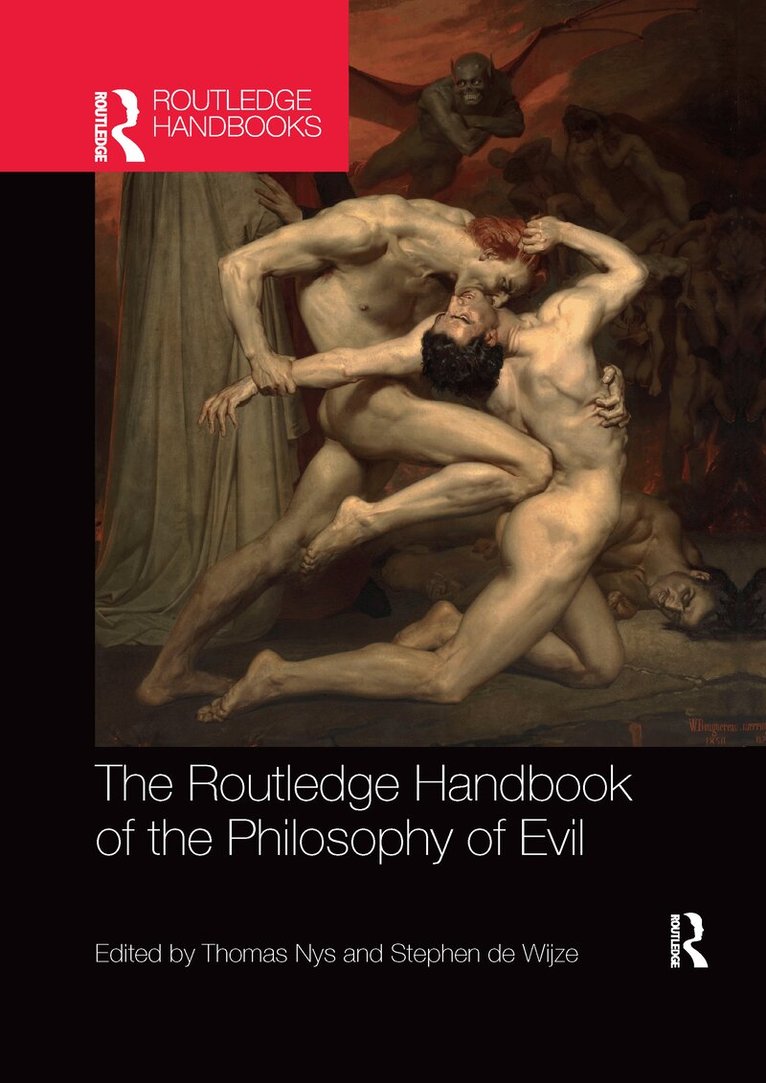
    Routledge Handbook of the Philosophy of Evil

    AvThomas Nys,Stephen de Wijze

    Inbunden, Engelska, 2019

    Del i serien Routledge Handbooks in Philosophy

    3 656 kr

    Beställningsvara. Skickas inom 10-15 vardagar. Fri frakt över 249 kr.
    Beskrivning

    Why ought we concern ourselves with understanding a concept of evil? It is an elusive and politically charged concept which critics argue has no explanatory power and is a relic of a superstitious and primitive religious past. Yet its widespread use persists today: we find it invoked by politicians, judges, journalists, and many others to express the view that certain actions, persons, institutions, or ideologies are not just morally problematic but require a special signifier to mark them out from the ordinary and commonplace. Therefore, the question of what a concept of evil could mean and how it fits into our moral vocabulary remains an important and pressing concern.The Routledge Handbook of the Philosophy of Evil provides an outstanding overview and exploration of these issues and more, bringing together an international team of scholars working on the concept of evil. Its 27 chapters cover the crucial discussions and arguments, both historical and contemporary, that are needed to properly understand the historical development and complexity of the concept of evil. The Handbook is divided into three parts: Historical explorations of evilRecent secular explorations of evilEvil and other issues.The Routledge Handbook of the Philosophy of Evil is essential reading for students and researchers in the fields of ethics and philosophy of psychology. It also provides important insights and background for anyone exploring the concept of evil in related subjects such as literature, politics, and religion.

    Produktinformation

    • Utgivningsdatum:2019-05-13
    • Mått:174 x 246 x 29 mm
    • Vikt:892 g
    • Format:Inbunden
    • Språk:Engelska
    • Serie:Routledge Handbooks in Philosophy
    • Antal sidor:388
    • Förlag:Taylor & Francis Ltd
    • ISBN:9781138931794

    Utforska kategorier

    • Filosofiska discipliner inom Filosofi och religion

    Mer om författaren

    Thomas Nys is Assistant Professor of Philosophy at the University of Amsterdam, the Netherlands.Stephen de Wijze is Senior Lecturer in Political Theory at the University of Manchester, UK.

    Innehållsförteckning

    • Introduction Thomas Nys and Stephen de Wijze Part 1: Historical explorations of Evil 1. Plato on Evil Alina Scudieri 2. Augustine on Evil Philip Cary 3. Aquinas on Evil W. Matthews Grant 4. Machiavelli: The Drama of Politics and Its Inherent Evil Giovanni Giorgini 5. Hobbes on Evil Laurens van Apeldoorn 6. Leibniz On Evil: God’s Justice in the Best of All Possible Worlds Agustín Echavarría 7. Jean-Jacques Rousseau on the Origin and Nature of Evil Jason Neidleman 8. Kant: The Evil in All of Us Matthé Scholten 9. Sade: Mushroom Clouds and Silver Linings Thomas Nys 10. Nietzsche’s Critique of Morality and His Effort to Create an Evaluation ‘Beyond Good and Evil’ Paul van Tongeren 11. Hannah Arendt’s Double Account of Evil: Political Superfluousness and Moral Thoughtlessness Peg Birmingham 12. After the Fall: Camus on Evil Matthew Sharpe Part 2: Recent Secular Explorations of Evil 13. Deliver us from Evil: The Case for Scepticism Phillip Cole 14. Does the term ‘evil’ have any explanatory power? Eve Garrard 15. Defining the concept of evil: Insights from our pre-cognitive responses Stephen de Wijze 16. Evil and Wrongdoing Todd Calder 17. Evil Characters Peter Brian Barry 18. Defining evil actions: Different approaches Luke Russell 19. Different Substantive Conceptions of Evil Actions Paul Formosa Part 3: Evil and other Issues 20. Evil and Punishment Leo Zaibert 21. Evil and Forgiveness Kathryn J. Norlock 22. Evil and Freedom Lars Fr. H. Svendsen 23. Evil and Power Simona Forti 24. Evil and Childhood Gideon Calder 25. Evil’s Diachronic Characteristics Zachary J. Goldberg 26. Evil, Genocide, and Mass Atrocities Jonathan Leader Maynard 27. Evil: A Comparative Overview Michiel Leezenberg