• Fri frakt över 249 kr
  • •
  • Snabba leveranser
  • •
  • Billiga böcker
Kundservice

Du är på sajten för privatpersoner.

Företag, bibliotek eller offentlig verksamhet?

Du handlar på classic.bokus.com, där alla dina funktioner finns intakta.
Till classic.bokus.com
Bokus logotyp. Gå till startsidan.
  • Erbjudanden
  • Nyheter
  • Student
  • Topplistor
  • Barn & ungdom
  • Bokus Play
  • E-böcker
  • Pocketböcker
  • Spel & pussel

10% rabatt på allt med kod: NYSTART10 →

Sidfot

Mina sidor

    Hjälp

    • Kundservice
    • Vanliga frågor och svar
    • Frakt och leverans
    • Retur vid ångerrätt
    • Reklamera vara
    • Betalning
    • Köpvillkor
    • Allmänna villkor
    • Information om webbplatsens tillgänglighet

    Om Bokus

    • Om oss
    • Pressrum
    • För studenter
    • För företag
    • För bibliotek och offentlig verksamhet
    • För leverantörer
    • Hållbarhet

    Populärt

    • Aktuella erbjudanden
    • Presentkort
    • Studentlitteratur
    • Nya böcker
    • Topplistor
    • Signerade böcker
    • Engelska böcker

    Inspiration

    • Boktips
    • BookTok
    • Populära bokserier
    • Barnbokskaraktärer
    • Populära författare
    Logotyp för Bokus
    Följ oss på Facebook (extern länk)Följ oss på Instagram (extern länk)Följ oss på YouTube (extern länk)Följ oss på TikTok (extern länk)
    bokus @ CookiesAnpassa cookiesIntegritetspolicyKöpvillkor
    Till Citymail hemsida (extern länk)Till Budbee hemsida (extern länk)Till Postnord hemsida (extern länk)Till Schenker hemsida (extern länk)Till Early Bird hemsida (extern länk)Till Walleys hemsida (extern länk)
    1. Historia och arkeologi
    2. Historia
    3. Historia: teori och metod

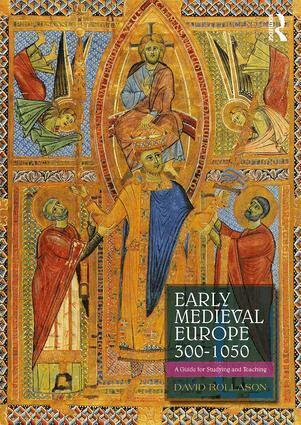
    Early Medieval Europe 300–1050

    A Guide for Studying and Teaching

    AvDavid Rollason

    Häftad, Engelska, 2018

    600 kr

    Beställningsvara. Skickas inom 10-15 vardagar. Fri frakt över 249 kr.

    Fler format och utgåvor

    Inbunden

    2 247 kr

    Beskrivning

    Early Medieval Europe 300–1050: A Guide for Studying and Teaching empowers students by providing them with the conceptual and methodological tools to investigate the period. Throughout the book, major research questions and historiographical debates are identified and guidance is given on how to engage with and evaluate key documentary sources as well as artistic and archaeological evidence. The book’s aim is to engender confidence in creative and independent historical thought. This second edition has been fully revised and expanded and now includes coverage of both Islamic and Byzantine history, surveying and critically examining the often radically different scholarly interpretations relating to them. Also new to this edition is an extensively updated and closely integrated companion website, which has been carefully designed to provide practical guidance to teachers and students, offering a wealth of reference materials and aids to mastering the period, and lighting the way for further exploration of written and non-written sources. Accessibly written and containing over 70 carefully selected maps and images, Early Medieval Europe 300–1050 is an essential resource for students studying this period for the first time, as well as an invaluable aid to university teachers devising and delivering courses and modules on the period.

    Produktinformation

    • Utgivningsdatum:2018-04-04
    • Mått:174 x 246 x 21 mm
    • Vikt:782 g
    • Format:Häftad
    • Språk:Engelska
    • Antal sidor:420
    • Upplaga:2
    • Förlag:Taylor & Francis Ltd
    • ISBN:9781138936874

    Utforska kategorier

    • Historia: teori och metod inom Historia och arkeologi
    • Medeltiden inom Historia och arkeologi

    Mer om författaren

    David Rollason is Emeritus Professor of History at Durham University, UK. His previous publications include Northumbria 500–1100: Creation and Destruction of a Kingdom (2003) and The Power of Place: Rulers and Their Palaces, Landscapes, Cities, and Holy Places (2016). His research has included the cult of saints in Anglo-Saxon England, twelfth-century historical writing, the extensive medieval list of names known as the Durham Liber Vitae, and most recently royal and imperial sites across Europe

    Recensioner i media

    'This is a wholly original "textbook" that explodes the genre in an enormously fruitful way. By focusing on evidence and interpretations, rather than offering a summary of what we think we know, it opens up for students the excitement of history as a conversation, a puzzle, even a game. The Early Middle Ages is an ideal period for such an exercise, given the relative scarcity of sources and the vibrant state of contemporary scholarship in the field. This is a book that treats students with great respect and offers instructors opportunities for creative pedagogy. Anyone teaching the period should have it on the shelf.'Adam J. Kosto, Columbia University, USA'David Rollason’s Early Medieval Europe provides a clear and comprehensive introduction to the sources for early medieval history as well as the historiographical debates occupying scholars right now. This new edition incorporates a wealth of fresh material on Byzantium and the Muslim caliphate, while retaining its unique approach that takes students seriously as active participants in the learning process.'Scott Bruce, University of Colorado Boulder, USA

    Innehållsförteckning

    • PART I: INTRODUCTION, Chapter 1 Why study this period?, Chapter 2 From Roman Empire to barbarian kingdoms: cataclysm or transition?, Chapter 3 The dismemberment and survival of the Byzantine Empire, Chapter 4 The Arab conquests, Chapter 5 The making of peoples, PART III: POWER AND SOCIETY, Chapter 6 Pagan, Roman, and Christian beliefs about Rulers: ideological power, Chapter 7 Edicts, taxes, and armies: bureaucratic power, Chapter 8 Kings, warriors, and women: personal power, PART IV: THE ECONOMIC FOUNDATION, Chapter 9 Trade as a driving force?, Chapter 10 Cultivating the land: the basis of European society?, Chapter 11 Towns and cities: the functions of urban life, PART V: THE CHURCH’S TRIUMPH, Chapter 12 Conversion to Christianity, Chapter 13 The success of monasticism, Chapter 14 The power of bishops and popes, General Conclusion