• Fri frakt över 249 kr
  • •
  • Snabba leveranser
  • •
  • Billiga böcker
Kundservice

Du är på sajten för privatpersoner.

Företag, bibliotek eller offentlig verksamhet?

Du handlar på classic.bokus.com, där alla dina funktioner finns intakta.
Till classic.bokus.com
Bokus logotyp. Gå till startsidan.
  • Erbjudanden
  • Nyheter
  • Student
  • Topplistor
  • Barn & ungdom
  • Bokus Play
  • E-böcker
  • Pocketböcker
  • Spel & pussel

10% rabatt på allt med kod: NYSTART10 →

Sidfot

Mina sidor

    Hjälp

    • Kundservice
    • Vanliga frågor och svar
    • Frakt och leverans
    • Retur vid ångerrätt
    • Reklamera vara
    • Betalning
    • Köpvillkor
    • Allmänna villkor
    • Information om webbplatsens tillgänglighet

    Om Bokus

    • Om oss
    • Pressrum
    • För studenter
    • För företag
    • För bibliotek och offentlig verksamhet
    • För leverantörer
    • Hållbarhet

    Populärt

    • Aktuella erbjudanden
    • Presentkort
    • Studentlitteratur
    • Nya böcker
    • Topplistor
    • Signerade böcker
    • Engelska böcker

    Inspiration

    • Boktips
    • BookTok
    • Populära bokserier
    • Barnbokskaraktärer
    • Populära författare
    Logotyp för Bokus
    Följ oss på Facebook (extern länk)Följ oss på Instagram (extern länk)Följ oss på YouTube (extern länk)Följ oss på TikTok (extern länk)
    bokus @ CookiesAnpassa cookiesIntegritetspolicyKöpvillkor
    Till Citymail hemsida (extern länk)Till Budbee hemsida (extern länk)Till Postnord hemsida (extern länk)Till Schenker hemsida (extern länk)Till Early Bird hemsida (extern länk)Till Walleys hemsida (extern länk)
    1. Filosofi och religion
    2. Religion och tro
    3. Buddhism

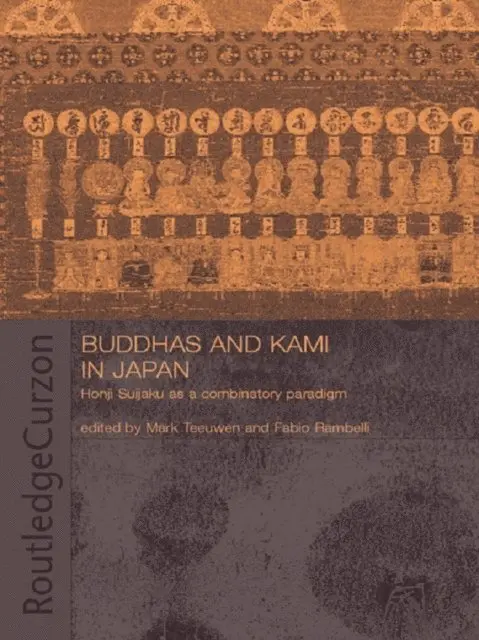
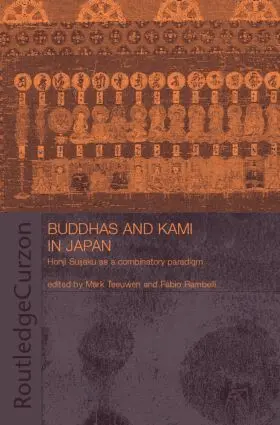
    Buddhas and Kami in Japan

    Honji Suijaku as a Combinatory Paradigm

    AvFabio Rambelli,Mark Teeuwen

    Häftad, Engelska, 2015

    766 kr

    Beställningsvara. Skickas inom 10-15 vardagar. Fri frakt över 249 kr.

    Beskrivning

    This volume offers a multidisciplinary approach to the combinatory tradition that dominated premodern and early modern Japanese religion, known as honji suijaku (originals and their traces). It questions received, simplified accounts of the interactions between Shinto and Japanese Buddhism, and presents a more dynamic and variegated religious world, one in which the deities' Buddhist originals and local traces did not constitute one-to-one associations, but complex combinations of multiple deities based on semiotic operations, doctrines, myths, and legends. The book's essays, all based on specific case studies, discuss the honji suijaku paradigm from a number of different perspectives, always integrating historical and doctrinal analysis with interpretive insights.
    Produktinformation

    • Utgivningsdatum:2015-12-09
    • Mått:156 x 234 x 24 mm
    • Vikt:710 g
    • Format:Häftad
    • Språk:Engelska
    • Antal sidor:384
    • Förlag:Taylor & Francis Ltd
    • ISBN:9781138965164

    Utforska kategorier

    • Buddhism inom Filosofi och religion
    • Östasiatiska religioner inom Filosofi och religion

    Mer om författaren

    Mark Teeuwen teaches at the University of Oslo, Norway. He specialises in the history of Shinto.Fabio Ramballi teaches at Sapporo University, Japan. He specialises in the history of Buddhism, particularly Esoteric Buddhism in Japan.

    Innehållsförteckning

    • Contributors Preface 1. Introduction: Combinatory religion and the honji suijaku paradigm in pre-modern Japan Mark Teeuwen and Fabio Rambelli 2. From thunder child to Dharma protector: Dojo hoshi and the Buddhist appropriation of Japanese local deities Irene Lin 3. The source of oracular speech: absense? presence? or plain treachery? The case of Hachiman Usa-gú gotakusenshú Allan Grapard 4. Wrathful Deities and saving deities Sato Hiroo 5. The creation of a honji suijaku deity: Amaterasu as the Judge of the Dead Mark Teeuwen 6. Honji suijaku and the logic of combinatory images: Two case studies Iyanaga Nobumi 7. Honji suijaku and the development of etymological allegoresis as an interpretive method in medieval commentaries Susan Blakeley/Klein 8. 'Both parts' or 'only one'? Challenges to the honji suijaku paradigm in the Edo period Bernhard Scheid 9. Hokke Shinto: Kami in the Nichiren tradition Lucia Dolce 10. Honji suijaku at work: Religion, economics, and ideology in pre-modern Japan Fabio Rambelli 11. The interaction between Buddhist and Shinto traditions at Suwa Shrine Inoue Takami 12. Dancing the doctrine: Honji suijaku thought in kagura performances Irit Averbuch Notes Bibliography Index